
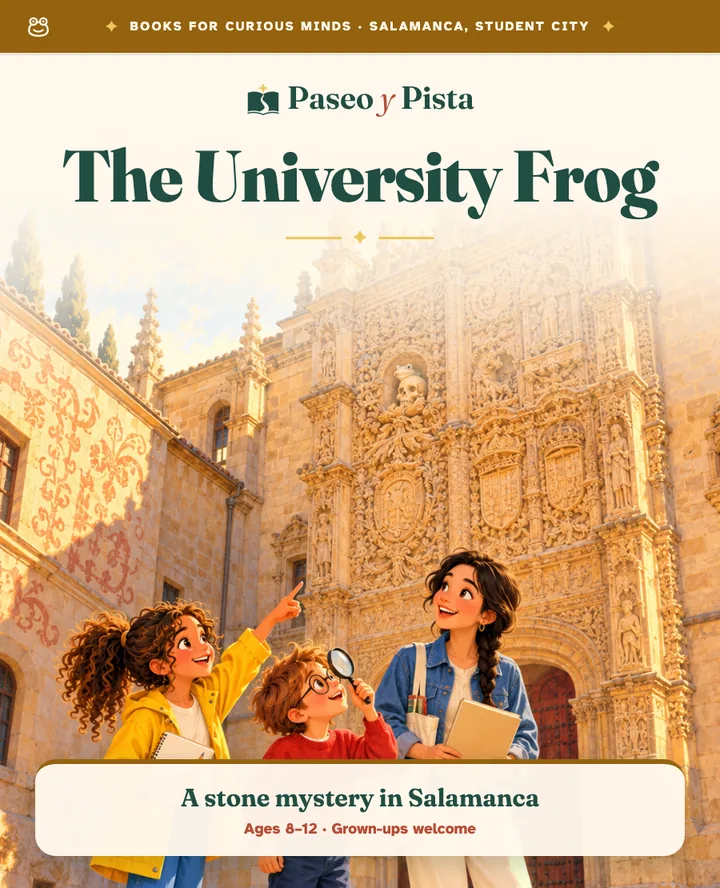
The University Frog
You learn to: Knowing what a university is and reading a façade
- 8–12 years
- ES · EN
- University

Books for curious minds · Ages 8–12 · 5 books
Eight centuries of students and a city full of clues.
Alba and Marcos spend a few days with their cousin Candela, who studies at the University of Salamanca. With her they look for the exam frog, study a sky painted more than five hundred years ago, investigate a house covered in shells that is now a library, and meet "under the clock" in the Plaza Mayor, like the students do. Each book is a case solved at home; visiting the city is optional.
See the booksA stone mystery in Salamanca
The University Frog 1 of 5 · See the book
At school, primary social science covers heritage and the passing of time. Salamanca packs it into a few streets: a university from 1218, two cathedrals, a house covered in shells and an 18th-century square.
What children this age rarely hear is what a university actually is: a place where people from all over the world go to learn, research and ask questions. Candela, the student cousin, shows Alba and Marcos from the inside, and in every book "Candela's notebook" shows a slice of her student life: timetables, exams, classmates from other countries.
You solve it at home with the book and a pencil. If you make the trip afterwards, the grown-ups' pages suggest a walking route. Checked facts come with their source; legends, like the one about the frog, are told as "People say…".
You learn to: Knowing what a university is and reading a façade
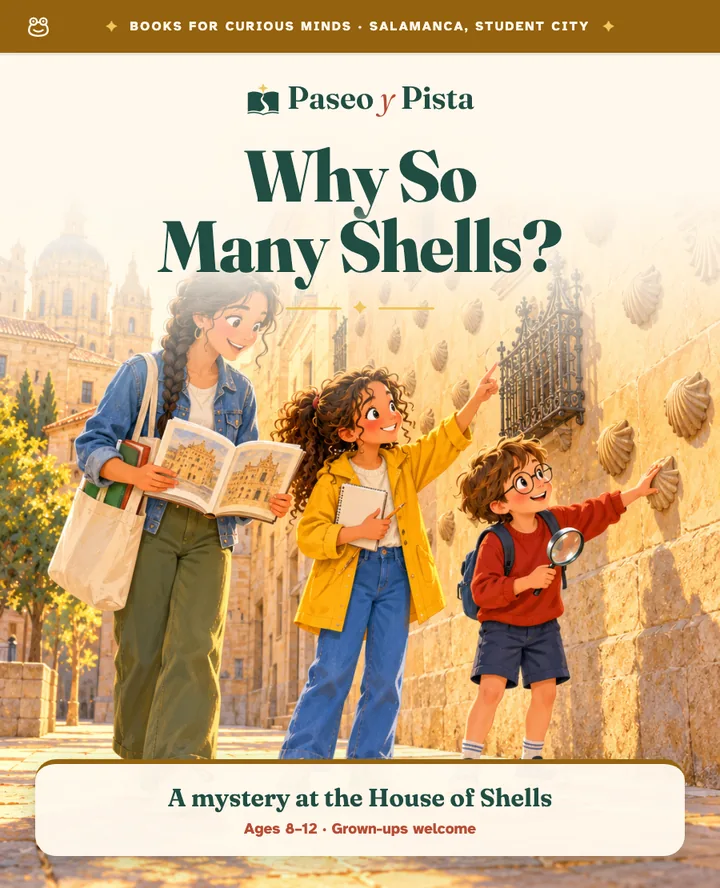
You learn to: Estimating big numbers and comparing evidence
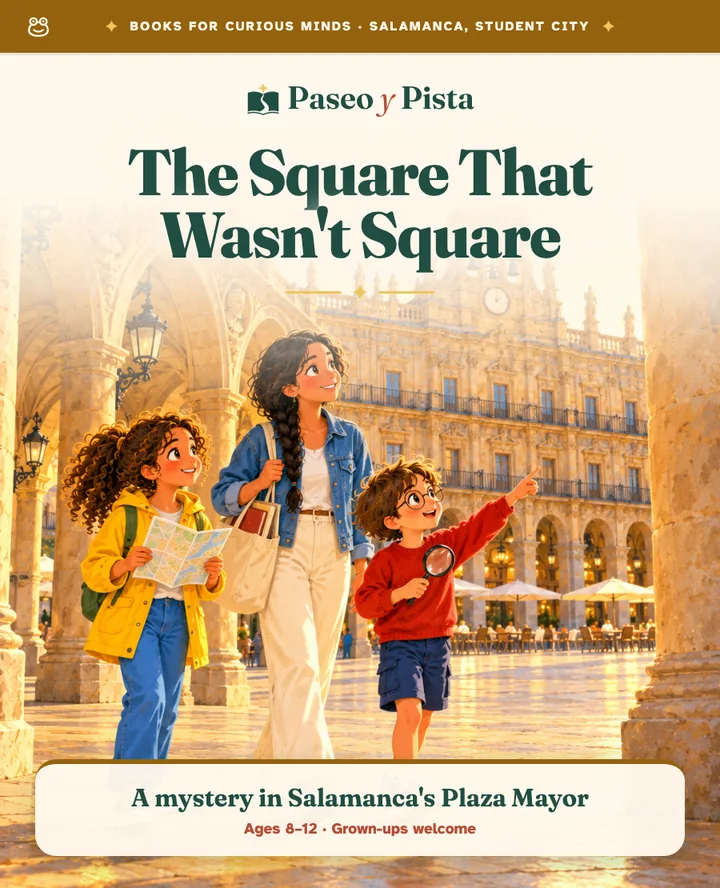
You learn to: Measuring, comparing and reading a map
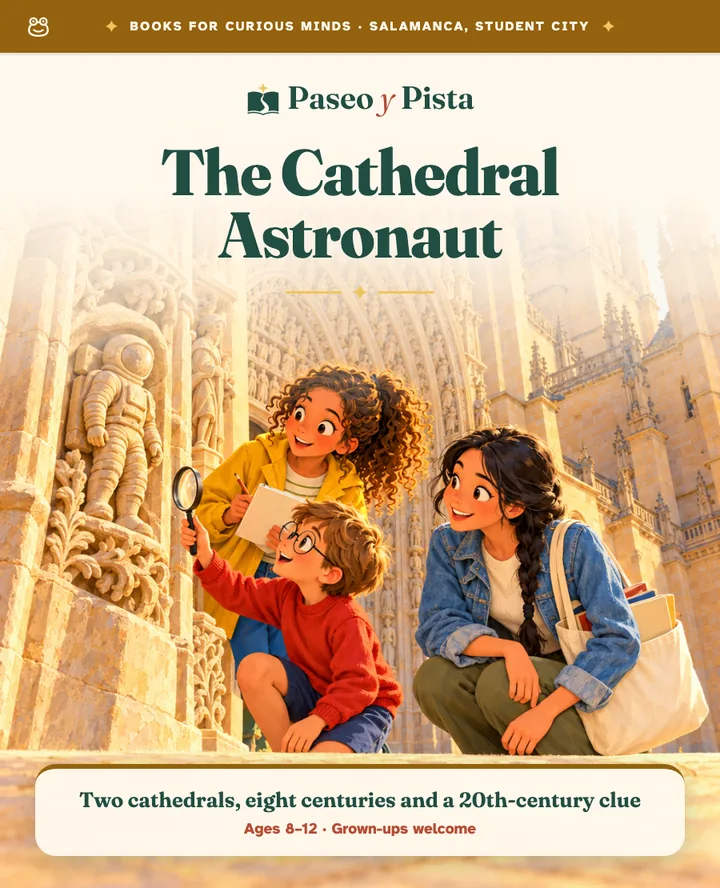
You learn to: Telling what's old from what's restored
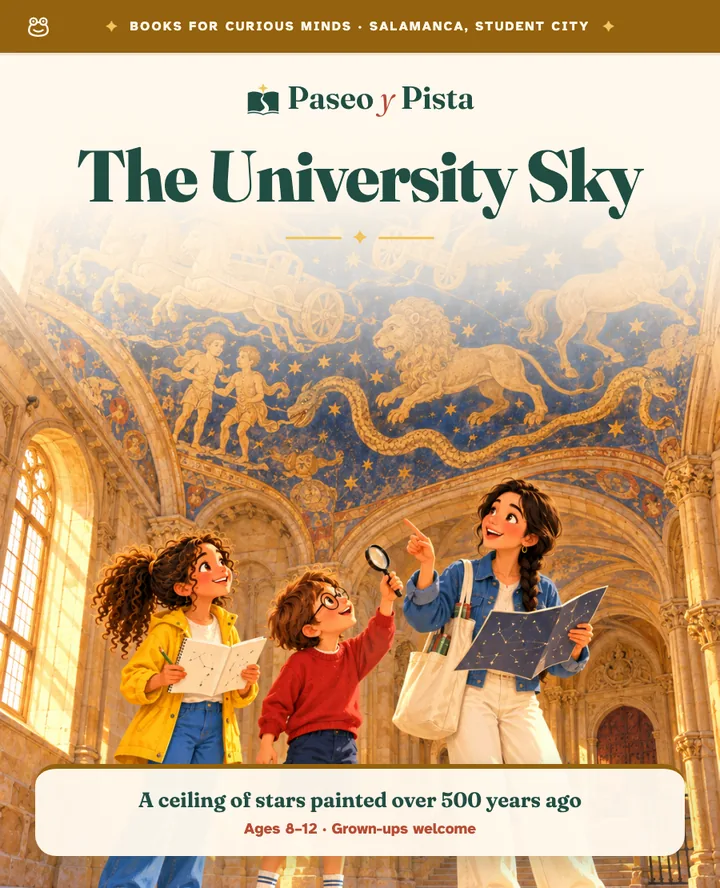
You learn to: Recognising constellations and reading the sky like a calendar
No. Every case is solved at home with the pictures, the maps and a pencil. Visiting the city is an extra.
Ages 8 to 12. Children can solve it on their own or with a grown-up.
Yes. Salamanca is the setting, but what they learn works anywhere: what a university is, how research works and how to read an old city.
Checked facts are told as facts, with their source. Anything else, like the luck you get from finding the frog, is told as "People say…".
Yes, every book will have a Spanish edition and an English edition.
Have another question? Write to us at contact@paseoypista.com and we'll reply.
Games for the street, books for curious minds and stories to read together.
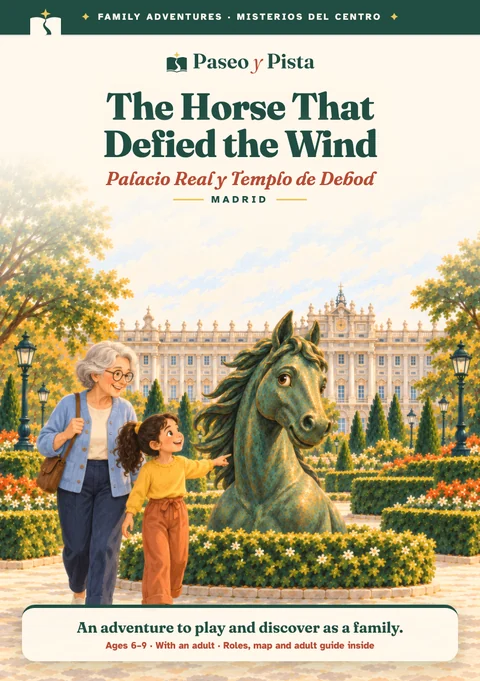 Mysteries to solve on foot7 cities · 4 adventures in each
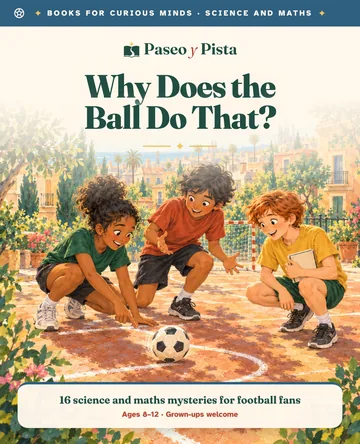
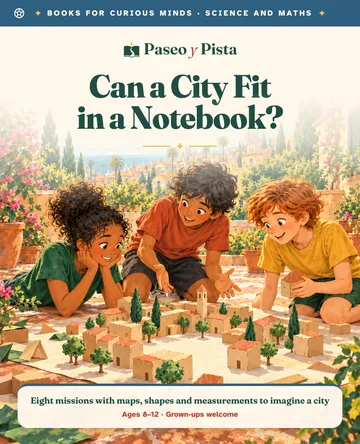
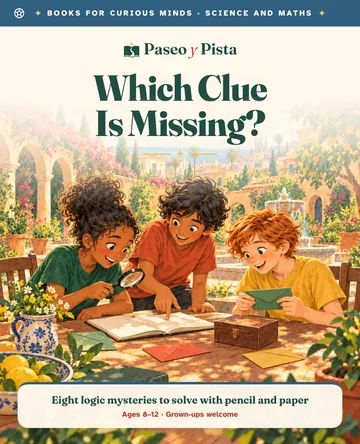 Physics and maths hiding in the things you love.4 books · See the series →
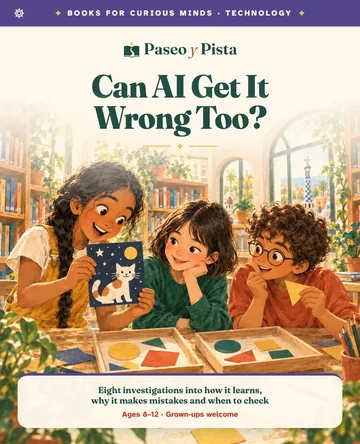
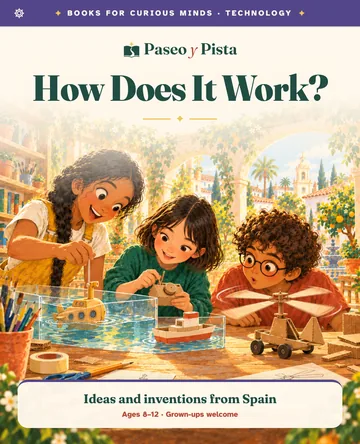
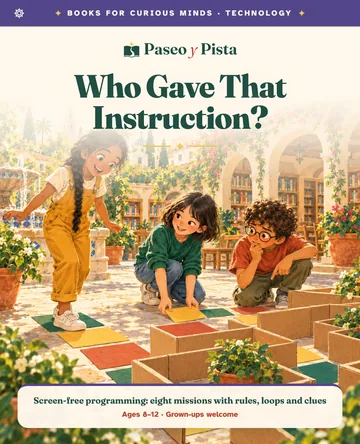 How the machines, ideas and systems we use every day really work.9 books · See the series →
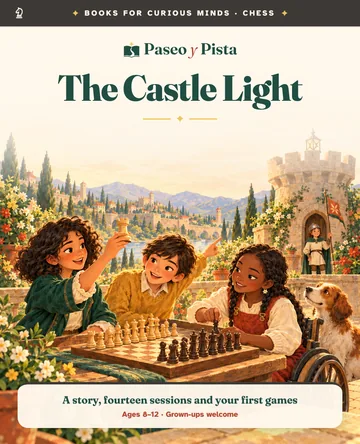
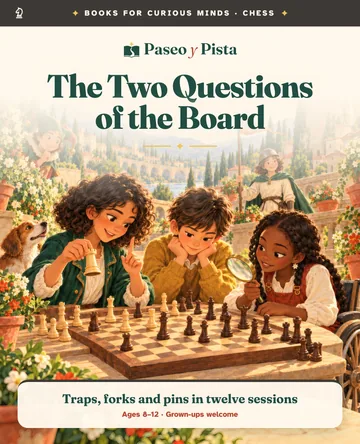
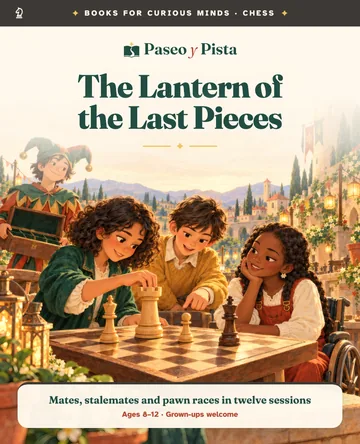 Learn chess by playing, from your first game to making plans.4 books · See the series →
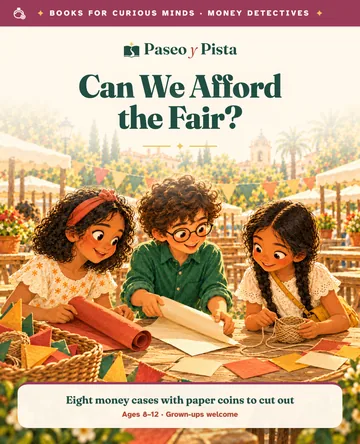
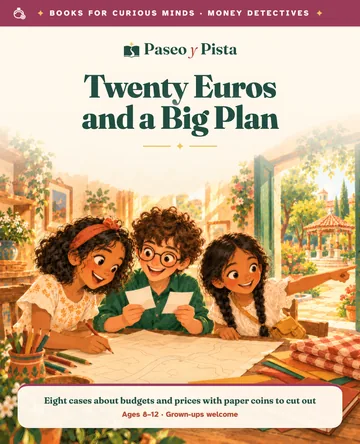
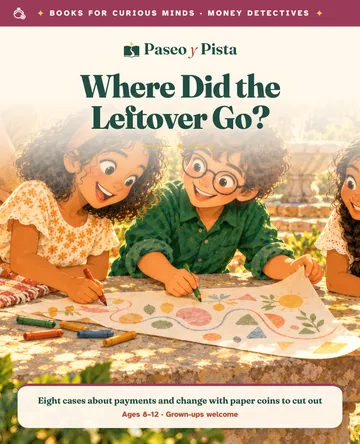 Mysteries that make sense of money.10 books · See the series →
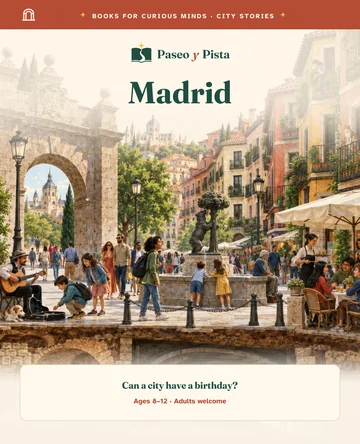
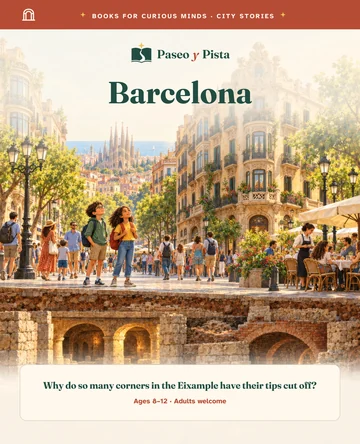
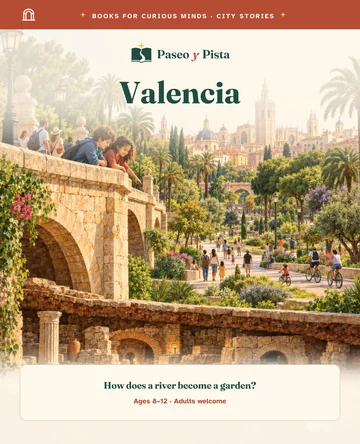 Why a city is the way it is: streets, water, decisions and people.4 books · See the series →
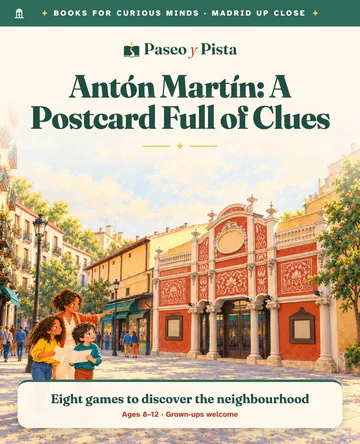
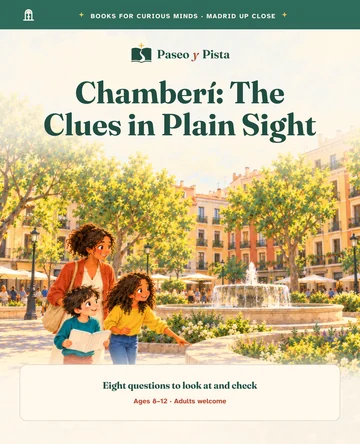
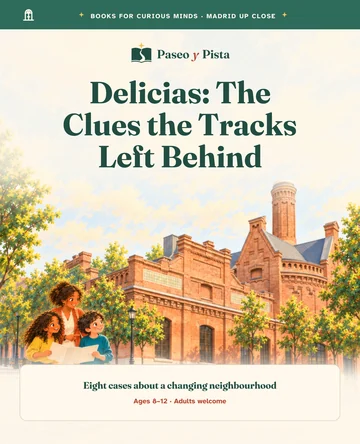 One Madrid neighbourhood, eight ways to look closely.5 books · See the series →
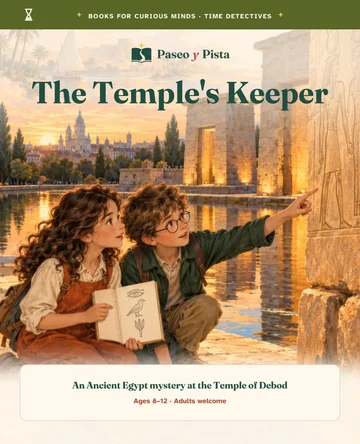
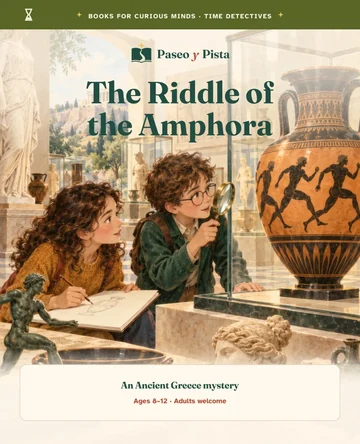
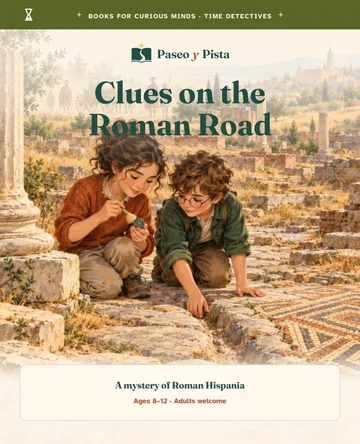 Egypt, Greece, Rome and Madrid: history, solved like a case.6 books · See the series →
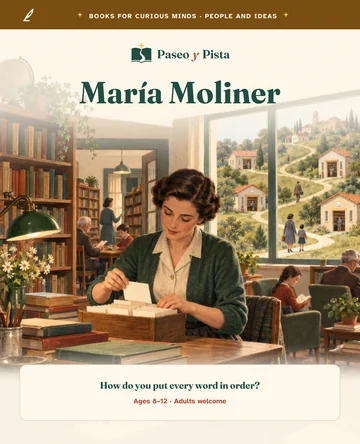
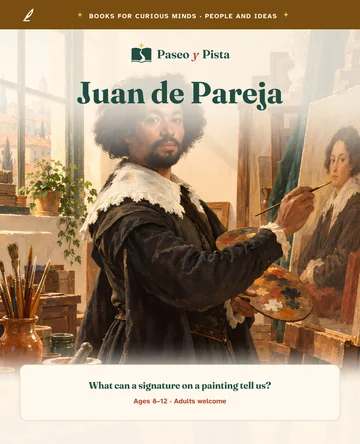
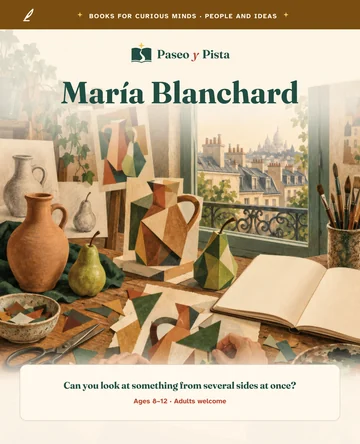 People from Spain who looked at the world differently, and the ideas they left us.4 books · See the series →
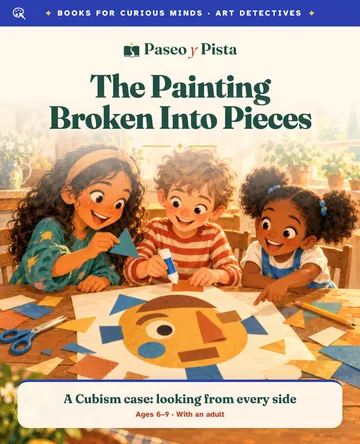
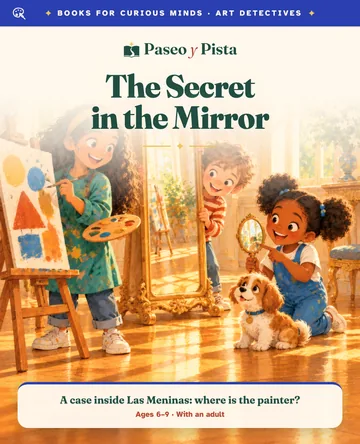
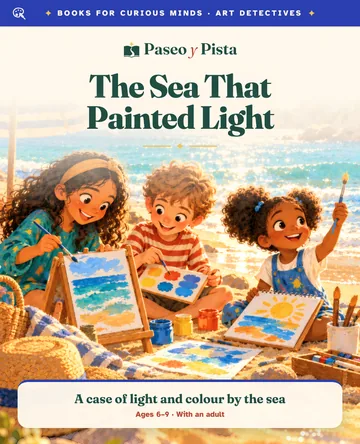 Mysteries for looking closely at paintings.6 books · See the series →
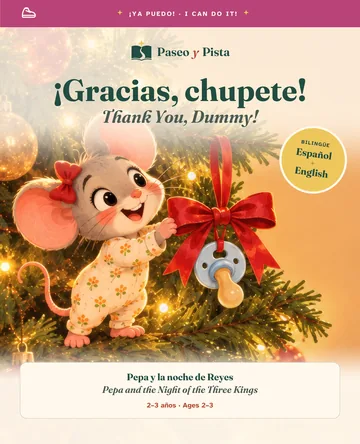
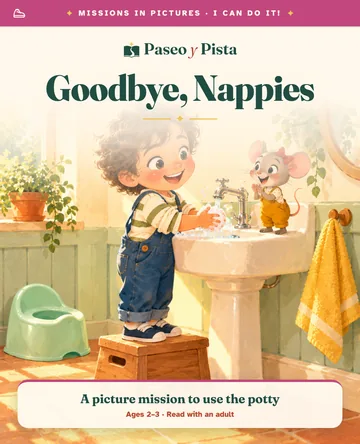
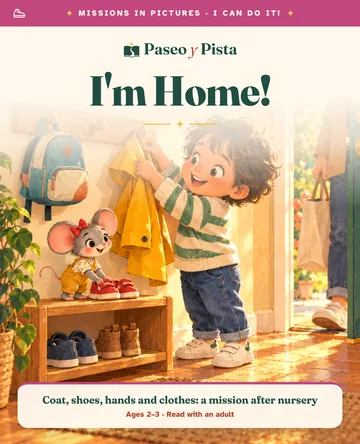 Picture missions for the big steps of ages 2 and 3.3 books · See the series →
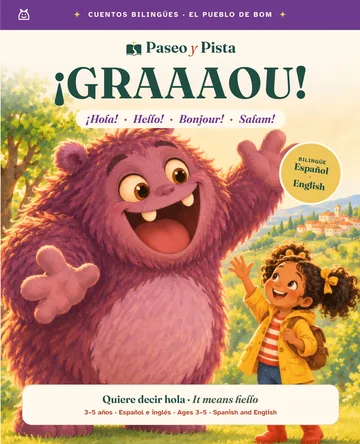
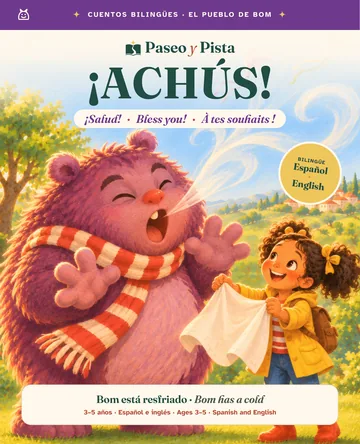
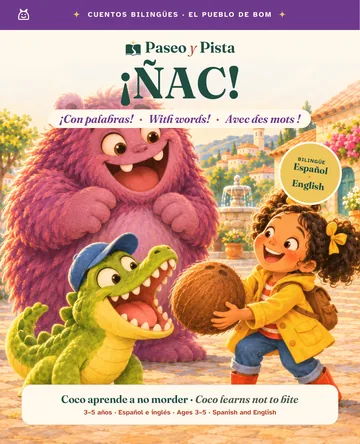 Bilingual Spanish–English stories for ages 3 to 5.7 books · See the series →
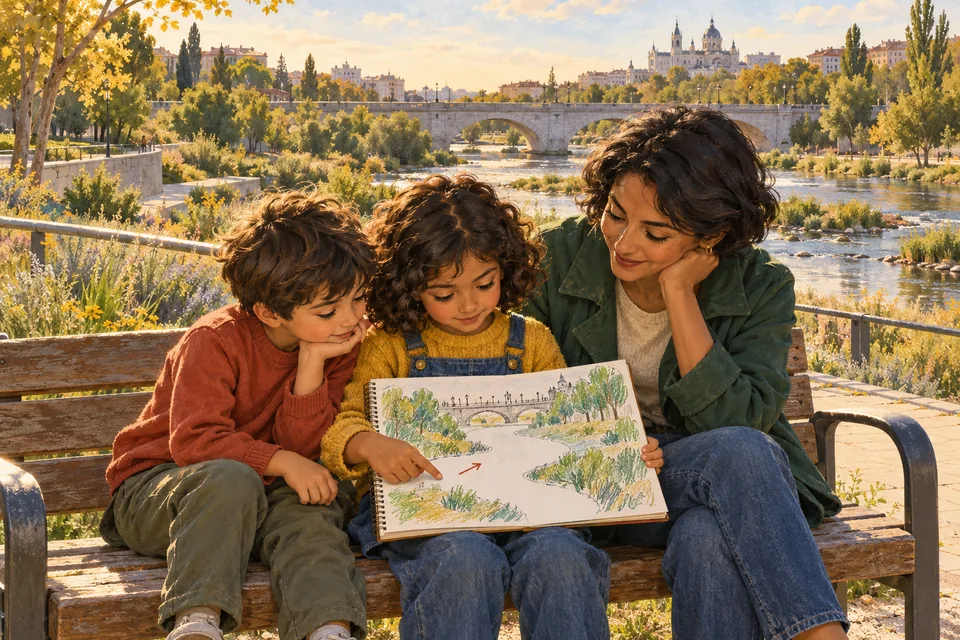 Little mysteries to share16 stories · 7 cities
Paseo y Pista makes paper games, books and stories for learning through play: curious, hands-on and away from screens.