
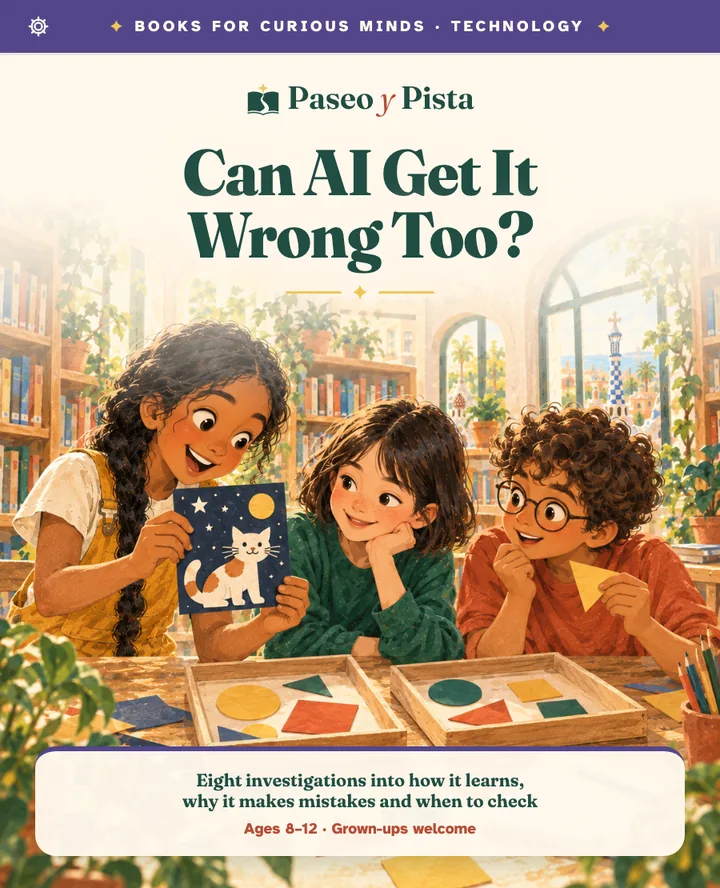
Can AI Get It Wrong Too?
You learn to: Test when an AI gets it right, and when it doesn't
- 8–12 years
- ES · EN
- Artificial intelligence

Books for curious minds · Ages 8–12 · 9 books
How the machines, ideas and systems we use every day really work.
How does a machine learn? How does an order cross the sea? Investigations with paper cards, rules and examples, to see how systems work and when to check what they say. No accounts, apps or personal data.
See the booksEight investigations into how it learns, why it makes mistakes and when to check
Can AI Get It Wrong Too? 1 of 9 · See the book
Madrid has a primary subject called «Tecnología y Robótica» with six blocks: computational thinking, mechanics and engineering, electricity, artificial intelligence, the internet of things, and virtual or augmented reality. It is optional: each school decides whether to offer it, and in which years.
Other countries treat it as core. In England computing is compulsory from age 5, and the new curriculum adds how machines learn from data. In Beijing every school gives at least eight hours of AI a year since 2025.
This series brings those six blocks home, without screens: each book is a case the family solves together with paper and pencil. Children don't learn to use a gadget; they learn how it thinks.
Learning outside the classroom: what school starts carries on at home and on the street.
You learn to: Test when an AI gets it right, and when it doesn't
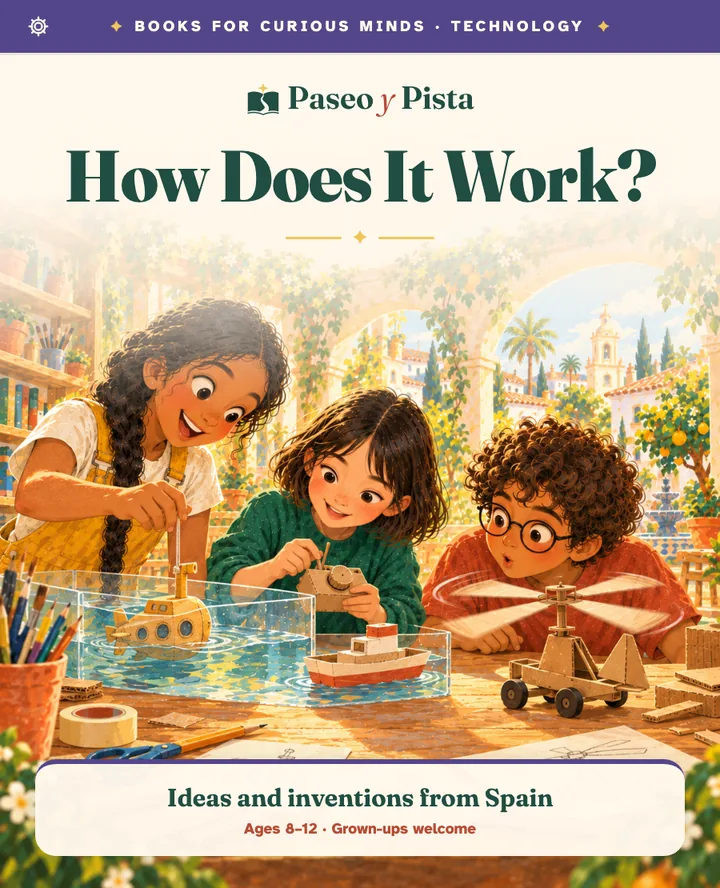
You learn to: How some Spanish inventions work
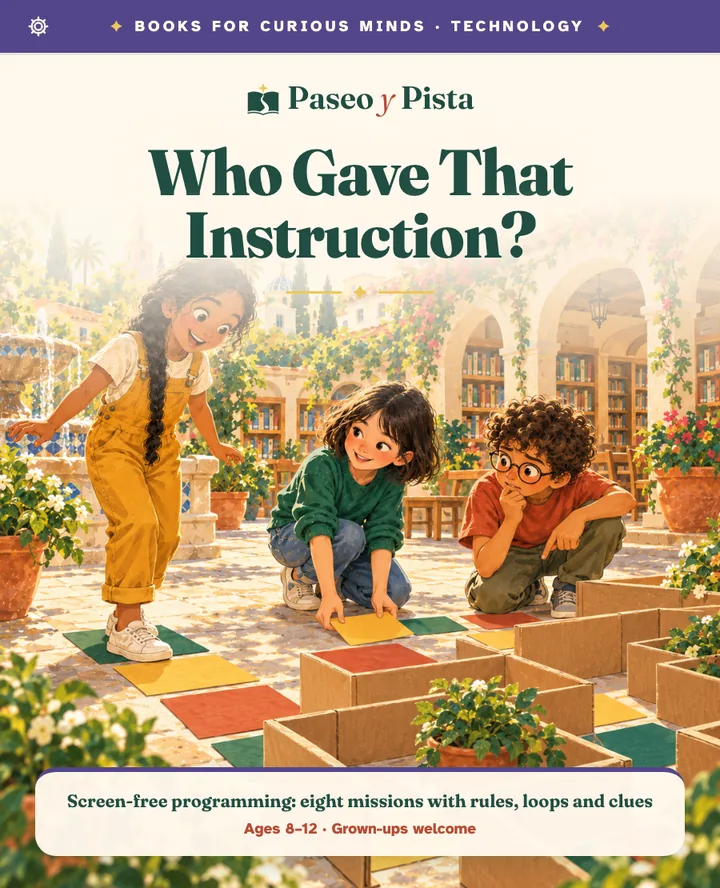
You learn to: Write exact instructions, loops and conditions
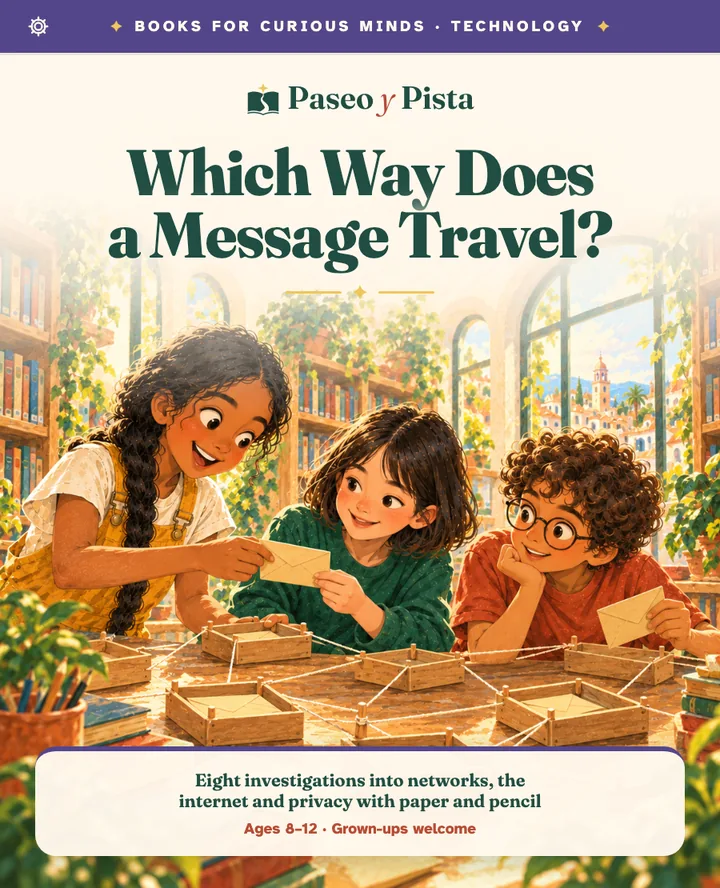
You learn to: Follow a message through a network and protect your data
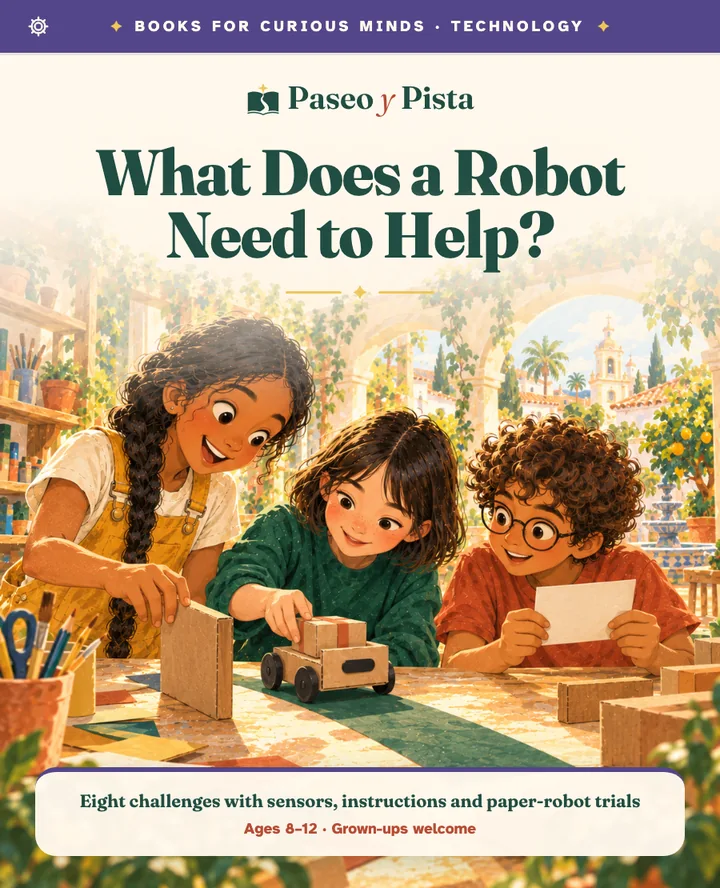
You learn to: Design a robot with sensors and fair tests
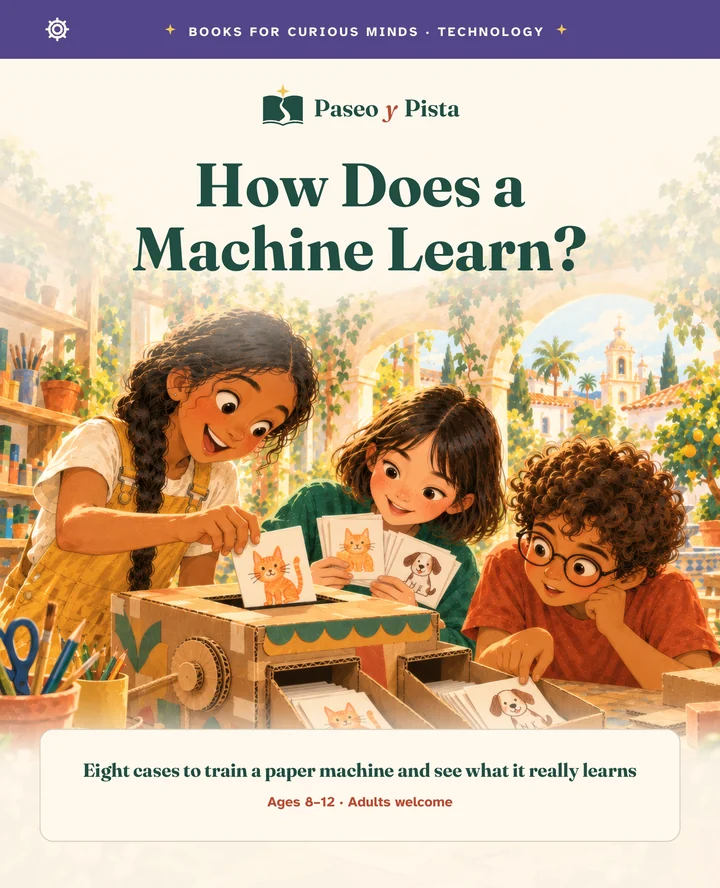
You learn to: Understand what training data is
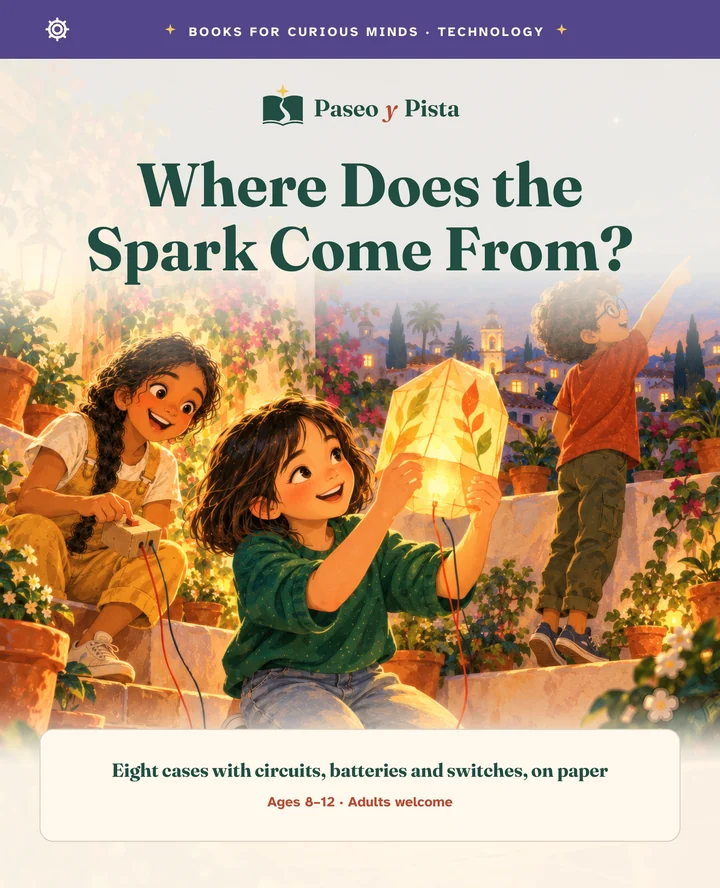
You learn to: Read and draw a simple circuit
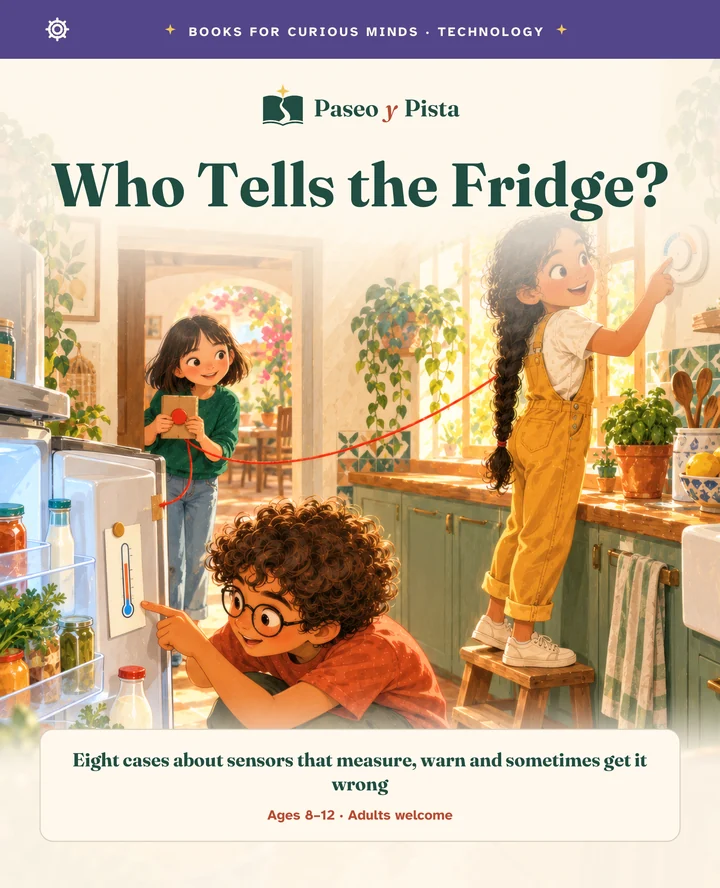
You learn to: Know what each sensor measures
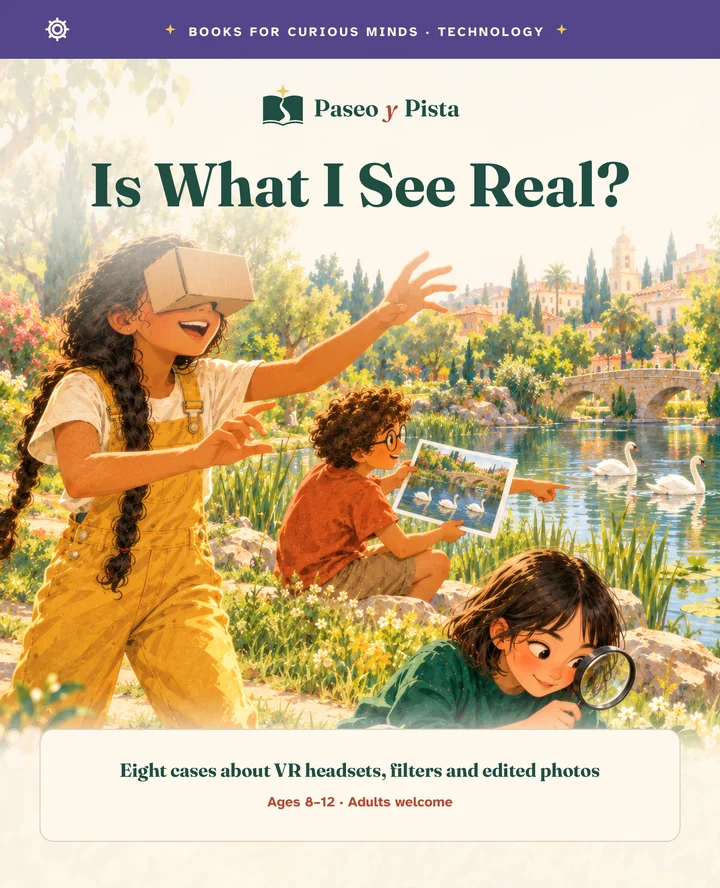
You learn to: Tell virtual from augmented reality
No. Everything is pencil and paper: children understand how technology works without using a screen.
Ages 8 to 12, with an adult at the start.
Yes: the cases work on the same ideas from another angle and help children explain them in their own words.
Yes, in two books: when an AI gets it right or wrong, and how it learns from the examples we give it.
Yes, every book has a Spanish and an English edition.
Have another question? Write to us at contact@paseoypista.com and we'll reply.
Games for the street, books for curious minds and stories to read together.
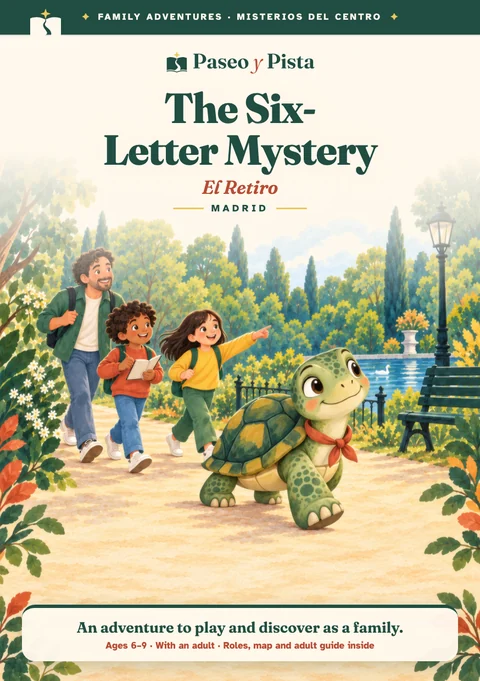
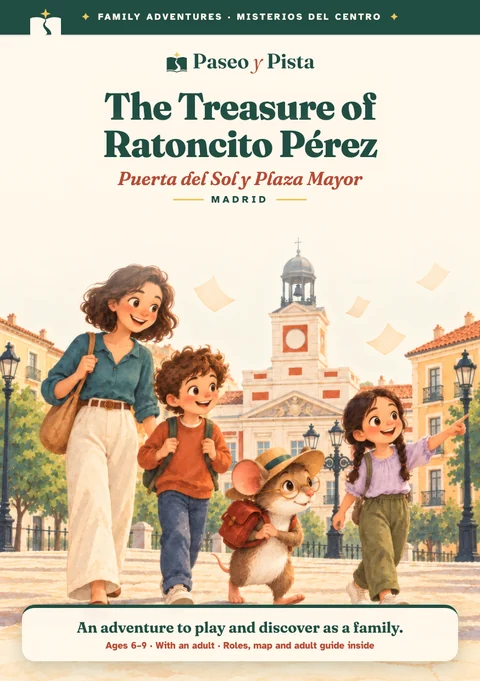
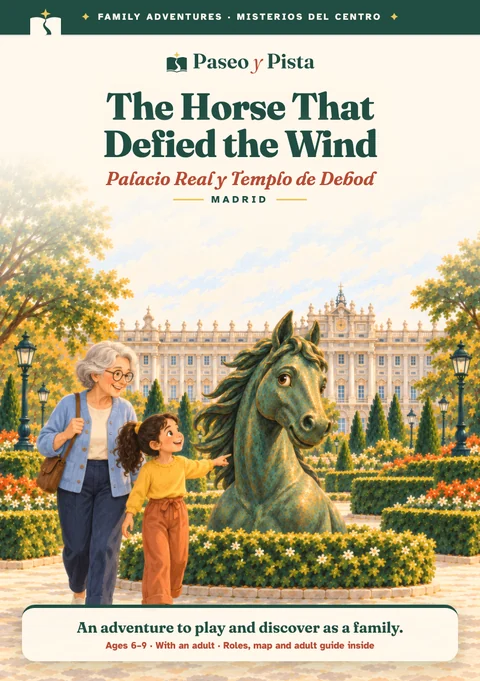 Mysteries to solve on foot7 cities · 4 adventures in each
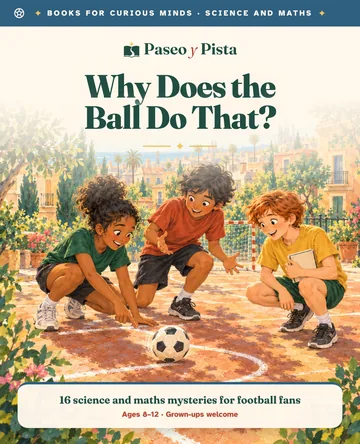
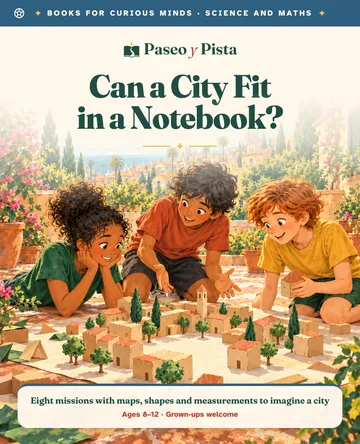
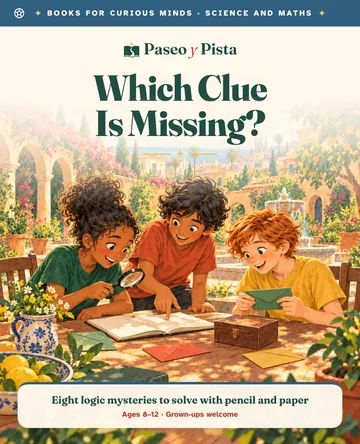 Physics and maths hiding in the things you love.4 books · See the series →
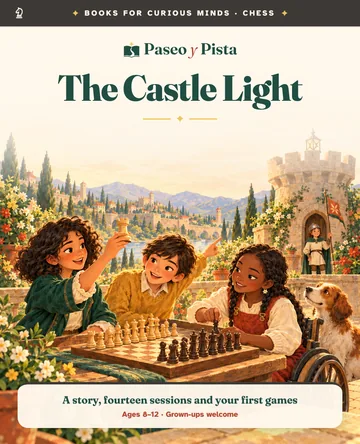
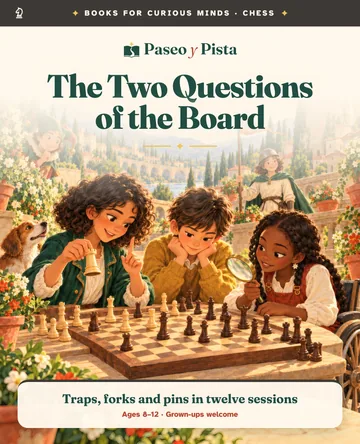
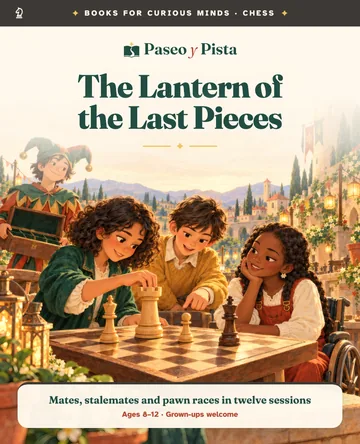 Learn chess by playing, from your first game to making plans.4 books · See the series →
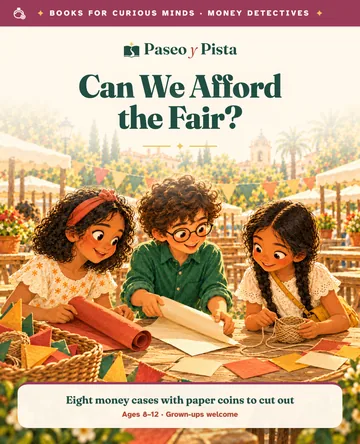
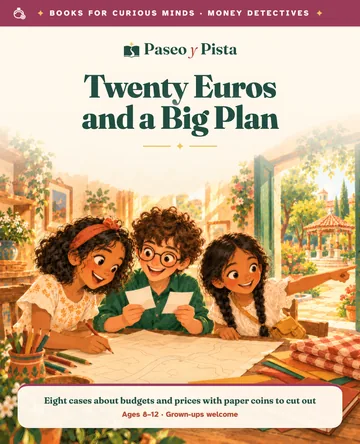
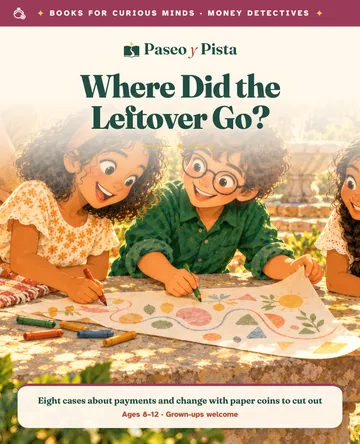 Mysteries that make sense of money.10 books · See the series →
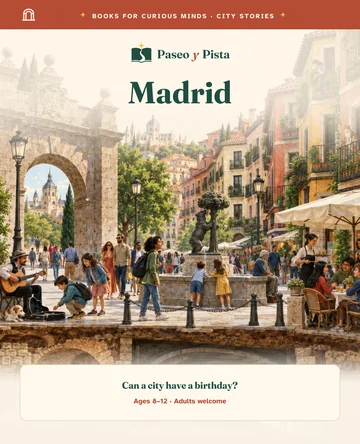
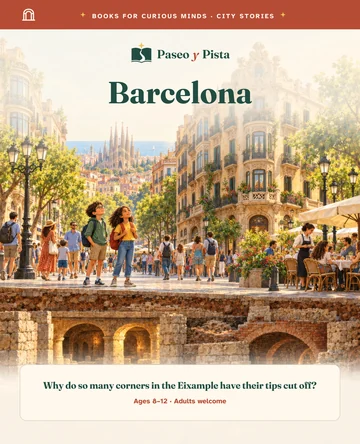
 Why a city is the way it is: streets, water, decisions and people.4 books · See the series →
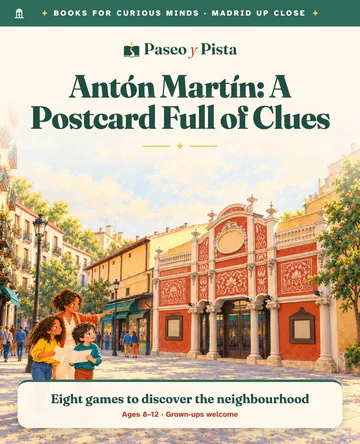
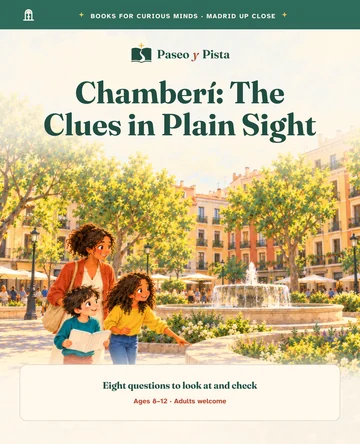
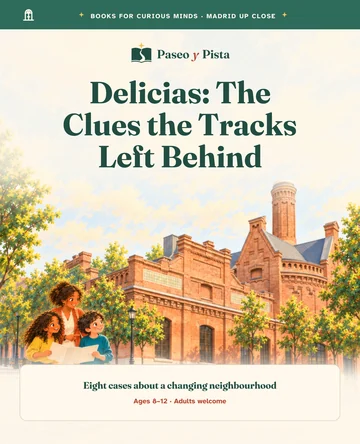 One Madrid neighbourhood, eight ways to look closely.5 books · See the series →
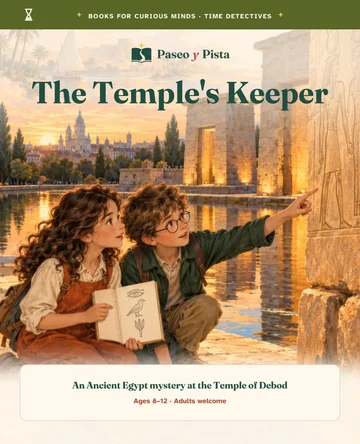
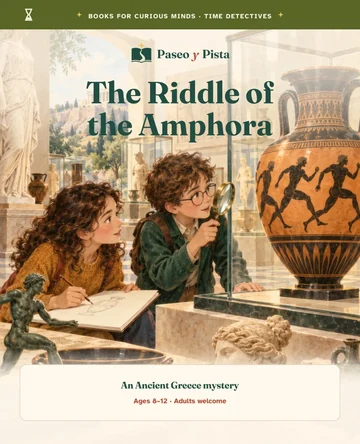
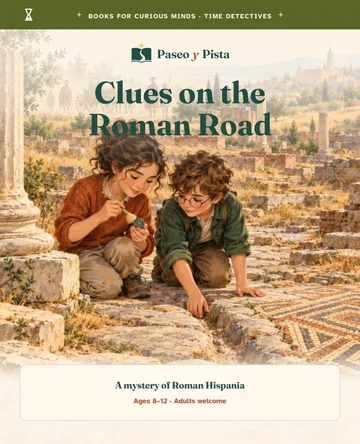 Egypt, Greece, Rome and Madrid: history, solved like a case.6 books · See the series →

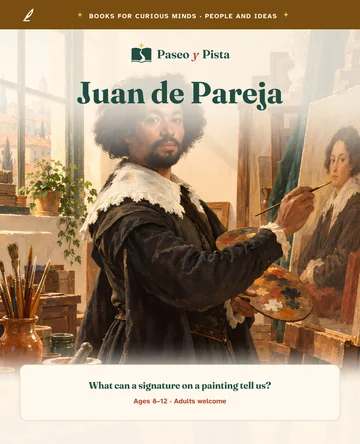
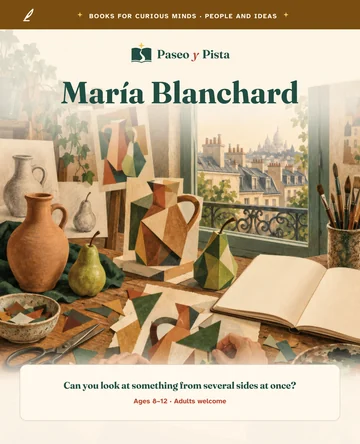 People from Spain who looked at the world differently, and the ideas they left us.4 books · See the series →
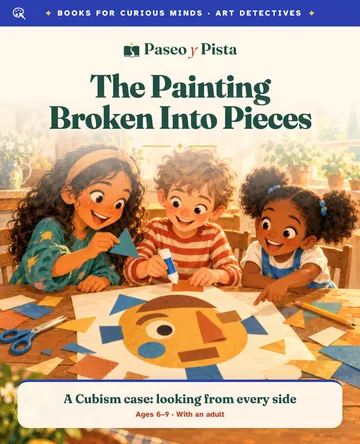
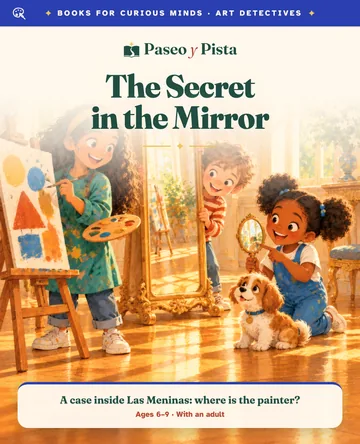
 Mysteries for looking closely at paintings.6 books · See the series →
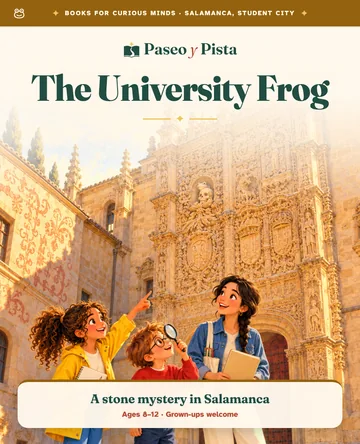
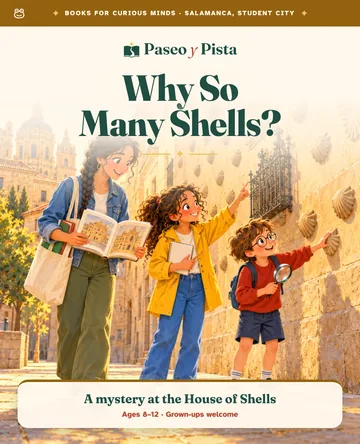
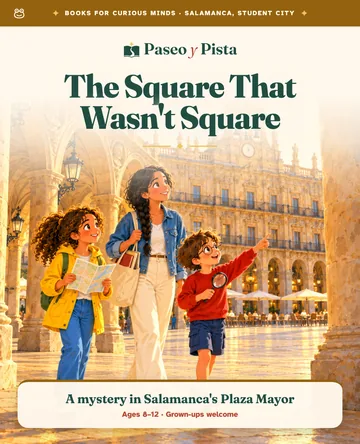 Eight centuries of students and a city full of clues.5 books · See the series →
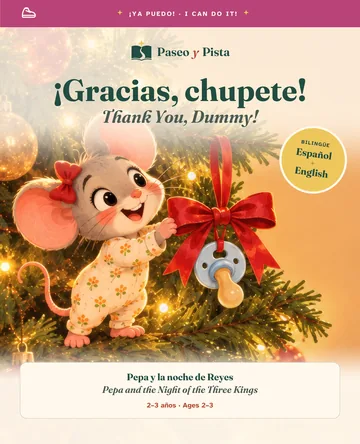
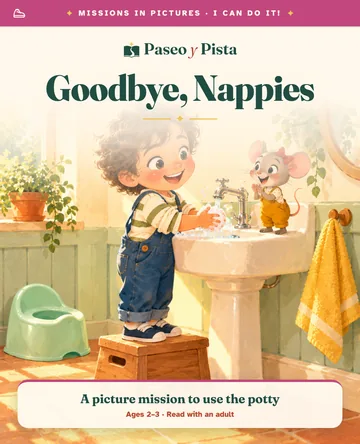
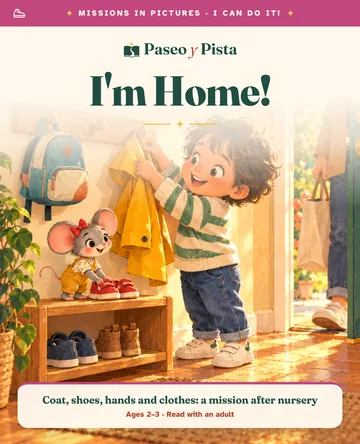 Picture missions for the big steps of ages 2 and 3.3 books · See the series →
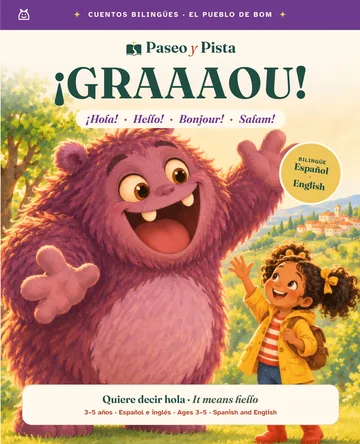
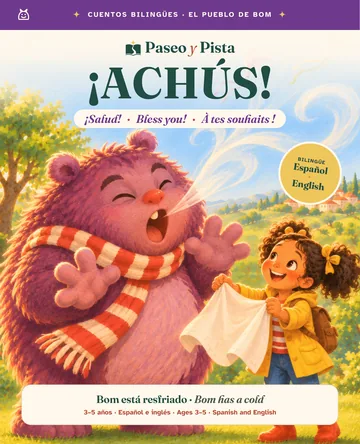
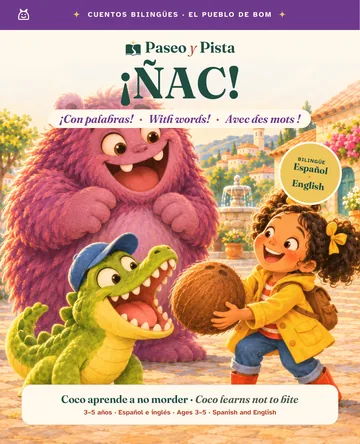 Bilingual Spanish–English stories for ages 3 to 5.7 books · See the series →
 Little mysteries to share16 stories · 7 cities
Paseo y Pista makes paper games, books and stories for learning through play: curious, hands-on and away from screens.