
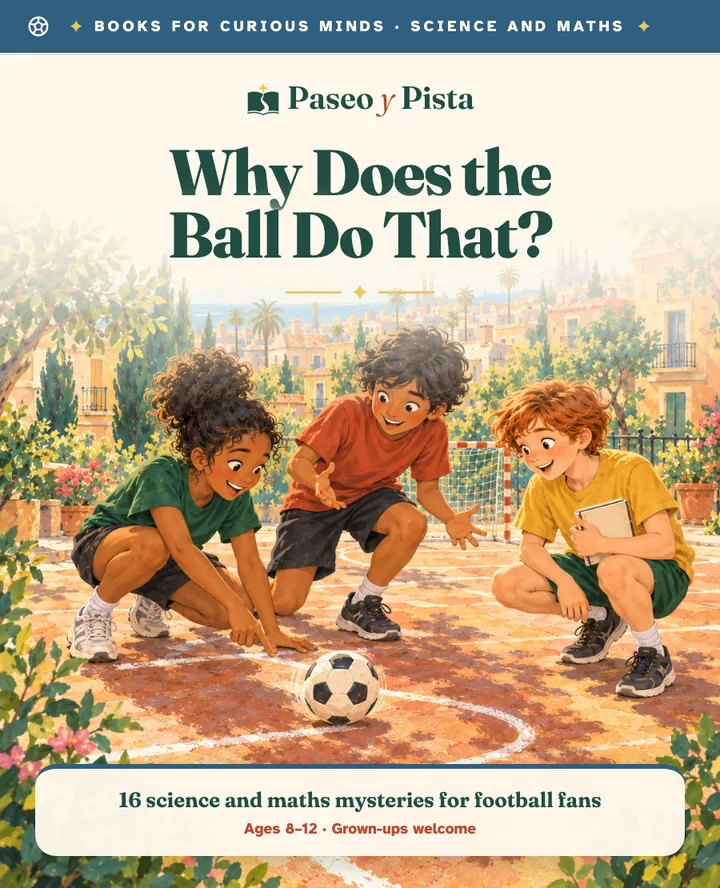
Why Does the Ball Do That?
You learn to: Use numbers to explain why a ball bounces, rolls and curves
- 8–12 years
- ES · EN
- Sports physics

Books for curious minds · Ages 8–12 · 4 books
Physics and maths hiding in the things you love.
Football, shortcuts, shadows and spin: the physics and maths are already in the things you love. Each case starts with a scene and a prediction, then lets you test it on paper. No need to know teams or kick hard: curiosity and a pencil are enough.
See the books16 science and maths mysteries for football fans
Why Does the Ball Do That? 1 of 4 · See the book
At school, children learn sums, measures and formulas. Using them to explain something real (why a ball bounces, how tall a tree is, which clue is missing) gets much less practice.
Each book is a set of cases: a scene to predict, evidence in drawings and tables, a test to try at home and explained answers. You tick an answer, check it and talk it over as a family.
The topics come from what children already love: football, maps, logic mysteries and the bugs in the park. The maths turns up when it's needed to solve the case.
Learning outside the classroom: what school starts carries on at home and on the street.
You learn to: Use numbers to explain why a ball bounces, rolls and curves
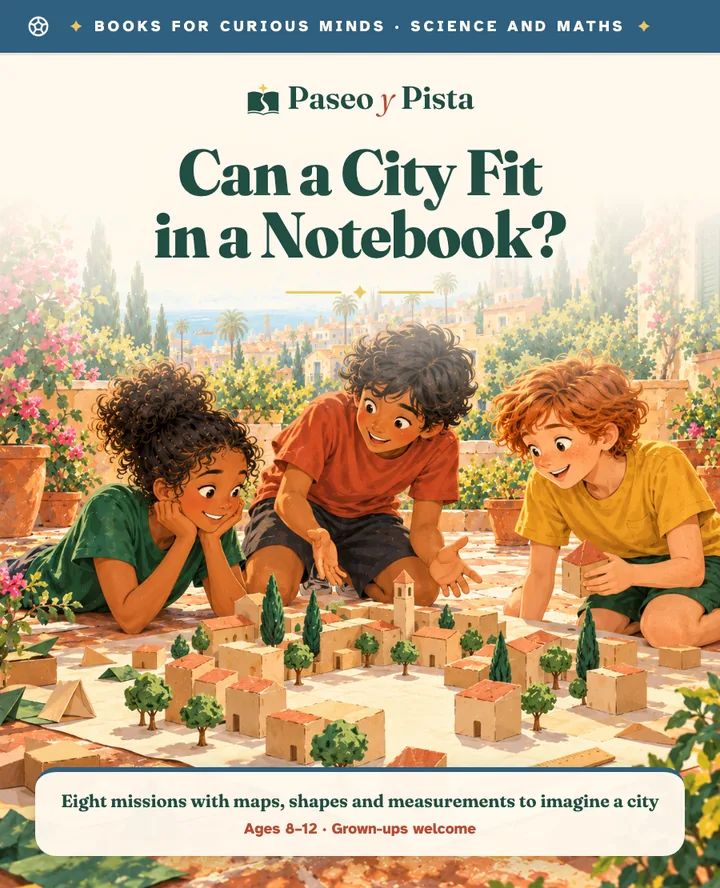
You learn to: Read plans, scales, areas and symmetry
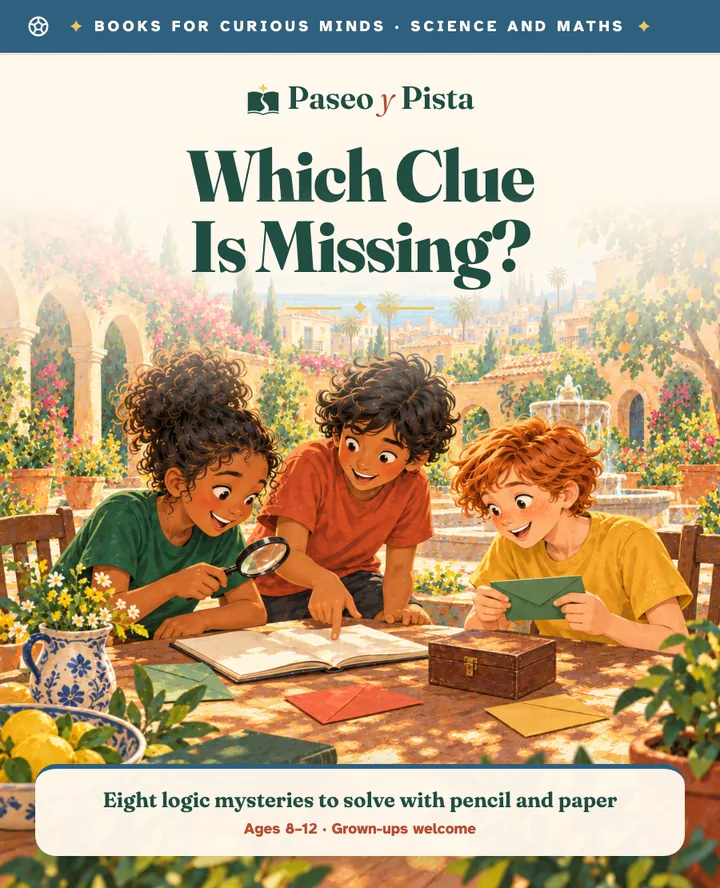
You learn to: Rule out, put in order and know when a clue is missing
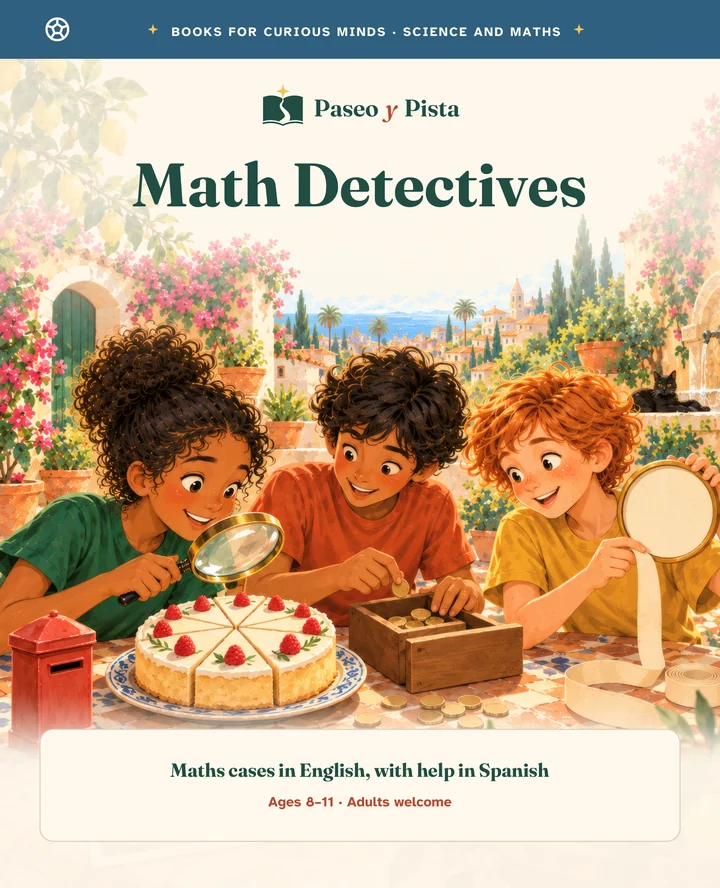
You learn to: Say times tables, fractions and measures in English
No. Each case starts with a scene and a guess, and the sums come step by step. The answers are explained at the end of each case.
Ages 8 to 12. Younger readers enjoy it more with an adult alongside.
They are optional and simple: paper, a pencil, a ruler or a light ball, always with an adult nearby.
Any order: every book and every case stands on its own.
Yes, every book has a Spanish and an English edition, and «Math Detectives» is made for practising maths in English.
Have another question? Write to us at contact@paseoypista.com and we'll reply.
Games for the street, books for curious minds and stories to read together.
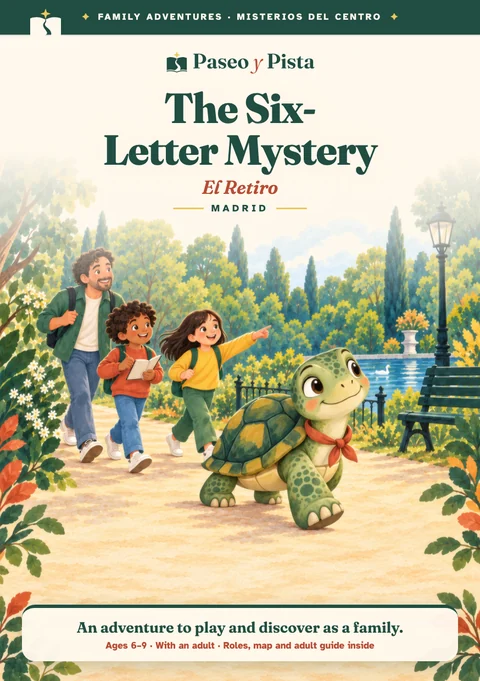
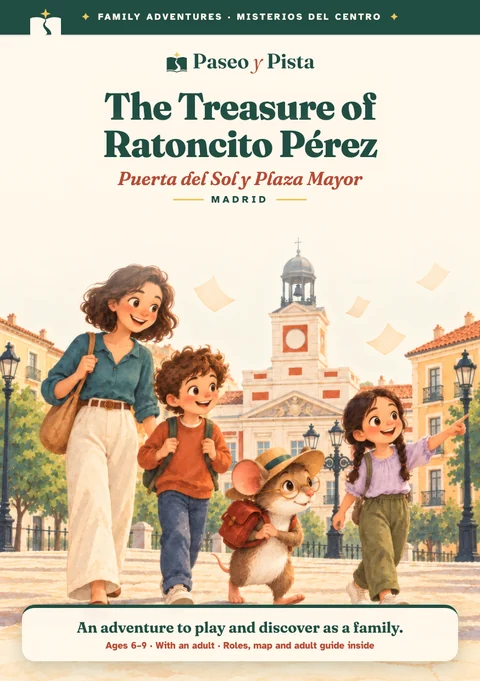
 Mysteries to solve on foot7 cities · 4 adventures in each
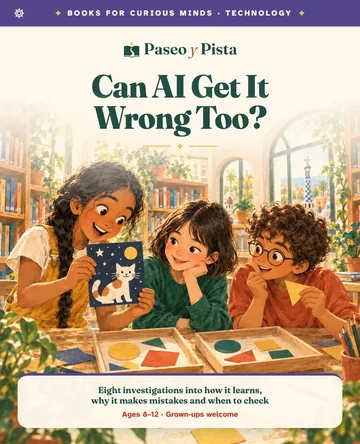
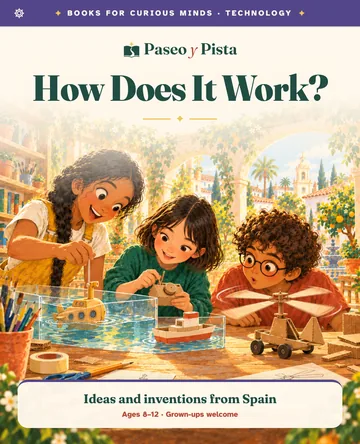
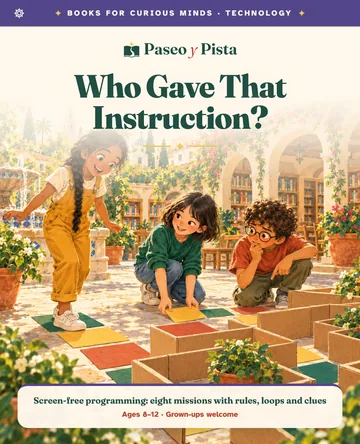 How the machines, ideas and systems we use every day really work.9 books · See the series →
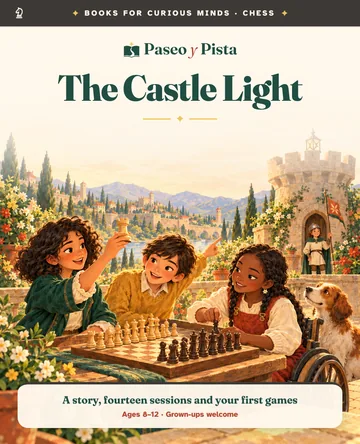
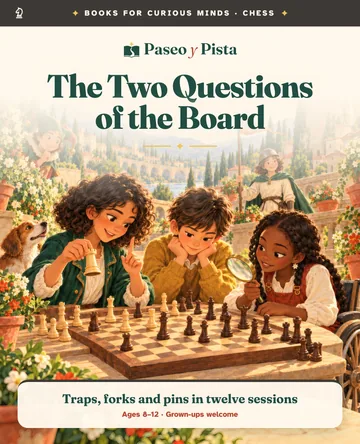
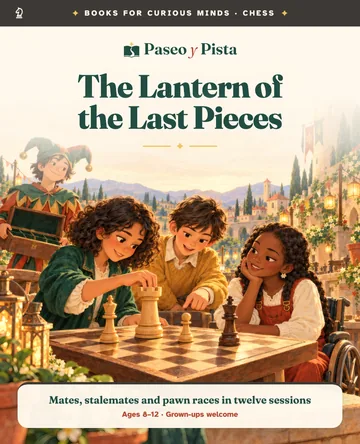 Learn chess by playing, from your first game to making plans.4 books · See the series →
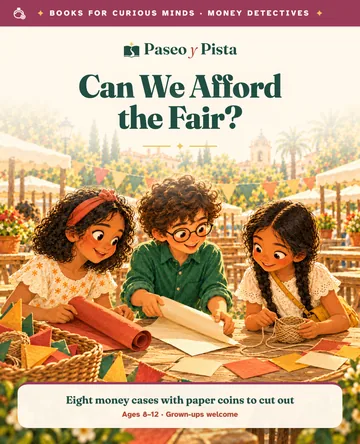
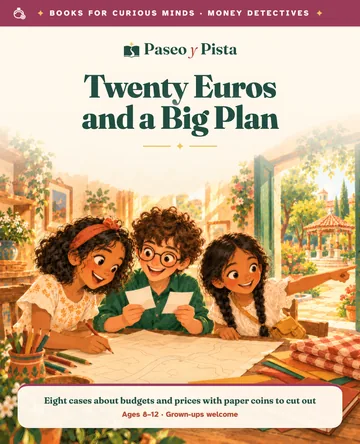
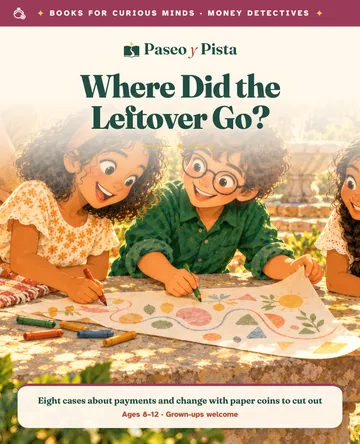 Mysteries that make sense of money.10 books · See the series →


 Why a city is the way it is: streets, water, decisions and people.4 books · See the series →
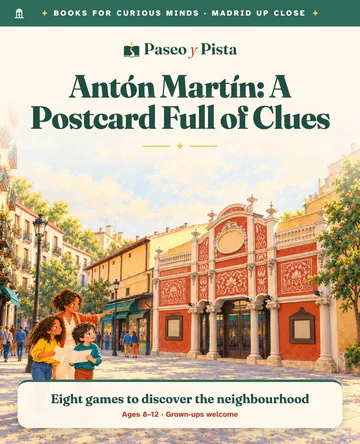
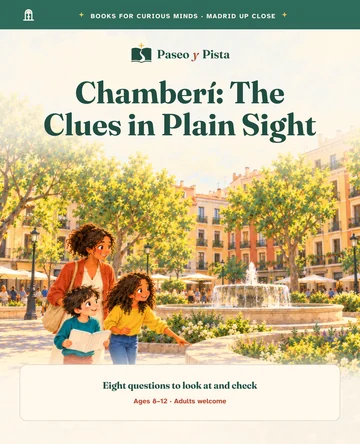
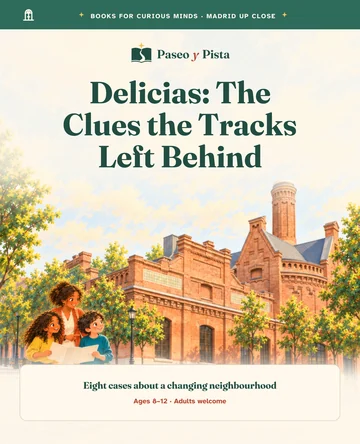 One Madrid neighbourhood, eight ways to look closely.5 books · See the series →
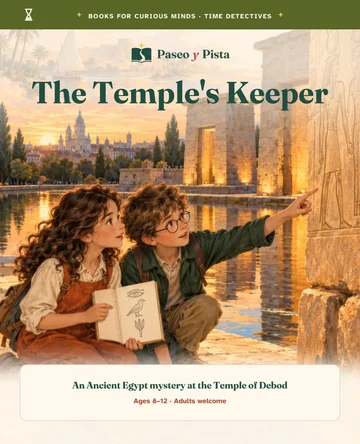
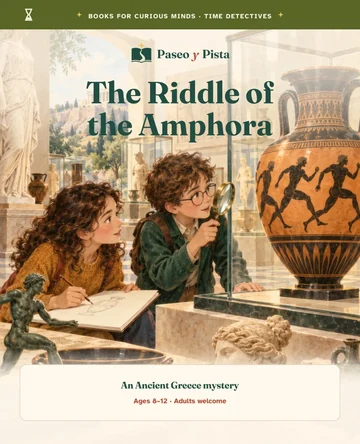
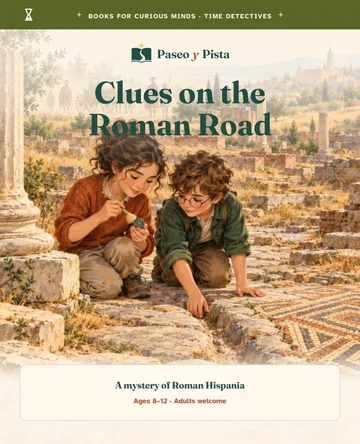 Egypt, Greece, Rome and Madrid: history, solved like a case.6 books · See the series →


 People from Spain who looked at the world differently, and the ideas they left us.4 books · See the series →
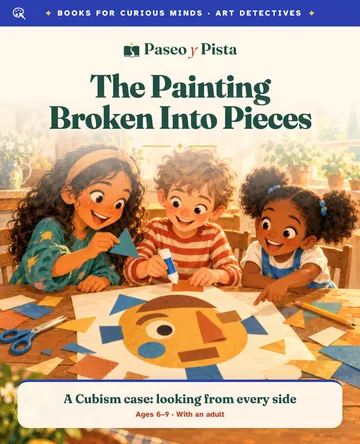
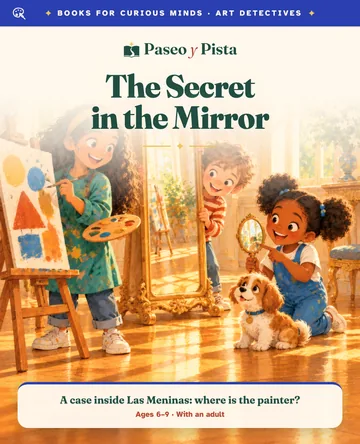
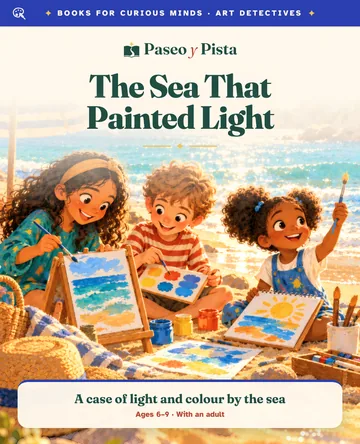 Mysteries for looking closely at paintings.6 books · See the series →
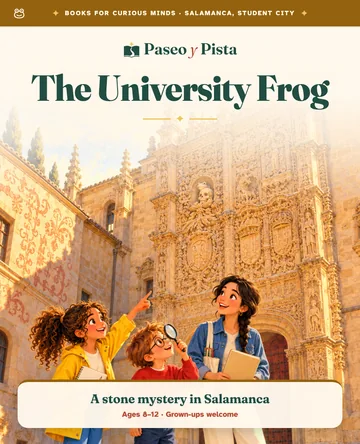
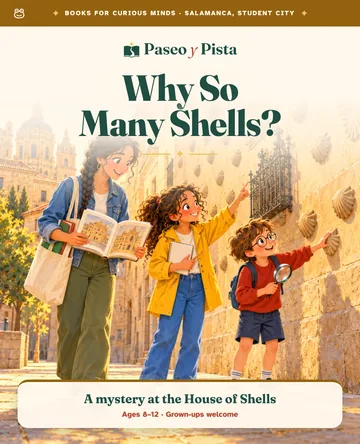
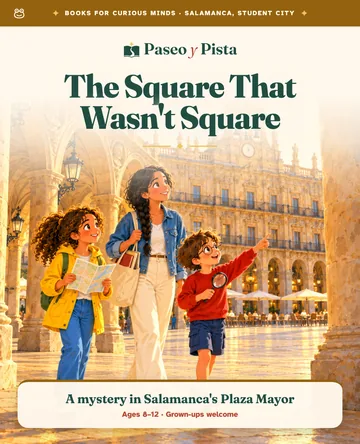 Eight centuries of students and a city full of clues.5 books · See the series →
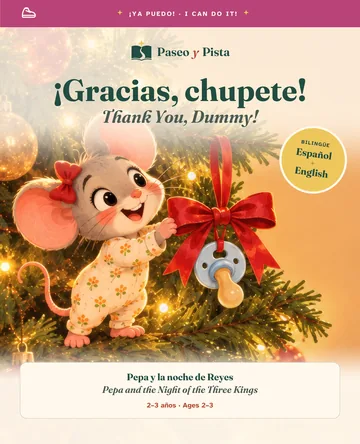
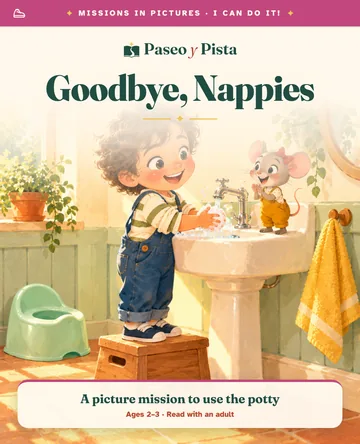
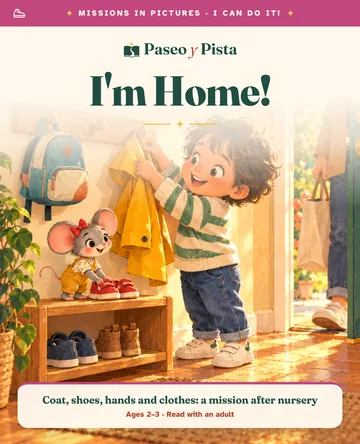 Picture missions for the big steps of ages 2 and 3.3 books · See the series →
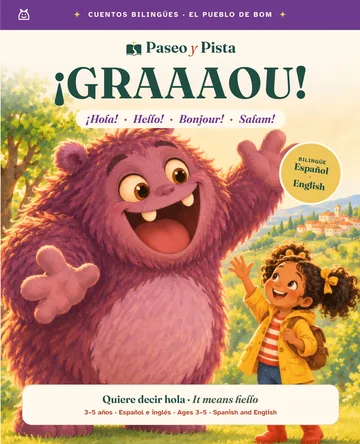
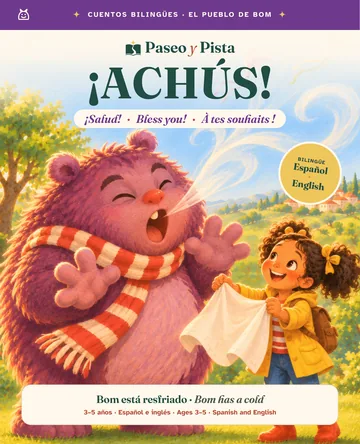
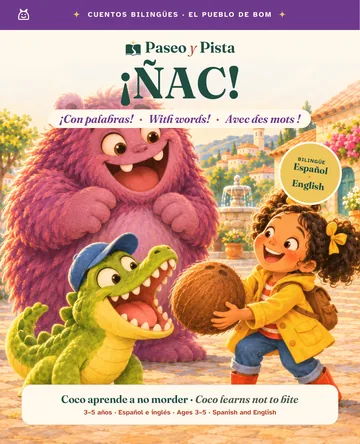 Bilingual Spanish–English stories for ages 3 to 5.7 books · See the series →
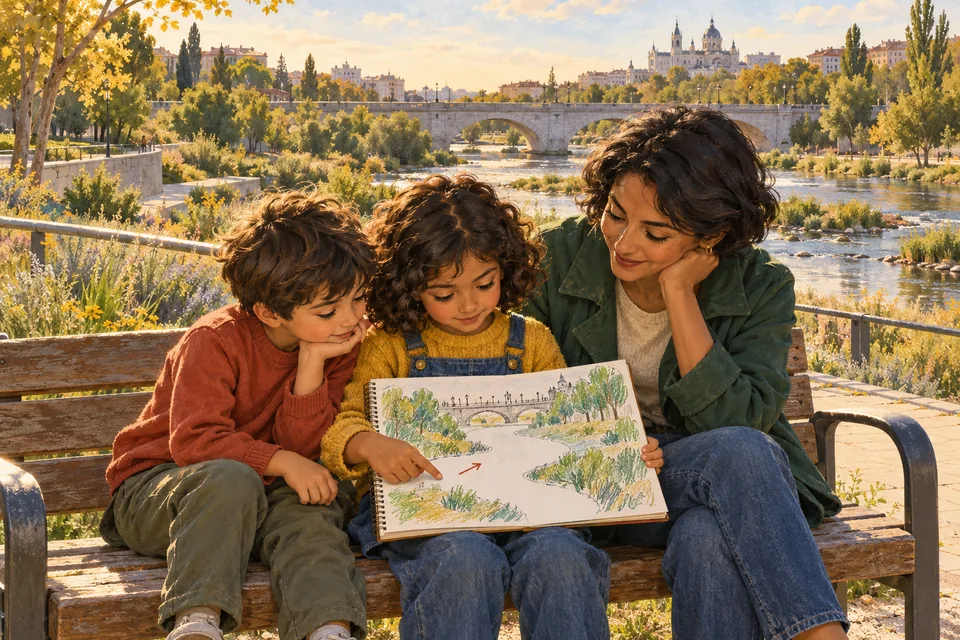 Little mysteries to share16 stories · 7 cities
Paseo y Pista makes paper games, books and stories for learning through play: curious, hands-on and away from screens.