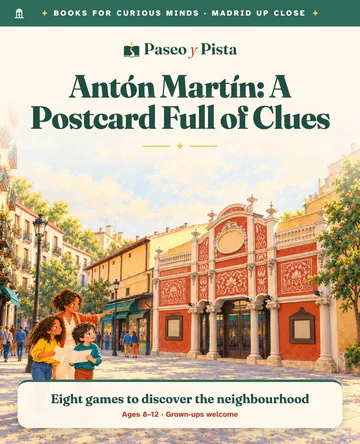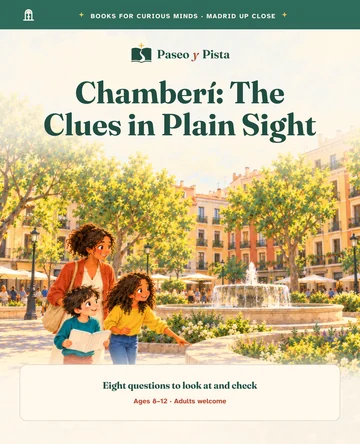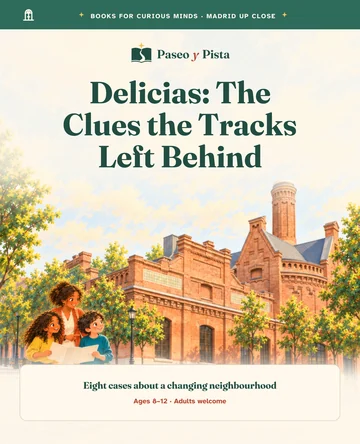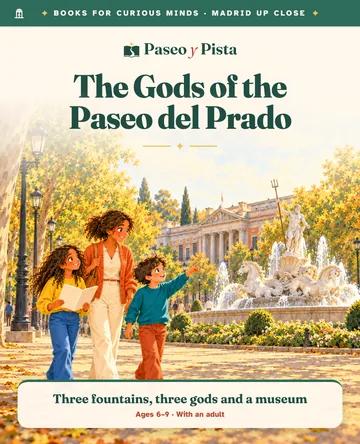
Madrid up close · 8–12 years
Carabanchel: An Atlas of Clues
Eight investigations between Carabanchel Bajo and Vista Alegre
You learn to: Sort clues without mixing up guesses and facts
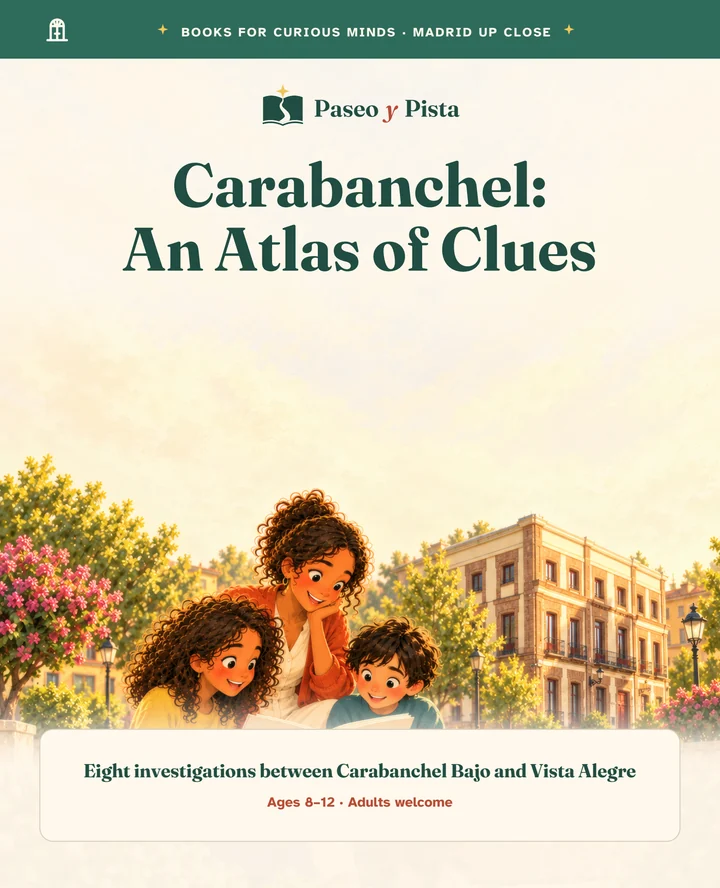
What does a clue let you claim? A pin in the wrong place sets off Lucía, Dani and Amina's atlas of Carabanchel, in Madrid.
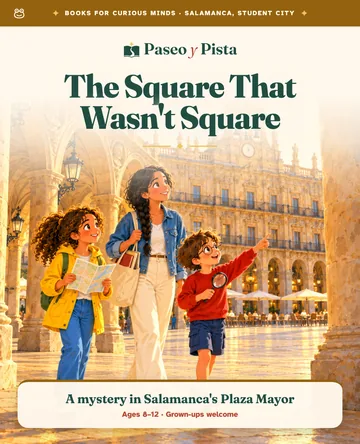
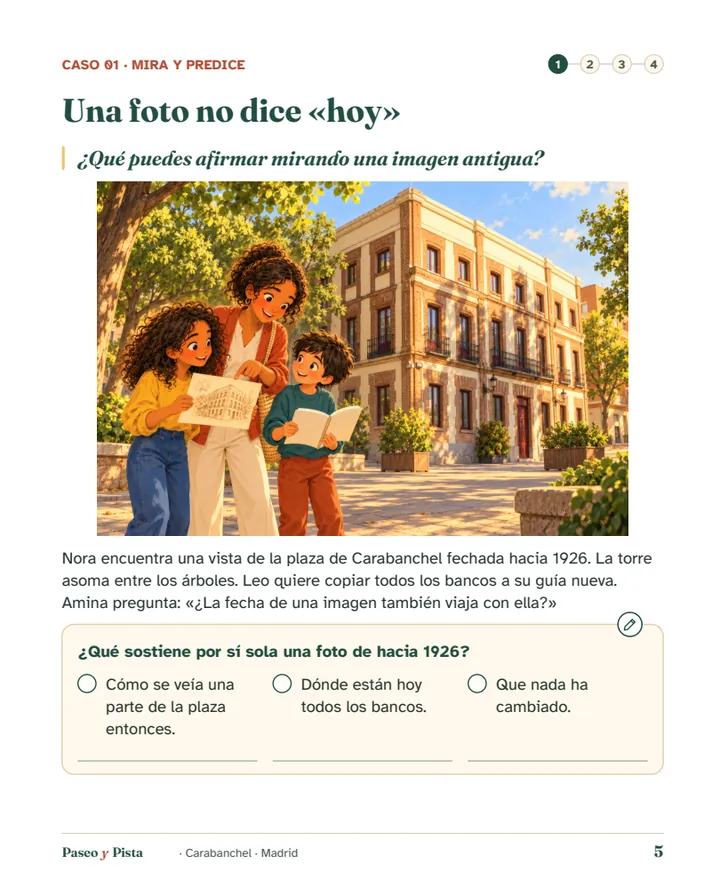
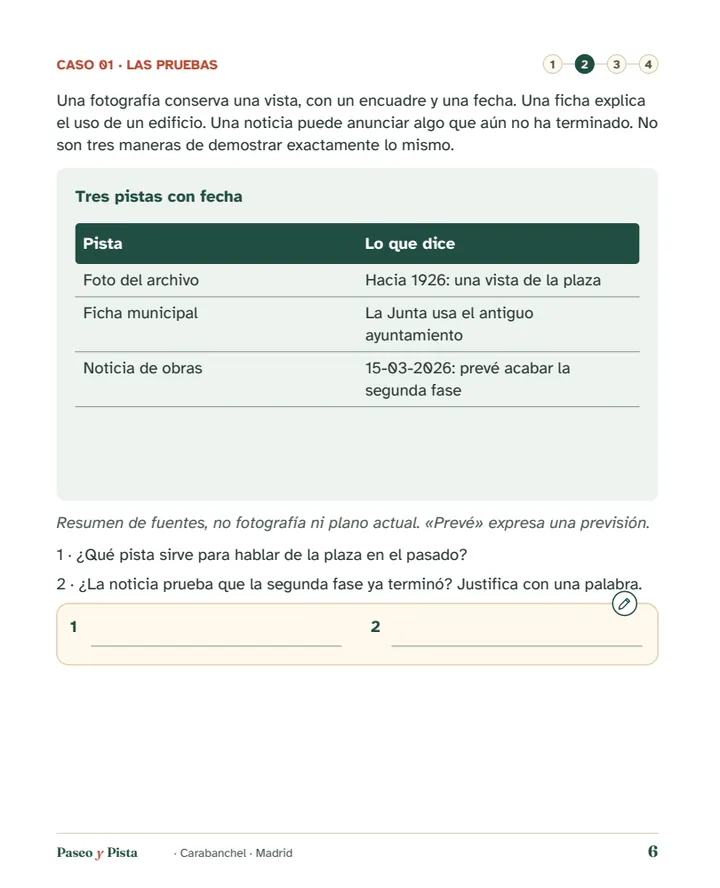
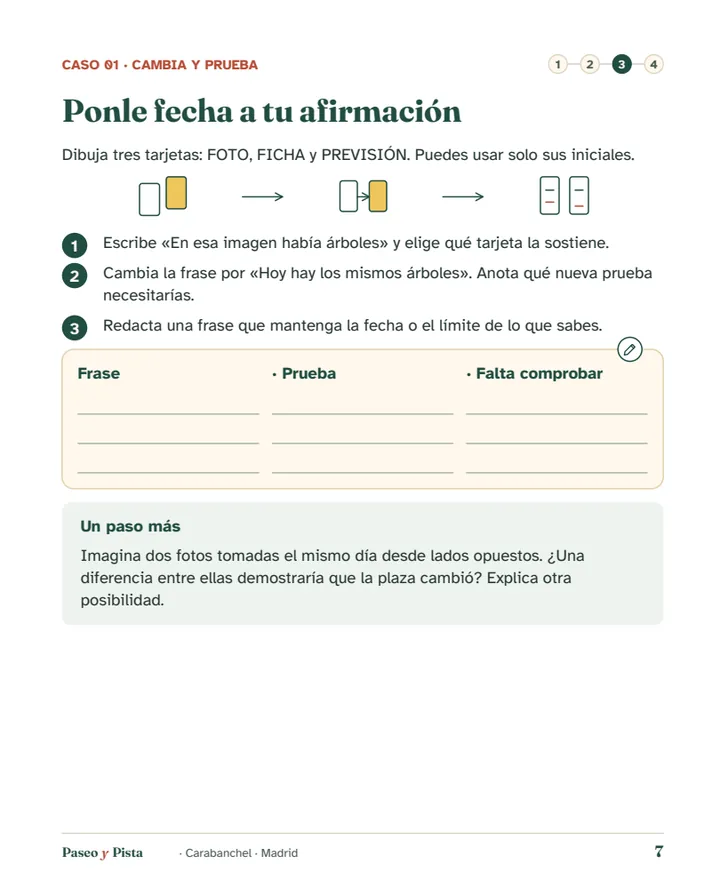
An old photo of the square, the garden at Finca de Vista Alegre, two places with the same name, the shelf numbers at La Chata library, the Colonia de la Prensa, a park in two parts and the Mudéjar chapel of Santa María la Antigua. Every case has four steps: look and predict, check the evidence, change something and test it, then read the answers. Everything works at home with a pencil and paper. For ages 8 to 12, adults welcome.
- Age
- 8–12 years, adults welcome
- Format
- Paperback, colour
- Language
- Spanish and English editions
- Subject
- Critical thinking
- Series
- Madrid up close
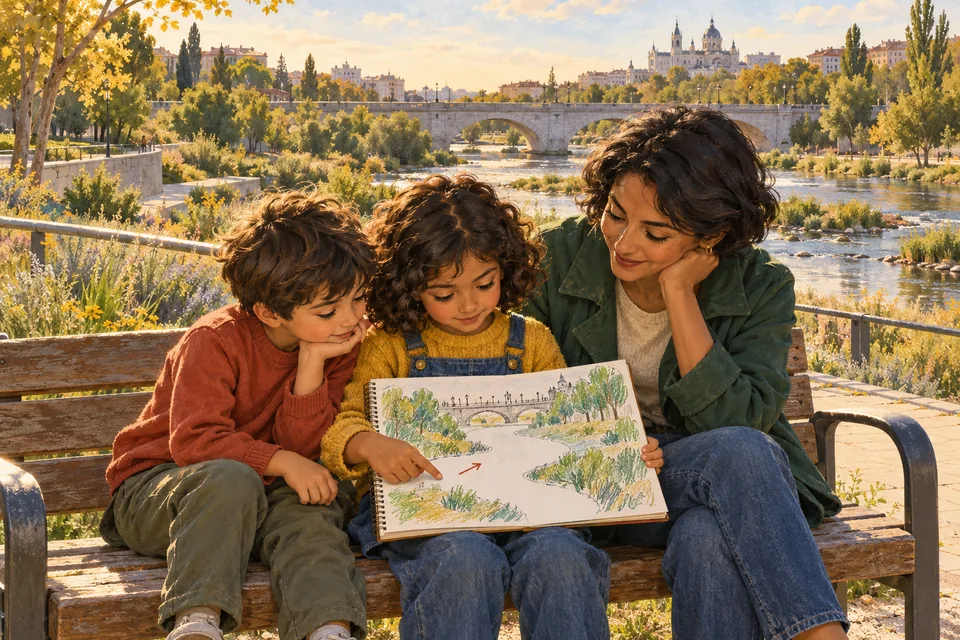
Look inside
Why this book
An old photo, two places with the same name and the numbers on a library's book spines: Carabanchel asks children to look more closely and sort their clues.
- Date what a photo tells you
- Put numbers in order like decimals
- Tell a fact from an opinion
What they learn as they play
Learning outside the classroom: what school starts carries on at home and on the street.
- Looking closely at the neighbourhood Noticing what you see every day.
- What you see and what you know Telling a clue from proof.
- Reading maps and tables Plans, timelines and data.
- Researching with sources Knowing where each fact comes from.
Questions from parents
Do we have to go to the neighbourhood to use the book?
No. Every case is solved at home with the pictures, the diagrams and a pencil. Visiting the places is an extra, always with an adult.
What age is it for?
The neighbourhood books are for ages 8 to 12, adults welcome. "The Gods of the Paseo del Prado" is a walk for ages 6 to 9 with an adult.
Have another question? Write to us at contact@paseoypista.com and we'll reply.
What is inside
- 8 illustrated four-page investigations about real places
- Documentary clues and original models with room for your ideas
- Paper activities, reasoned answers, a glossary and sources
- Spanish edition; every activity works at home and outings are optional
How it works
Questions, clues and investigations with paper and pencil.
- 1Look and predictEvery case opens with an illustrated scene and a question.
- 2Check the cluesData, diagrams and real sources to reason with.
- 3Explain your ideaWorked answers to compare how you thought it through.