Time Detectives · 8–12 years
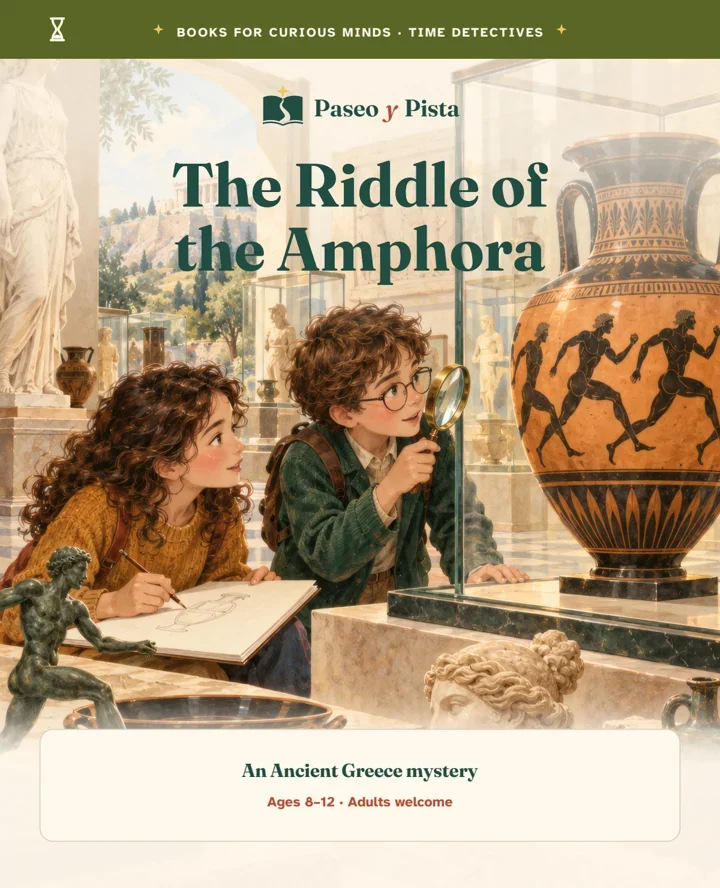
The Riddle of the Amphora
An Ancient Greece mystery
You learn to: Reading a Greek vase and the Greek alphabet
What does a 2,500-year-old vase tell us?
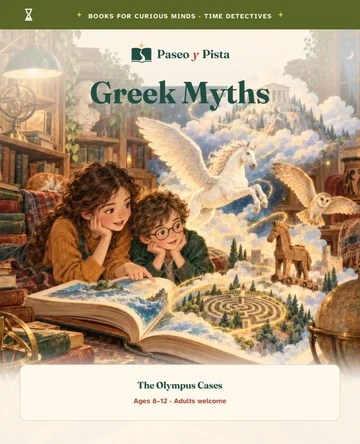
Athens, the first votes, the Greek alphabet and the Olympic Games, read on the vases of the Archaeological Museum.
- Age
- 8–12 years, adults welcome
- Format
- Paperback, colour
- Language
- Spanish and English editions
- Subject
- Ancient Greece
- Series
- Time Detectives
Why this book
Ancient Greece is a compulsory primary topic in England. Madrid's Archaeological Museum holds vases that show how Greeks lived: children read them as evidence.
- Explain what voting meant in Athens
- Read the Greek alphabet
- Interpret scenes on a vase
What they learn as they play
Learning outside the classroom: what school starts carries on at home and on the street.
- Ordering time Dates, periods and timelines.
- Reading evidence Objects, paintings and documents as clues.
- Telling facts from legends What we know and what is just told.
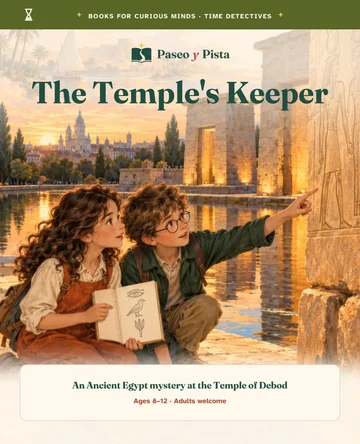
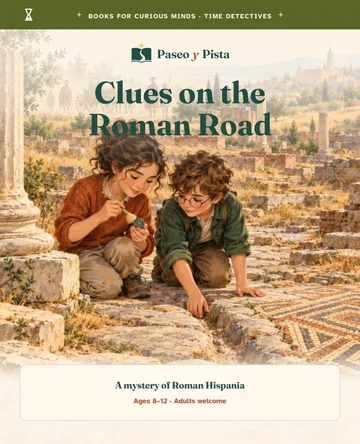
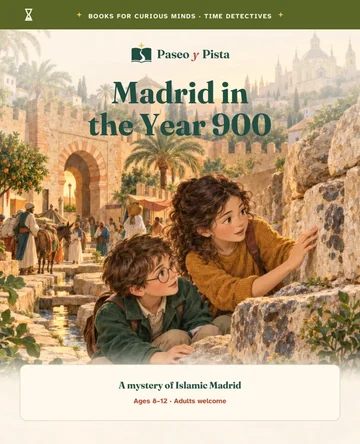
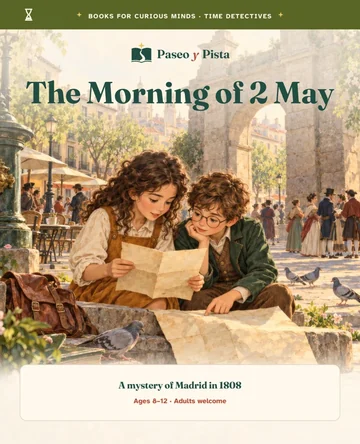
- Meeting other cultures Egypt, Greece, Rome and al-Andalus, from Madrid.
Questions from parents
Do we have to visit the museum?
No. Each case is solved at home; visiting the place is an extra.
Does it suit a British or international school?
Yes. The topics follow what children in England study between 7 and 11.
Have another question? Write to us at contact@paseoypista.com and we'll reply.
What is inside
- A complete case to solve as a family
- Clues, activities and challenges with paper and pencil
- Explained answers and a section for the adult
How it works
Questions, clues and investigations with paper and pencil.
- 1Look and predictEvery case opens with an illustrated scene and a question.
- 2Check the cluesData, diagrams and real sources to reason with.
- 3Explain your ideaWorked answers to compare how you thought it through.