
"Today he bit another child." It's one of the most worrying things to hear at nursery pick-up. The good news: biting is very common between one and three years old, and it almost always fades once words arrive, around age 3 or 4 (KidsHealth, Nemours).
This guide is for any adult caring for a child who bites, or one who has been bitten: mums and dads, grandparents, babysitters or nursery staff. It isn't medical advice; if in doubt, ask your paediatrician.
Why children bite
- They don't have the words yet for "that's mine", "you're bothering me" or "I'm tired". The bite comes before the sentence.
- They explore with their mouths, especially when teeth are coming through.
- They want to see what happens. A bite gets a huge reaction, and that's interesting.
- They feel overwhelmed in big groups, with noise, or when toys and attention have to be shared, as at nursery.
Right after a bite
- The child who was bitten comes first. Comfort them, look at the bite and wash it with soap and water.
- Then one short, calm sentence to the child who bit: "No biting. Biting hurts." No lectures, no shouting.
- Take them out of the game for a moment so they can calm down with an adult nearby.
- Never bite back "so they know how it feels". It teaches exactly the opposite.
How to prevent it
- Name the feeling. "You're angry because he wanted your car." Little by little, the word replaces the bite.
- Teach what to do instead: say "stop!", stamp their feet, squeeze a cushion or ask an adult for help.
- Notice when it happens: before meals? When tired? With lots of children around? There's often a moment that repeats.
- Celebrate when they get it right: "You said 'that's mine' with words. Well done!"
- Talk to the nursery and use the same words at home and in class. Consistency helps more than any punishment.
A game for putting anger into words
The angry crocodile. One person plays the crocodile and opens their mouth wide: "Snap!" The others show other ways to be angry without biting: stamp three times, count to three and say "I'm angry!". The crocodile tries it and, if they manage, everyone claps. Then swap roles.
When to ask for advice
Talk to your paediatrician if the biting carries on past age 3 or 4, gets worse instead of better, or comes with other behaviour that worries you.
Coco, the crocodile who bit
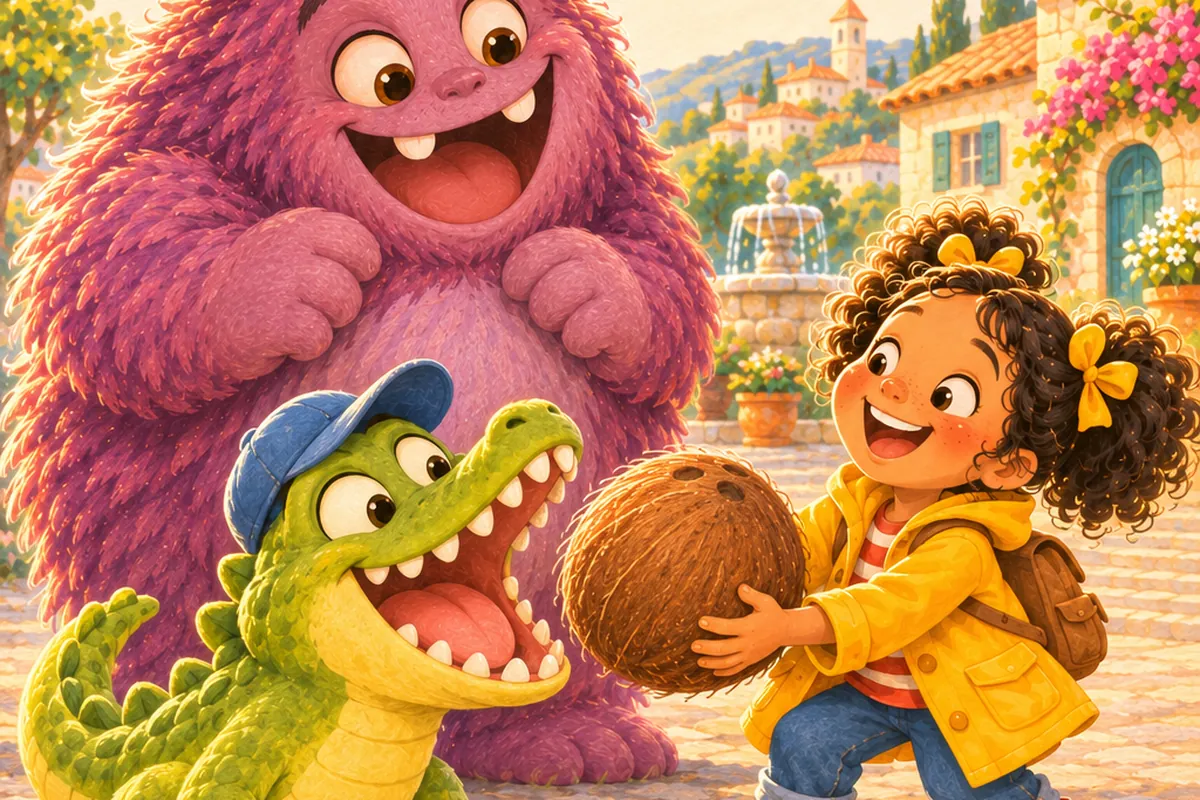
In "SNAP!", a story from the "Bom's Village" series, Coco, a little crocodile, bites when he's angry and ends up alone. Lala teaches him to stamp his feet, count to three and say it with words. It's a bilingual story, in Spanish and English, for children aged 3 to 5, to read with an adult. See the "Bom's Village" series.


