City stories · 8–12 years
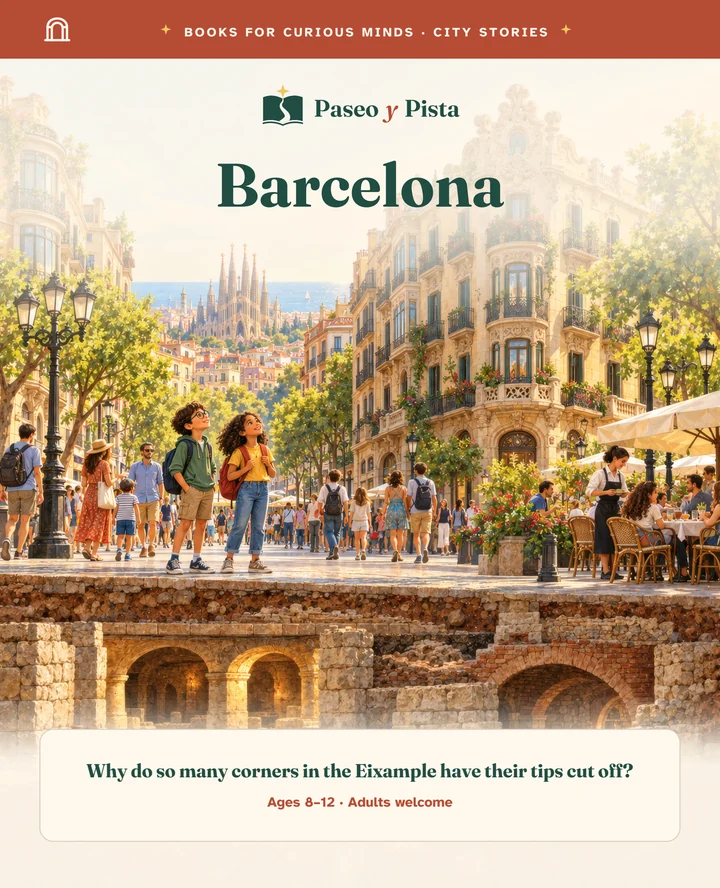
Barcelona
Why do so many corners in the Eixample have their tips cut off?
You learn to: Explain why the Eixample's corners are cut off
Why do so many corners in the Eixample have their tips cut off? Who tested a submarine in the harbour in 1859? Which neighbourhood dug its own shelter?
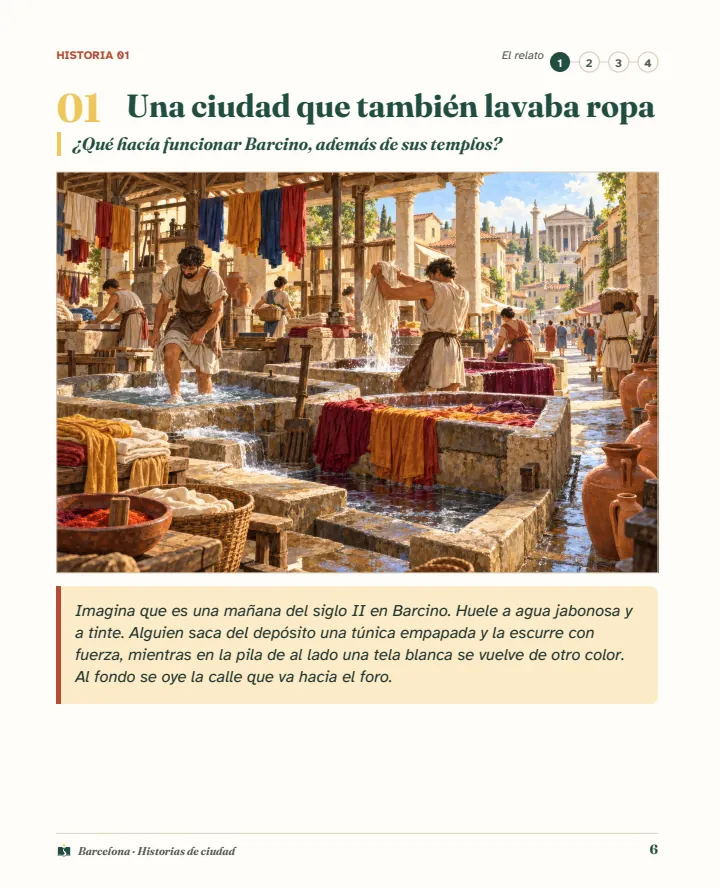
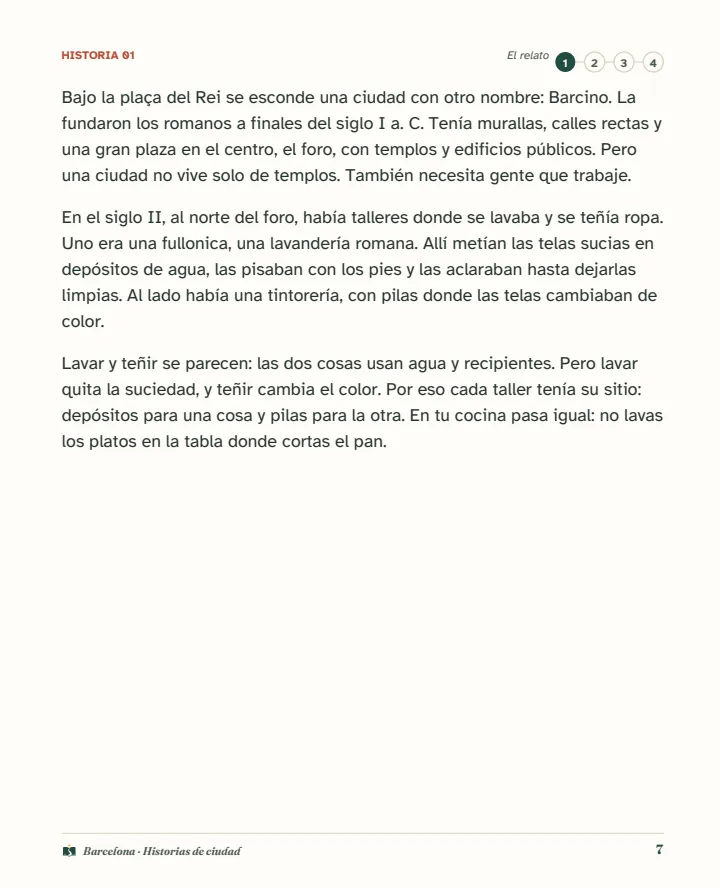
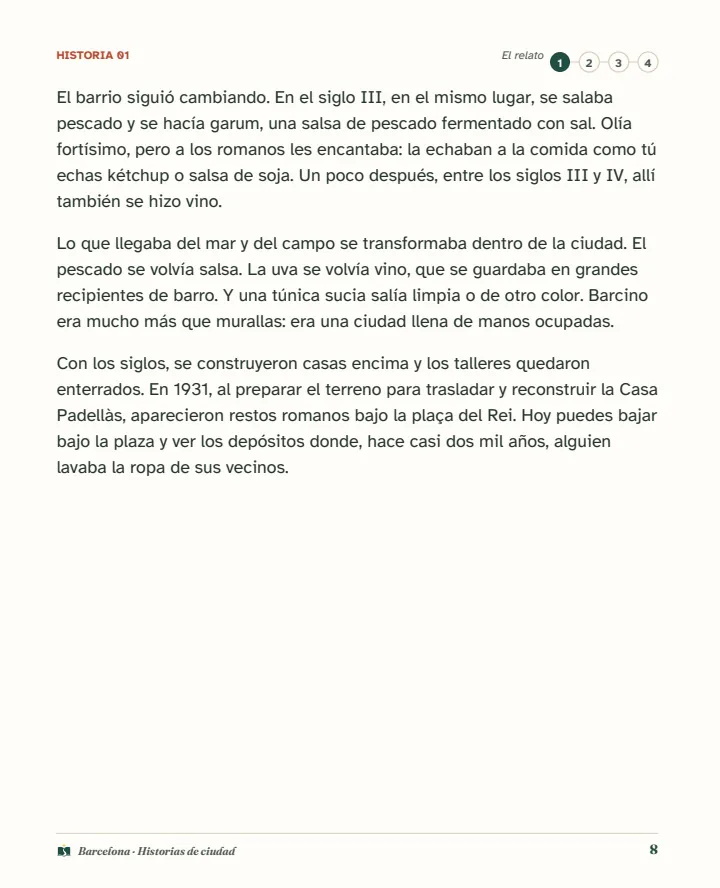
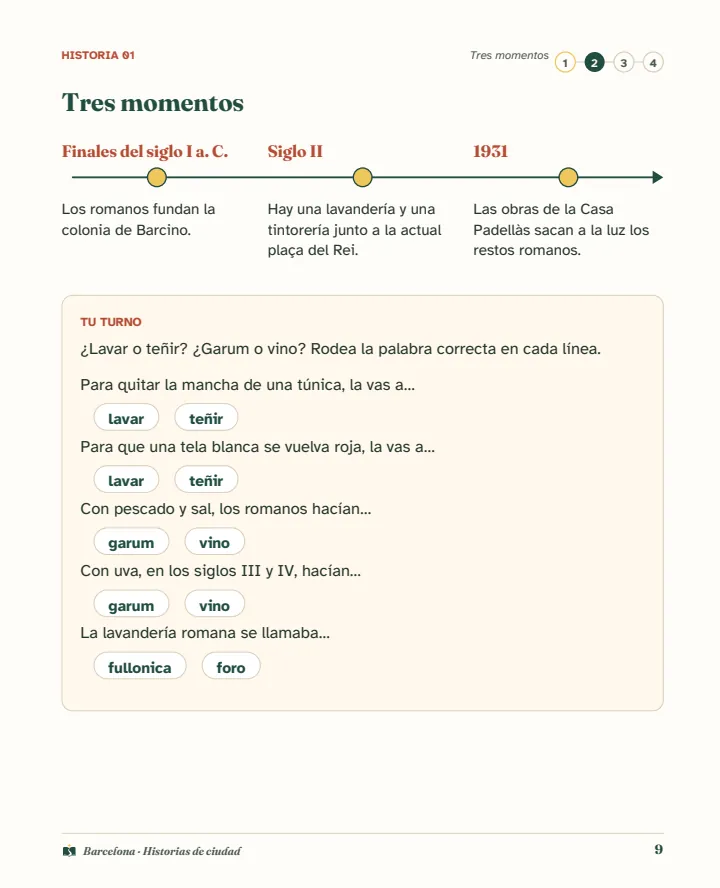
Twelve true stories of Barcelona: the Roman laundry of Barcino, the Call, the Drassanes shipyard, the Cerdà plan, Monturiol's Ictíneo, Dolors Aleu, Park Güell, the Orfeó Català, the People's Olympiad and Refugi 307. Each story opens with a painting and a scene to imagine, then tells what the sources say. For readers aged 8 to 12, adults welcome. Read at home, no screens and no walk needed. Spanish place names are kept, with short explanations.
- Age
- 8–12 years, adults welcome
- Format
- Paperback, colour
- Language
- Spanish and English editions
- Subject
- Urban planning
- Series
- City stories
Look inside
Why this book
A Roman laundry, a wooden submarine and a shelter dug by a whole neighbourhood. Twelve true stories explain how Barcelona made room to grow, and one page shows how to say the Catalan names.
- Reading a city map
- Saying Catalan place names
- Linking a decision to what it led to
What they learn as they play
Learning outside the classroom: what school starts carries on at home and on the street.
- Understanding the city Why streets, water and neighbourhoods are the way they are.
- Ordering time Timelines and what changed.
- Telling facts from legends What is documented and what is just told.
- Thinking about people Who decided, and who it affected.
Questions from parents
Do we need to visit the city to read it?
No. It is read at home, with no walk. If you do visit, each story has something to look for in the street.
What age is it for?
Ages 8 to 12. Younger readers enjoy it most reading with an adult.
Have another question? Write to us at contact@paseoypista.com and we'll reply.
What is inside
- 12 stories of Barcelona
- Timelines and vocabulary in every chapter
- Questions to talk about, with guidance
- Sources at the end
How it works
Questions, clues and investigations with paper and pencil.
- 1Look and predictEvery case opens with an illustrated scene and a question.
- 2Check the cluesData, diagrams and real sources to reason with.
- 3Explain your ideaWorked answers to compare how you thought it through.