City stories · 8–12 years
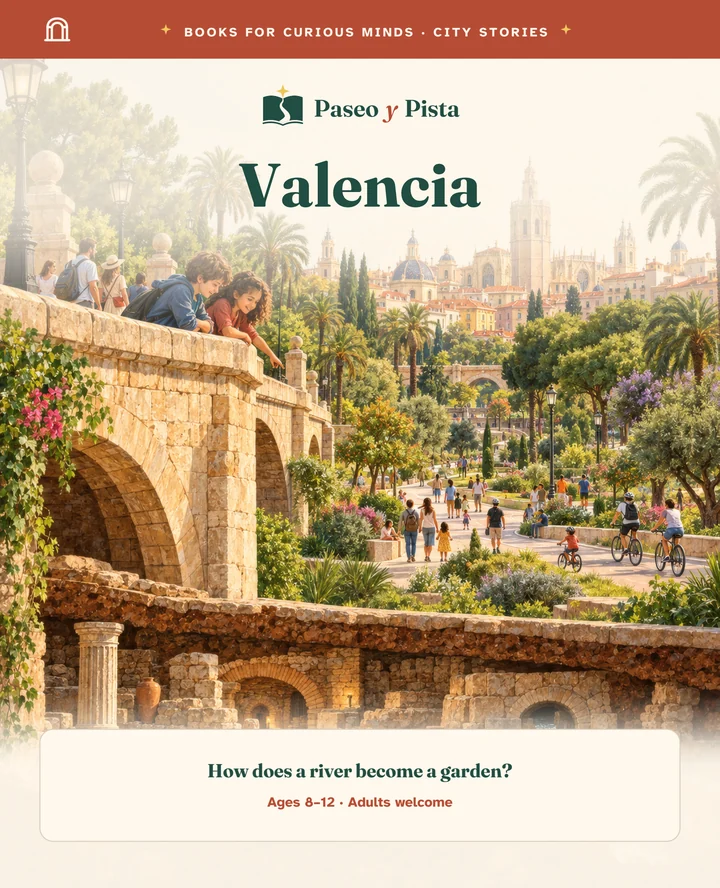
Valencia
How does a river become a garden?
You learn to: Tell how a river became a garden
How does a river become a garden? Which court meets every Thursday at the cathedral door? Which figure of a falla is saved from the fire?
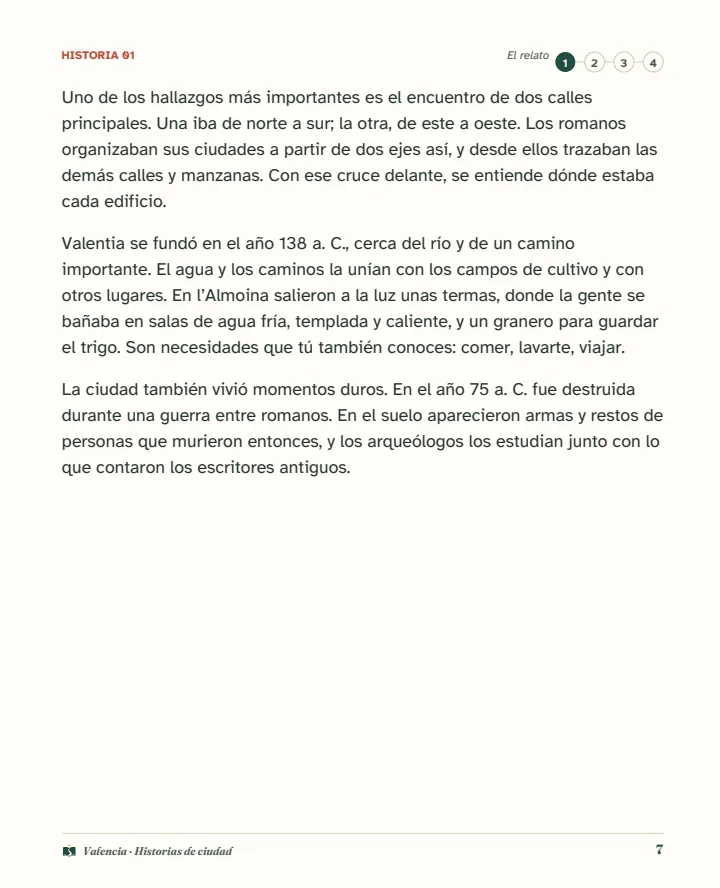
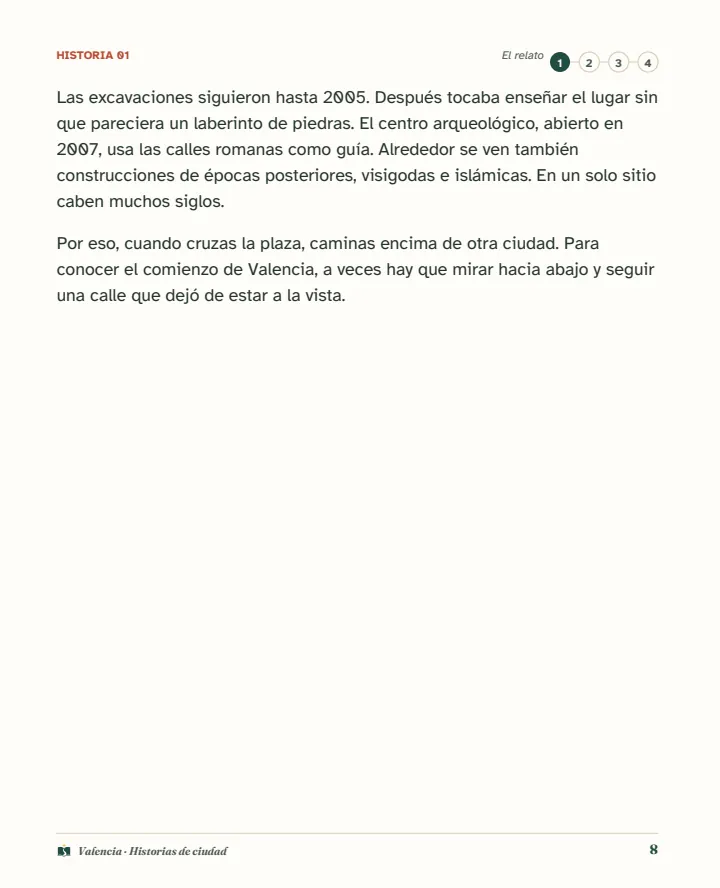
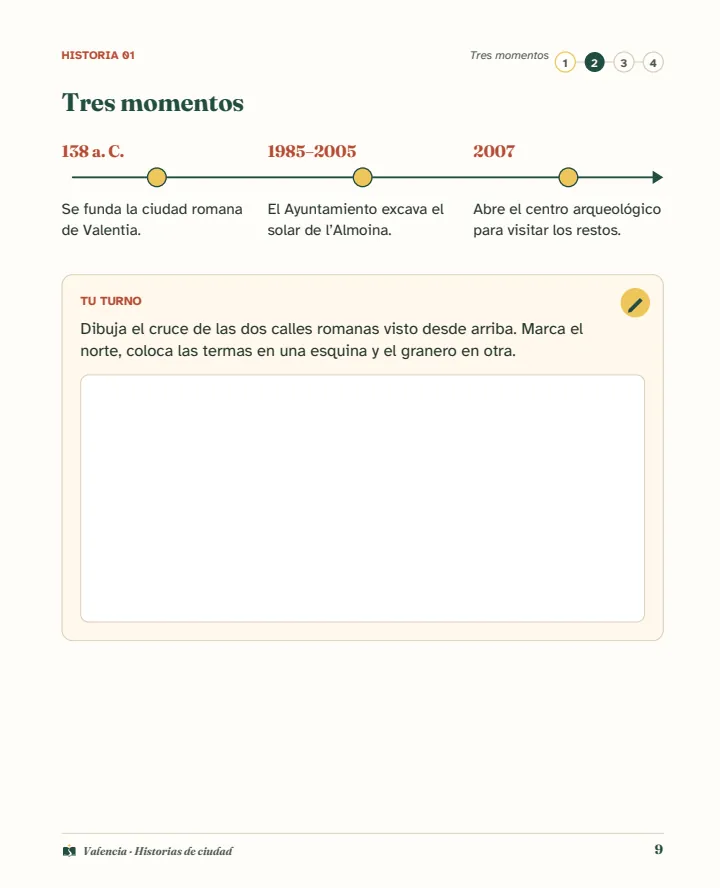
Twelve true stories of Valencia: the Roman street under l'Almoina, the Water Tribunal, the Silk Exchange, the first printing press, the pardoned ninot, Manuela Solís, the Botanical Garden, the Turia, Mestalla and pilota at the Pelayo court. Each story opens with a painting and a scene to imagine, then tells what the sources say. For readers aged 8 to 12, adults welcome. Read at home, no screens and no walk needed. Spanish place names are kept, with short explanations.
- Age
- 8–12 years, adults welcome
- Format
- Paperback, colour
- Language
- Spanish and English editions
- Subject
- City history
- Series
- City stories
Look inside
Why this book
After the 1957 flood, Valencia moved its river and turned the old riverbed into a garden. Twelve stories, from the Water Tribunal to printing and pilota, show how the city decides and shares.
- Explaining a change on the map
- Acting out an agreement aloud
- Putting the steps of a long project in order
What they learn as they play
Learning outside the classroom: what school starts carries on at home and on the street.
- Understanding the city Why streets, water and neighbourhoods are the way they are.
- Ordering time Timelines and what changed.
- Telling facts from legends What is documented and what is just told.
- Thinking about people Who decided, and who it affected.
Questions from parents
Do we need to visit the city to read it?
No. It is read at home, with no walk. If you do visit, each story has something to look for in the street.
What age is it for?
Ages 8 to 12. Younger readers enjoy it most reading with an adult.
Have another question? Write to us at contact@paseoypista.com and we'll reply.
What is inside
- 12 stories of Valencia
- Timelines and vocabulary in every chapter
- Questions to talk about, with guidance
- Sources at the end
How it works
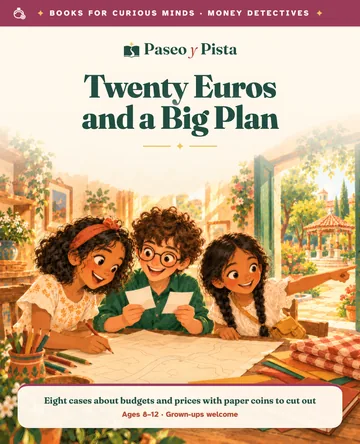
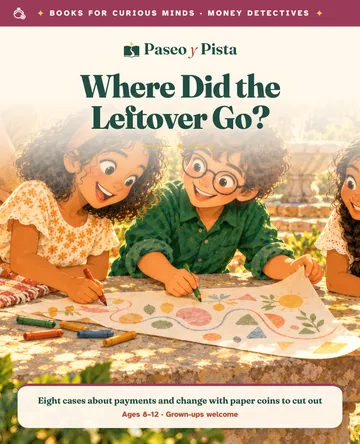
Questions, clues and investigations with paper and pencil.
- 1Look and predictEvery case opens with an illustrated scene and a question.
- 2Check the cluesData, diagrams and real sources to reason with.
- 3Explain your ideaWorked answers to compare how you thought it through.