Science and maths · 8–12 years
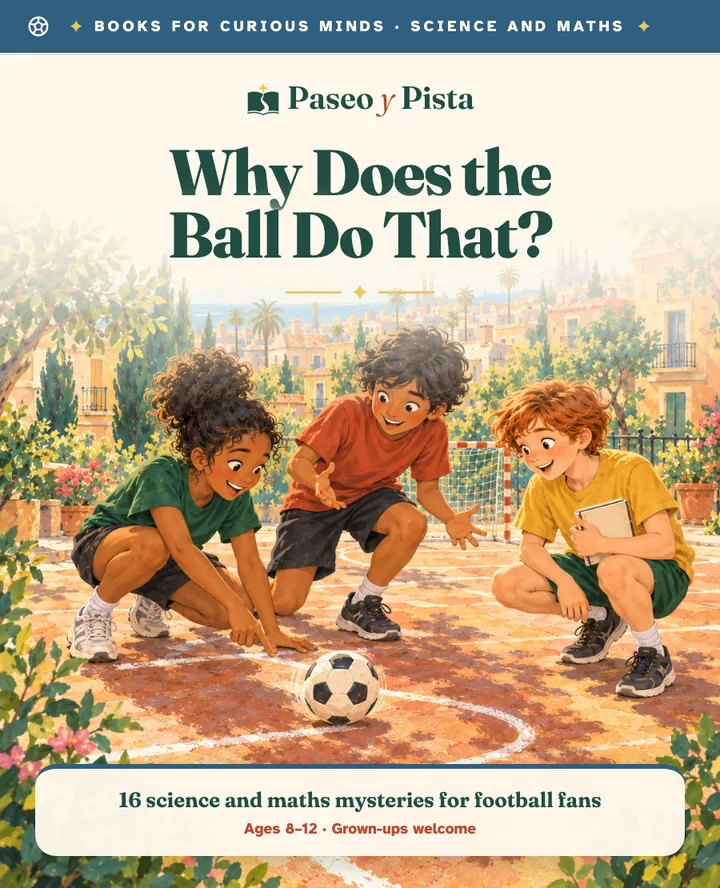
Why Does the Ball Do That?
16 science and maths mysteries for football fans
You learn to: Use numbers to explain why a ball bounces, rolls and curves
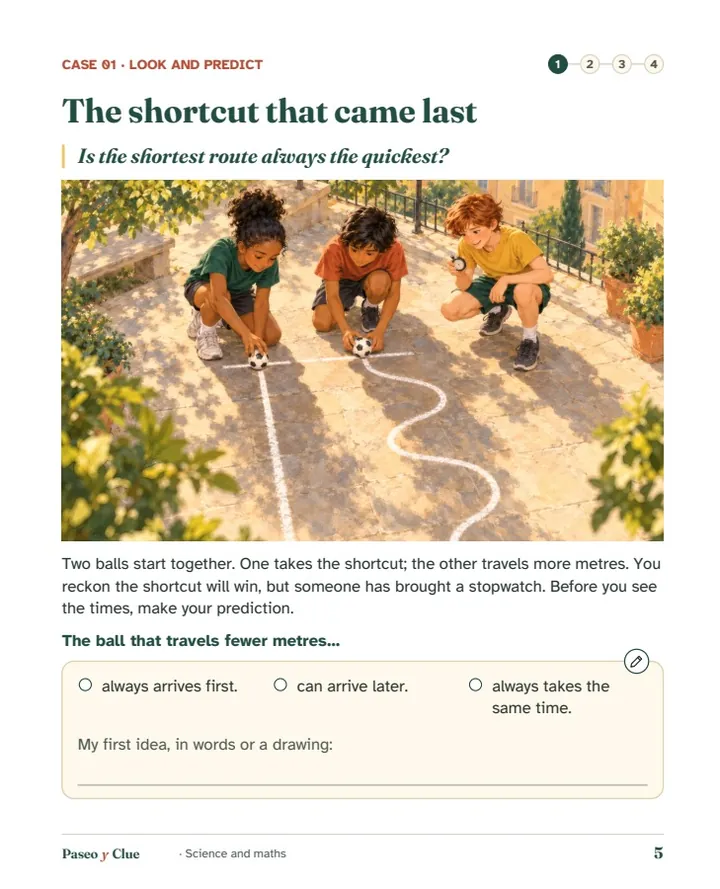
A shortcut that arrives late? A ball that curves in the air? When has a goal really gone in?
Sixteen illustrated cases about what happens around a ball: predict, look at the evidence, try a small paper test and compare your explanation with the worked answer. No need to know teams or kick hard: curiosity and a pencil are enough.
- Age
- 8–12 years, adults welcome
- Format
- Paperback, colour
- Language
- Spanish and English editions
- Subject
- Sports physics
- Series
- Science and maths
Look inside
Why this book
Football is full of physics and maths: bounces, spin, shadows, averages and chances. Sixteen cases turn a match into questions you can check.
- Explain why a ball bounces, rolls and curves
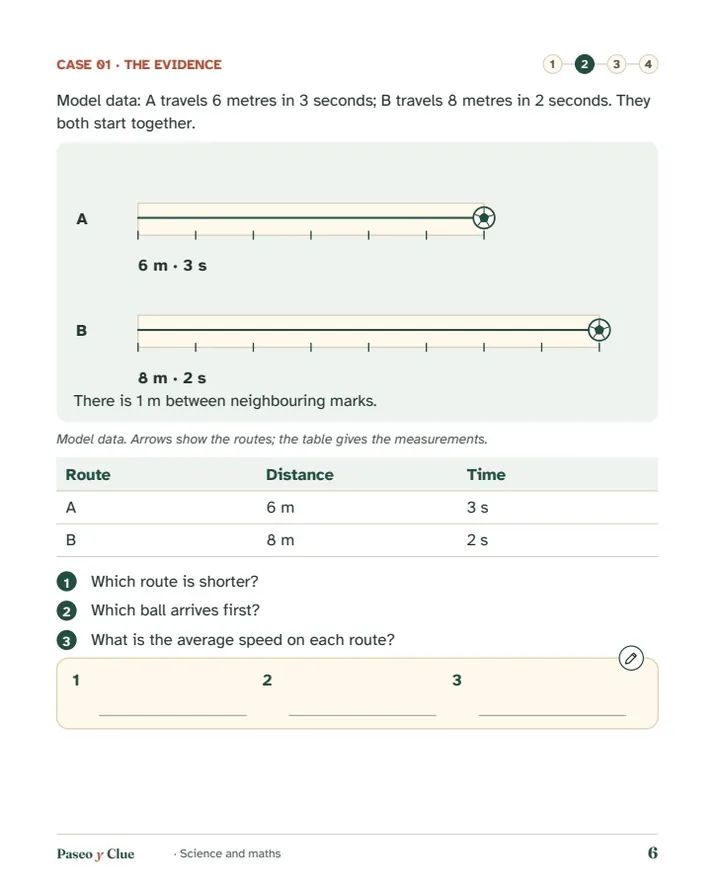
- Read diagrams and tables, minding the units
- Compare results with averages and fractions
What they learn as they play
Learning outside the classroom: what school starts carries on at home and on the street.
- Thinking like scientists Asking a question, predicting and checking.
- Measuring and calculating Numbers, shapes and measures in real situations.
- Reasoning Explaining why an answer works.
- Reading charts and diagrams Tables, maps and drawings that tell data.
Questions from parents
Does my child need to be good at maths?
No. Each case starts with a scene and a guess, and the sums come step by step. The answers are explained at the end of each case.
What age is it for?
Ages 8 to 12. Younger readers enjoy it more with an adult alongside.
Have another question? Write to us at contact@paseoypista.com and we'll reply.
What is inside
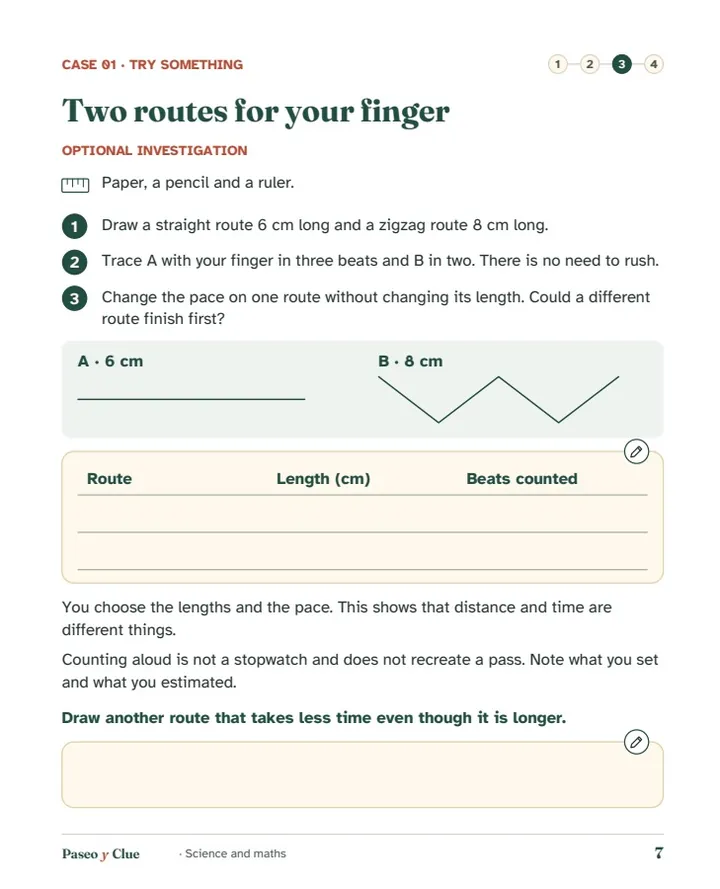
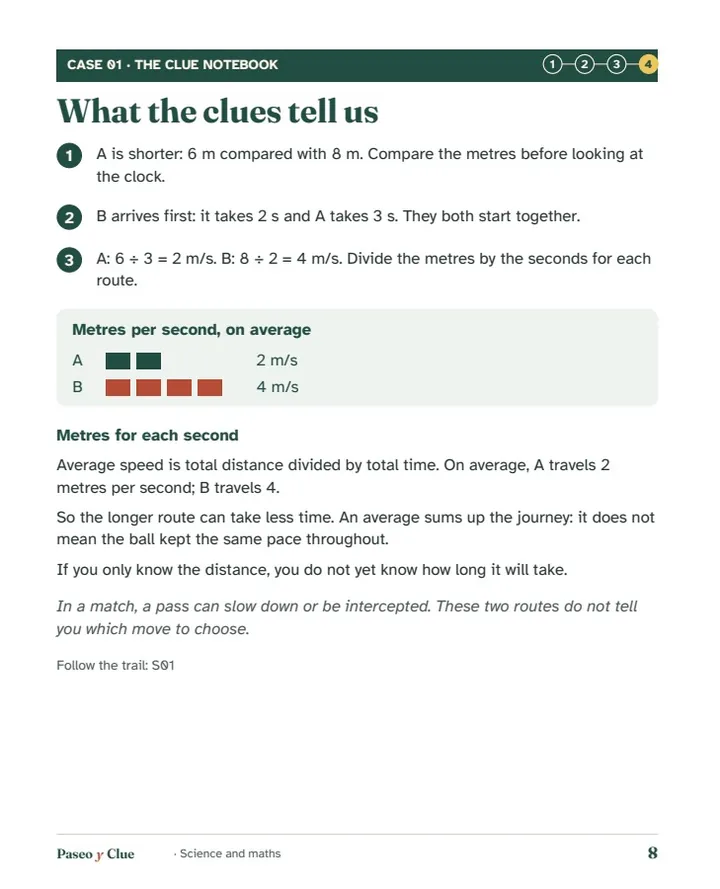
- 16 four-page cases: look and predict, the evidence, try something, what the clues say
- Speed, friction, spin, shadows, averages, fractions and probability
- Optional activities with paper, a pencil and a light ball
- 48 questions with explained answers and sources at the end
How it works
Questions, clues and investigations with paper and pencil.
- 1Look and predictEvery case opens with an illustrated scene and a question.
- 2Check the cluesData, diagrams and real sources to reason with.
- 3Explain your ideaWorked answers to compare how you thought it through.