Science and maths · 8–12 years
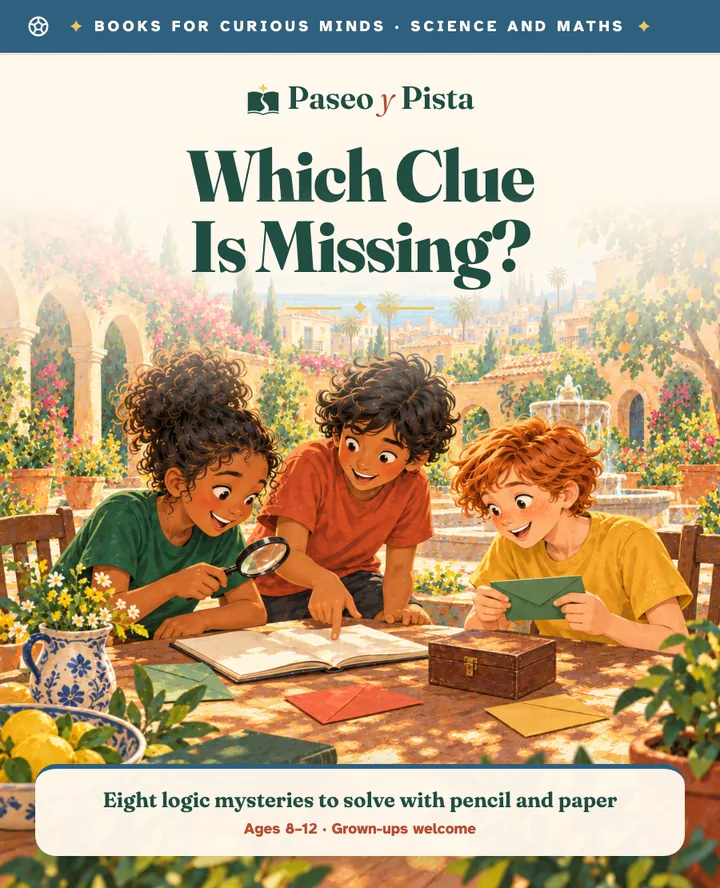
Which Clue Is Missing?
Eight logic mysteries to solve with pencil and paper
You learn to: Rule out, put in order and know when a clue is missing
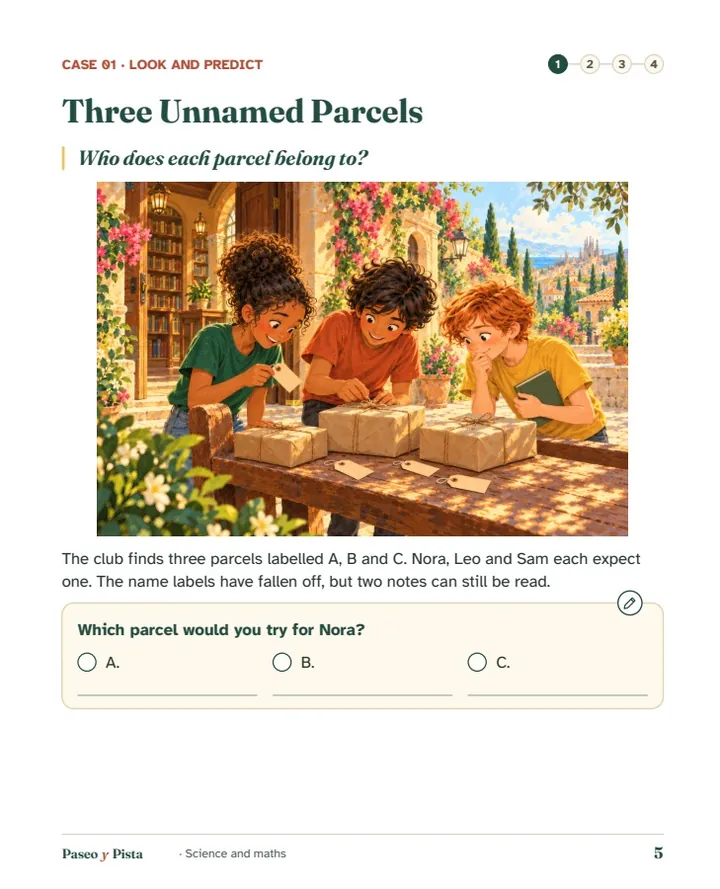
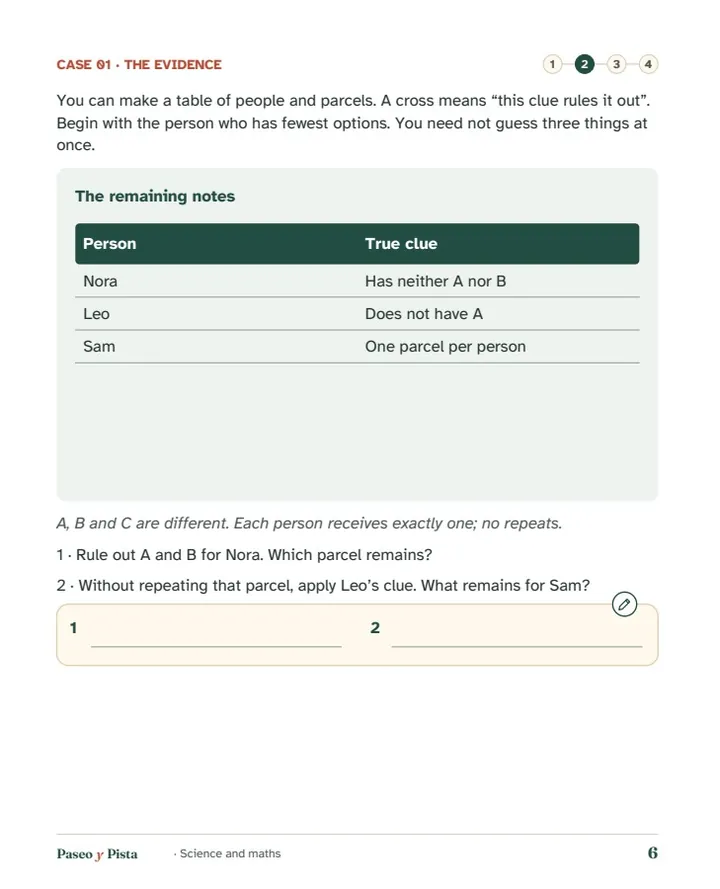
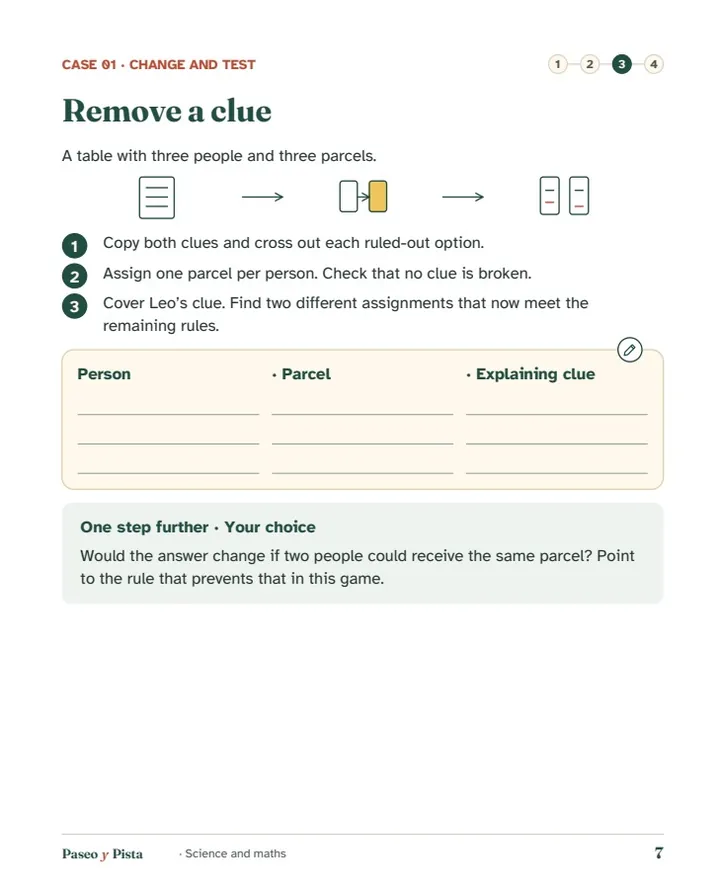
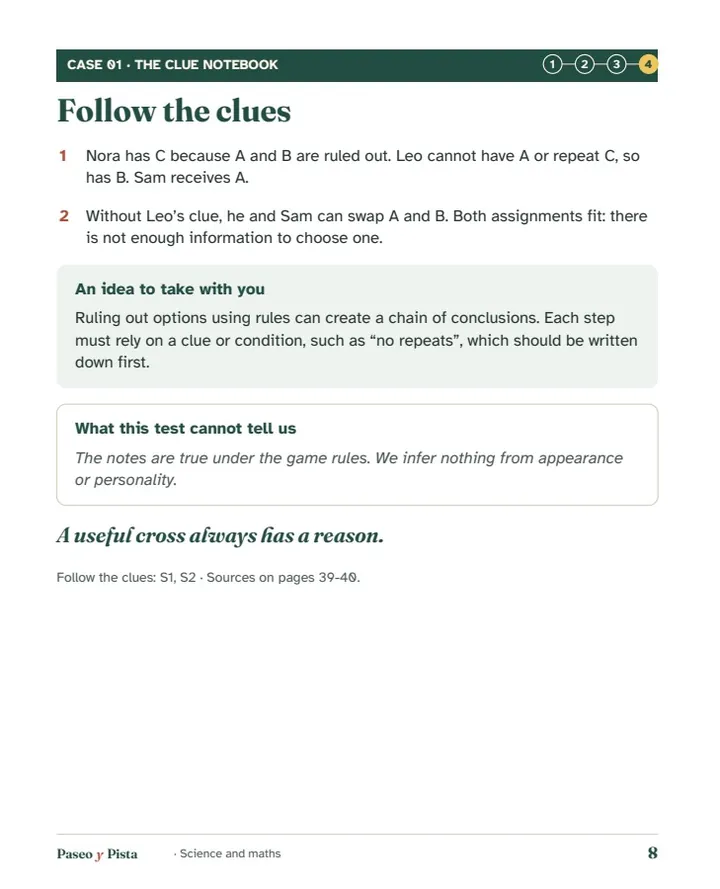
Three unnamed parcels. Two orders that fit the clues. Is there one answer, or is information missing?
In Nora, Leo and Sam’s club, an explanation matters more than a lucky guess. Draw, organise possibilities and discover what each clue can tell you. Sometimes several answers fit. You only need a pencil and paper, without a stopwatch or prizes for speed.
- Age
- 8–12 years, adults welcome
- Format
- Paperback, colour
- Language
- Spanish and English editions
- Subject
- Logic
- Series
- Science and maths
Look inside
Why this book
Logic underpins maths and coding, and it rarely gets a book of its own. Eight mysteries teach children to reason step by step and explain why.
- Rule out options with a clear reason
- Count combinations without repeating one
- Notice when information is missing
What they learn as they play
Learning outside the classroom: what school starts carries on at home and on the street.
- Thinking like scientists Asking a question, predicting and checking.
- Measuring and calculating Numbers, shapes and measures in real situations.
- Reasoning Explaining why an answer works.
- Reading charts and diagrams Tables, maps and drawings that tell data.
Questions from parents
Does my child need to be good at maths?
No. Each case starts with a scene and a guess, and the sums come step by step. The answers are explained at the end of each case.
What age is it for?
Ages 8 to 12. Younger readers enjoy it more with an adult alongside.
Have another question? Write to us at contact@paseoypista.com and we'll reply.
What is inside
- 8 illustrated four-page mysteries
- Clues, possibilities, useful questions and counterexamples
- Challenges with one answer, several answers or missing information
- Tables and drawings, reasoned answers, a glossary and sources
How it works
Questions, clues and investigations with paper and pencil.
- 1Look and predictEvery case opens with an illustrated scene and a question.
- 2Check the cluesData, diagrams and real sources to reason with.
- 3Explain your ideaWorked answers to compare how you thought it through.