People and ideas · 8–12 years
Beyond the Scoreboard
What does sport tell us beyond the score?
You learn to: Seeing the science and maths behind a result
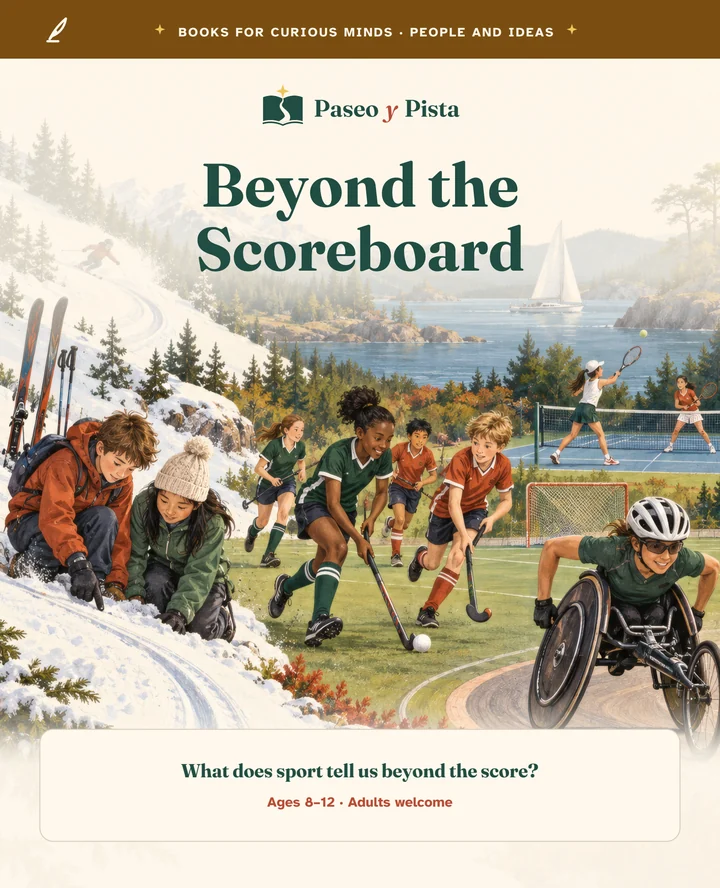
A run between gates in the snow. A cyclist climbing a volcano. Two tennis players in Paris, 1924. A goal in a European final. Behind every result there's a story.
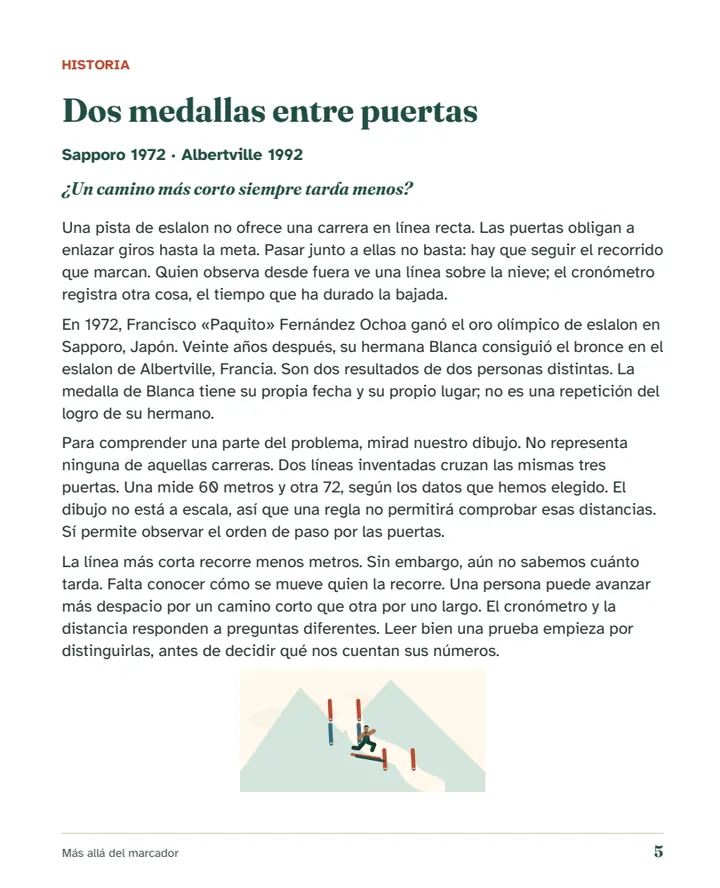
Nine true stories from Spanish sport, from Paris 1924 to Atlanta 1996: Paquito and Blanca Fernández Ochoa, Federico Martín Bahamontes, Lilí Álvarez and Rosa Torras, Miguel Jones, Anna Maria Martínez Sagi, hockey and sailing at Barcelona 1992, rhythmic gymnastics in Atlanta and Spain's first Paralympic Games. In each chapter you test an idea with pencil and paper: routes, gears, turns, passes, wind and accessibility. With a painting in every chapter, explained answers, a glossary, sources and a section for the adult. For ages 8 to 12.
- Age
- 8–12 years, adults welcome
- Format
- Paperback, colour
- Language
- Spanish and English editions
- Subject
- Sports science
- Series
- People and ideas
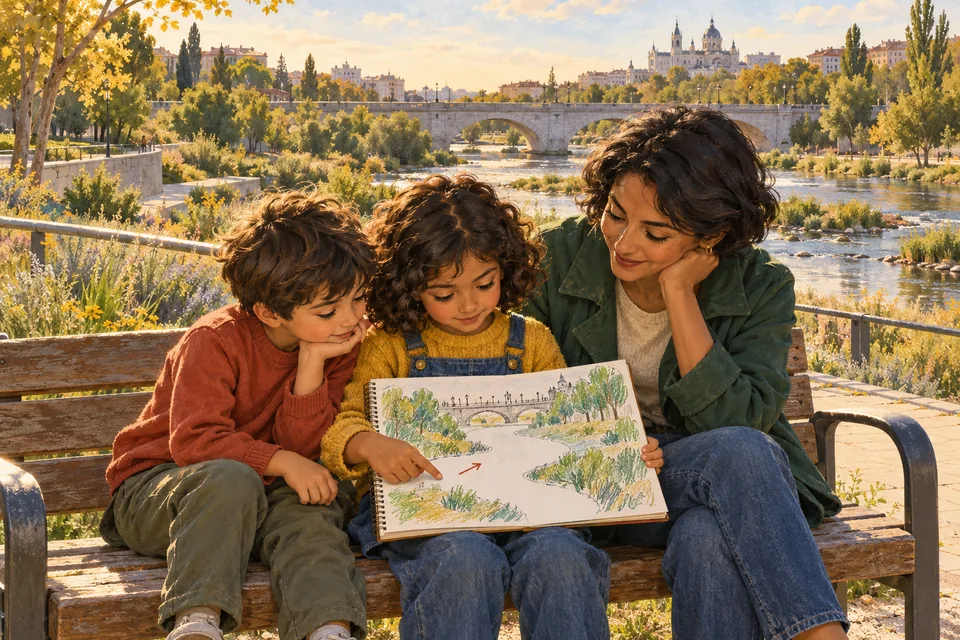
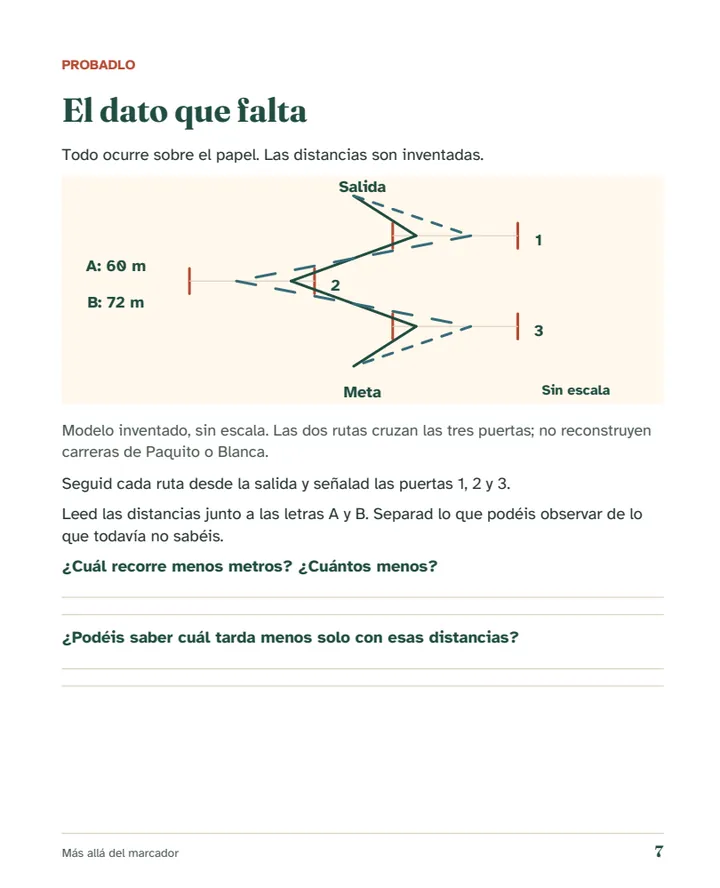
Look inside
Why this book
Behind every medal there are routes, turns, wind and decisions. Nine true stories from Spanish sport turn those ideas into paper challenges.
- Tell distance from time
- Share out turns fairly
- Think about how accessible a competition is
What they learn as they play
Learning outside the classroom: what school starts carries on at home and on the street.
- Meeting real people People from Spain who changed something.
- Understanding an idea What they thought and why it matters.
- Travelling to another time How people lived then.
- Having your own opinion Thinking, writing and explaining it.
Questions from parents
Are these true stories?
Yes. The people and events are real and come from documents; the cards and examples in the activities are made up for practice.
What age is it for?
Ages 8 to 12. Children can read alone or with the family, one chapter at a time.
Have another question? Write to us at contact@paseoypista.com and we'll reply.
What is inside
- 9 stories of athletes from Spain
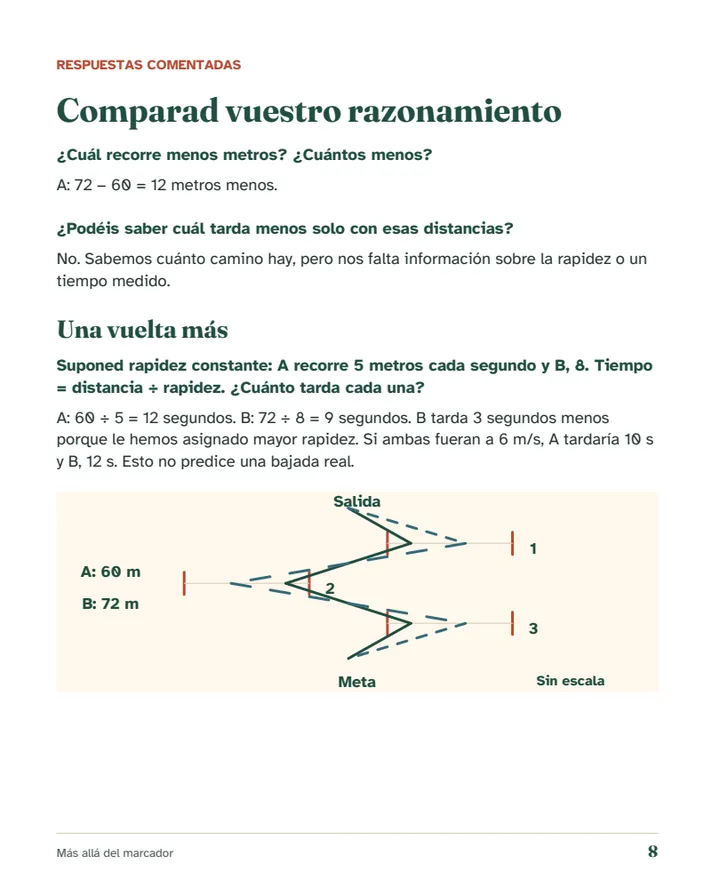
- Original diagrams of times, spaces and decisions
- Paper activities and reasoned answers
- Sources at the end
How it works
Questions, clues and investigations with paper and pencil.
- 1Look and predictEvery case opens with an illustrated scene and a question.
- 2Check the cluesData, diagrams and real sources to reason with.
- 3Explain your ideaWorked answers to compare how you thought it through.