People and ideas · 8–12 years
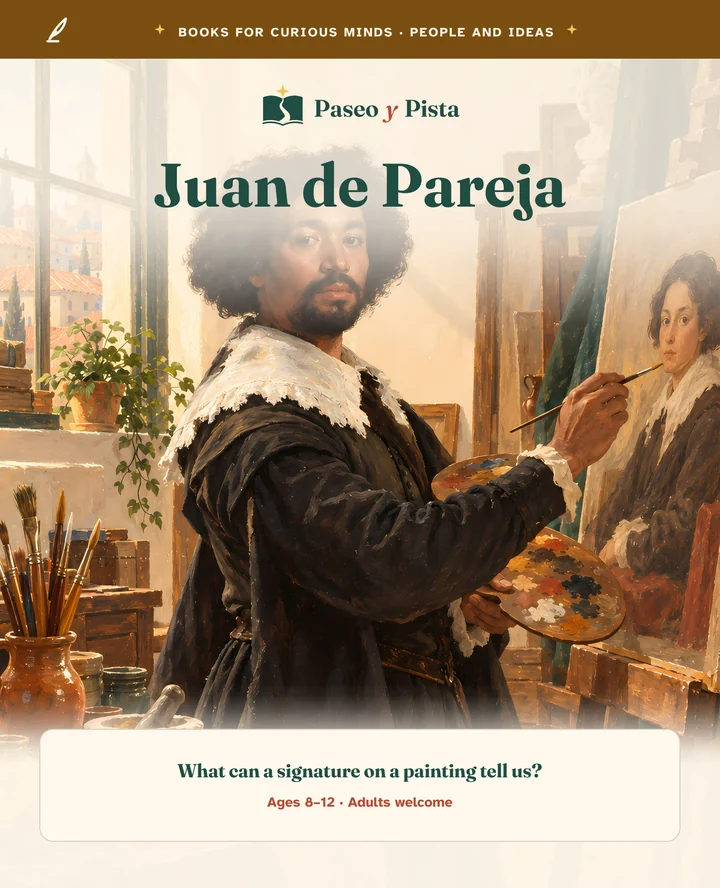
Juan de Pareja
What can a signature on a painting tell us?
You learn to: Reading a painting as evidence: who is in it and who painted it
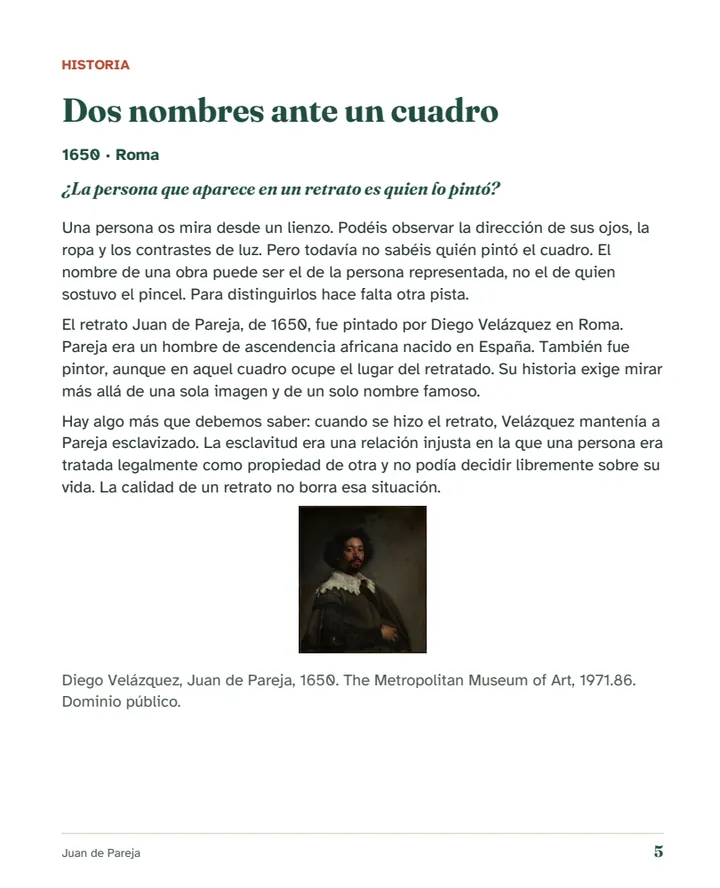
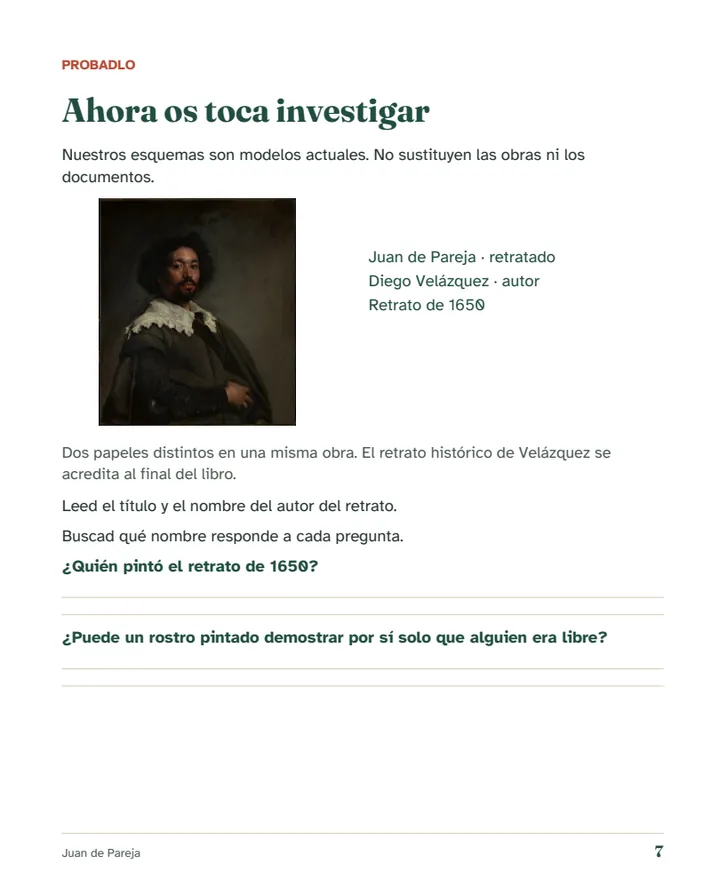
Rome, 1650: Velázquez paints a portrait of a man he holds in slavery, Juan de Pareja. Years later, now free, Pareja signs his own paintings and paints himself inside one of them.
Six chapters with the real story of this 17th-century Afro-Hispanic painter and an investigation in each: - tell the person in a painting from the person who painted it; - read the date on a document of freedom; - look for signatures and clues in the works; - follow the trail of a life, like a historian. With a painting in every chapter, Velázquez's portrait (public domain, The Met), explained answers, a glossary, sources and a section for the adult. For ages 8 to 12.
- Age
- 8–12 years, adults welcome
- Format
- Paperback, colour
- Language
- Spanish and English editions
- Subject
- Art and painting
- Series
- People and ideas
Look inside
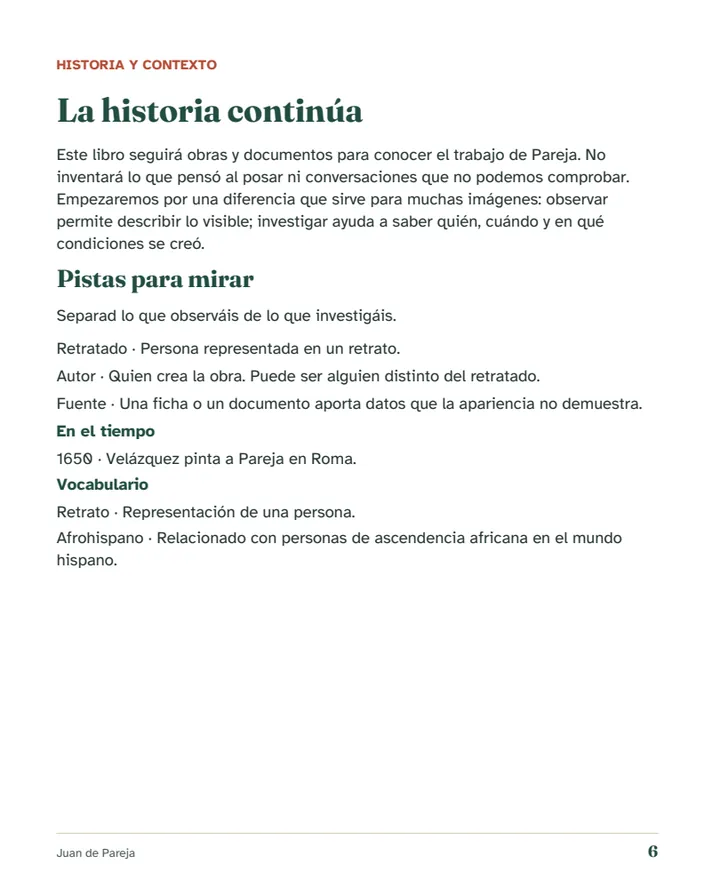
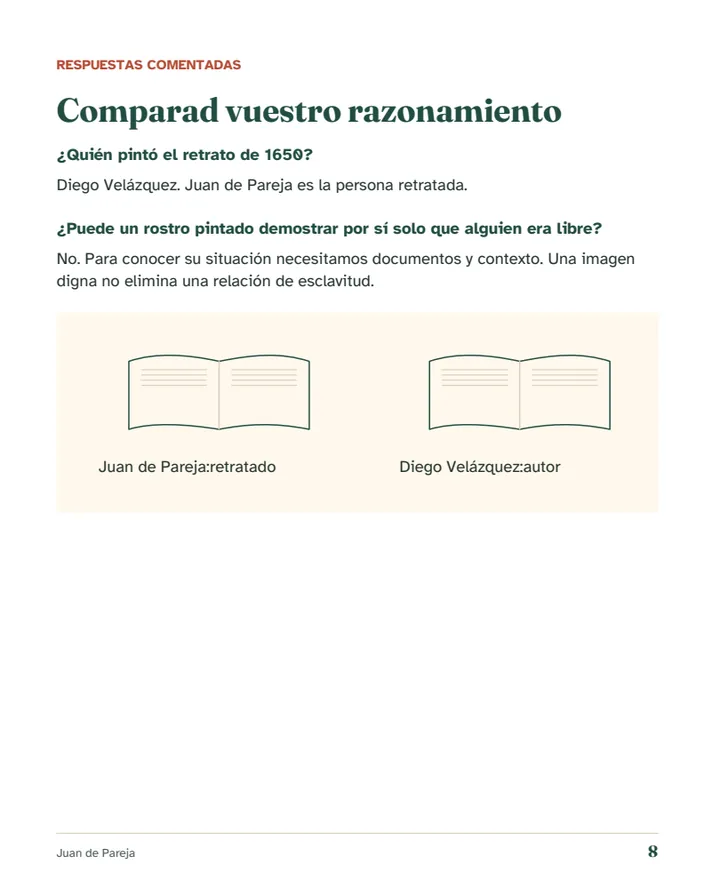
Why this book
Juan de Pareja was enslaved by Velázquez and went on to sign his own paintings. His story teaches children to look at art with questions: who painted it, who is in it, what a document says.
- Tell the person in a painting from the person who painted it
- Read dates and signatures as clues
- Talk about freedom and slavery with facts
What they learn as they play
Learning outside the classroom: what school starts carries on at home and on the street.
- Meeting real people People from Spain who changed something.
- Understanding an idea What they thought and why it matters.
- Travelling to another time How people lived then.
- Having your own opinion Thinking, writing and explaining it.
Questions from parents
Are these true stories?
Yes. The people and events are real and come from documents; the cards and examples in the activities are made up for practice.
What age is it for?
Ages 8 to 12. Children can read alone or with the family, one chapter at a time.
Have another question? Write to us at contact@paseoypista.com and we'll reply.
What is inside
- 6 chapters on Juan de Pareja and his time
- How to read a portrait and a museum label
- Observation activities and reasoned answers
- Timeline and sources
How it works
Questions, clues and investigations with paper and pencil.
- 1Look and predictEvery case opens with an illustrated scene and a question.
- 2Check the cluesData, diagrams and real sources to reason with.
- 3Explain your ideaWorked answers to compare how you thought it through.