People and ideas · 8–12 years
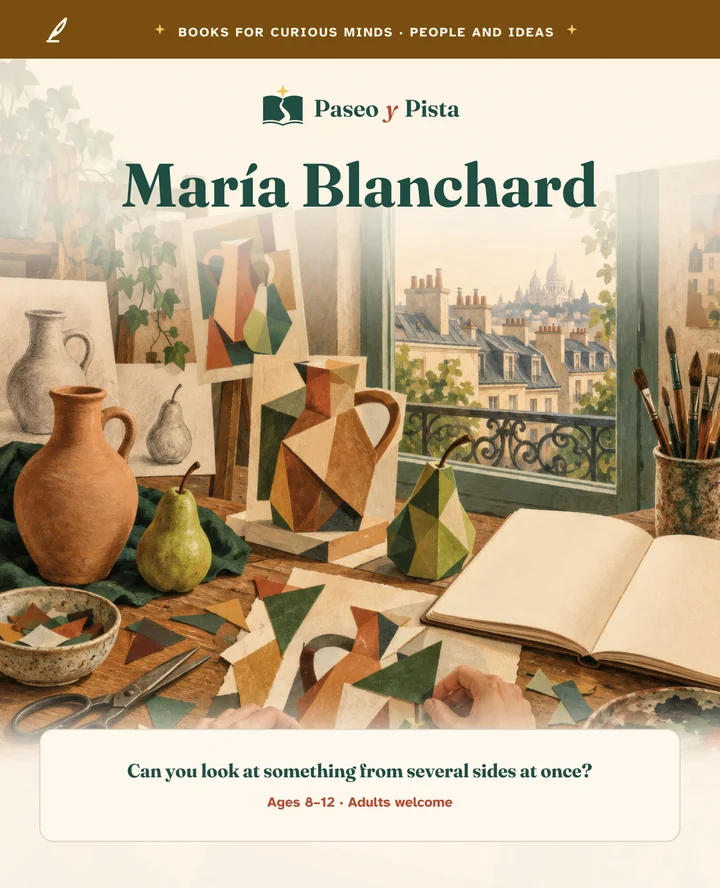
María Blanchard
Can you look at something from several sides at once?
You learn to: Looking at an object from several sides and understanding Cubism
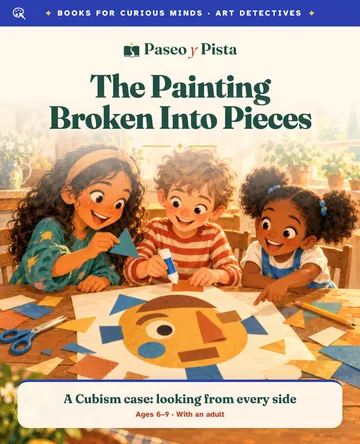
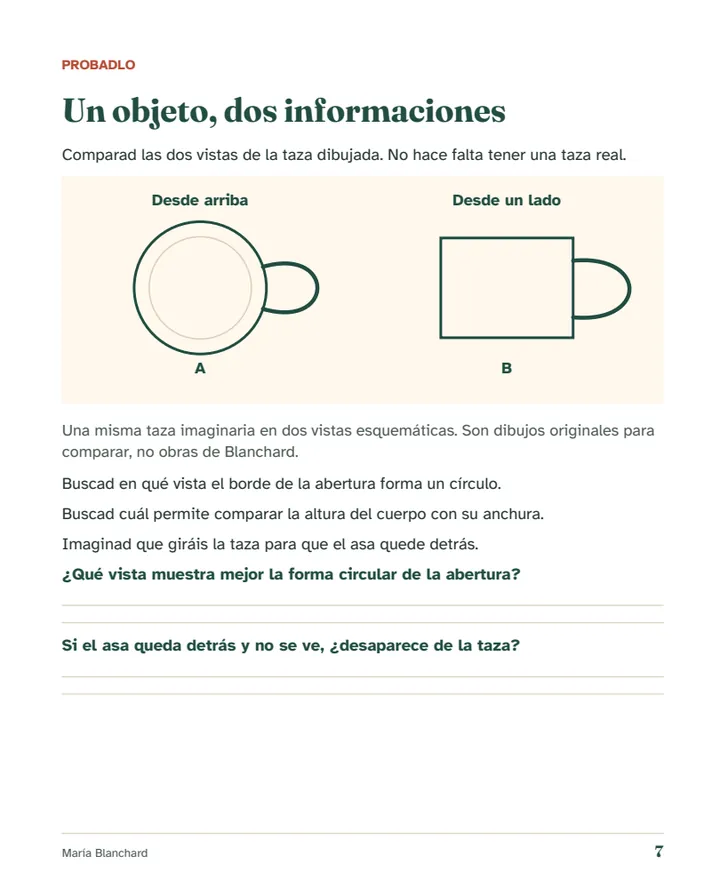
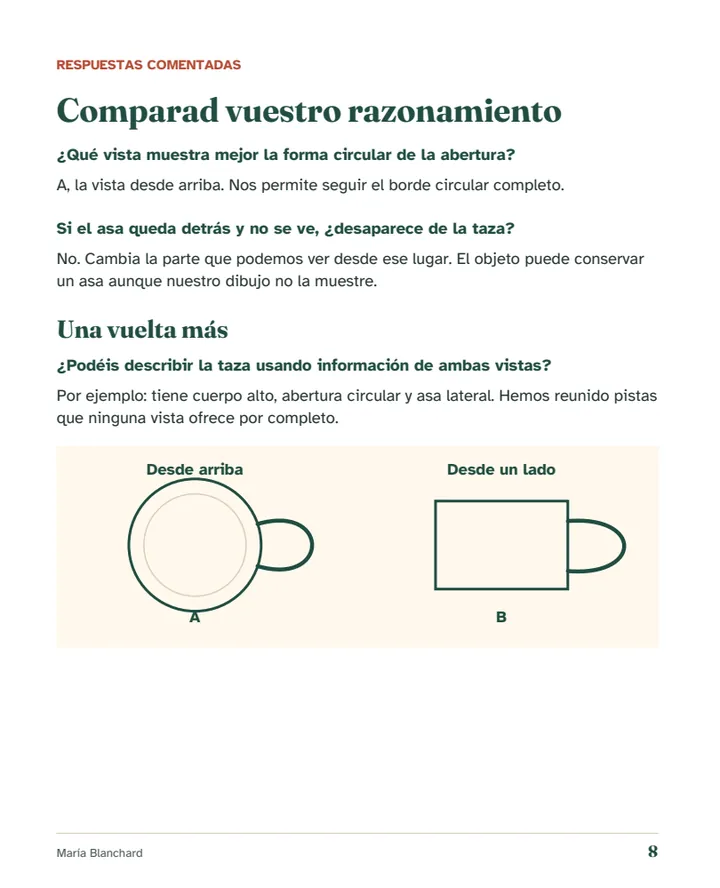
A cup seen from above and from the side. Two guitar strings. A piece of paper glued on top of another. That's how María Blanchard looked at the world: a painter born in Santander in 1881, a friend of Juan Gris and Diego Rivera in Cubist Paris.
Six chapters with her real story and a way of looking in each: - draw an object from several points of view; - discover the network of artists around her; - find the clues a Cubist painting leaves; - pull apart the layers of a collage and read a museum label. With a painting in every chapter, explained answers, a glossary, sources and a section for the adult. For ages 8 to 12; all you need is a pencil.
- Age
- 8–12 years, adults welcome
- Format
- Paperback, colour
- Language
- Spanish and English editions
- Subject
- Modern art
- Series
- People and ideas
Look inside
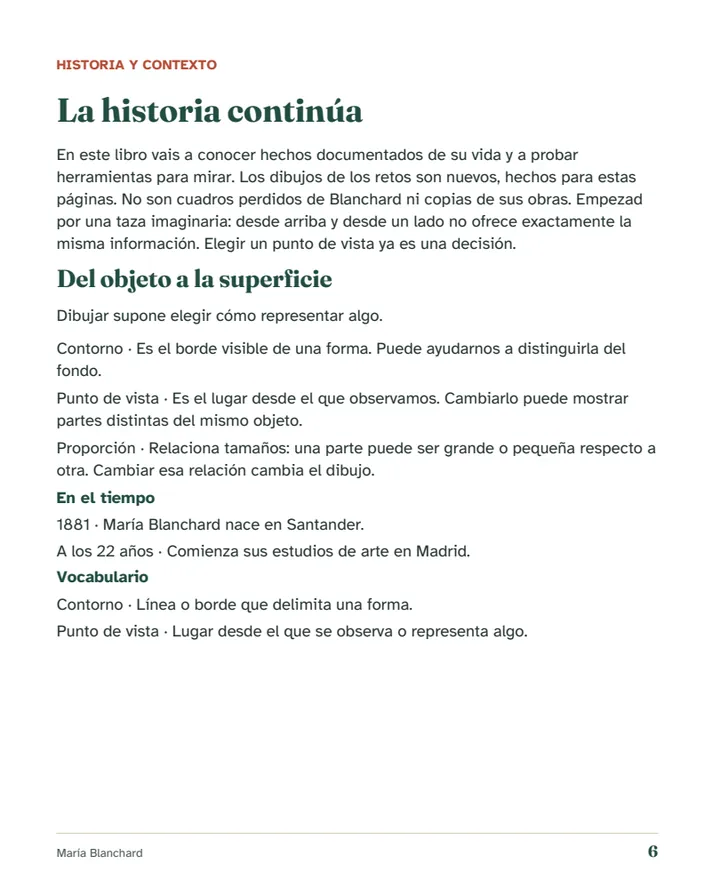
Why this book
María Blanchard painted what she saw from many sides at once. Following her life, children practise point of view, shape and collage, and learn to read a museum label.
- Draw an object from two points of view
- Find the clues in a Cubist painting
- Read a museum label
What they learn as they play
Learning outside the classroom: what school starts carries on at home and on the street.
- Meeting real people People from Spain who changed something.
- Understanding an idea What they thought and why it matters.
- Travelling to another time How people lived then.
- Having your own opinion Thinking, writing and explaining it.
Questions from parents
Are these true stories?
Yes. The people and events are real and come from documents; the cards and examples in the activities are made up for practice.
What age is it for?
Ages 8 to 12. Children can read alone or with the family, one chapter at a time.
Have another question? Write to us at contact@paseoypista.com and we'll reply.
What is inside
- 6 episodes on María Blanchard's life and work
- Viewpoints, shapes and layers to try on paper
- Original drawings and explained answers
- Timeline and sources
How it works
Questions, clues and investigations with paper and pencil.
- 1Look and predictEvery case opens with an illustrated scene and a question.
- 2Check the cluesData, diagrams and real sources to reason with.
- 3Explain your ideaWorked answers to compare how you thought it through.