A rainy afternoon, half an hour before dinner, a Sunday with no plans. You don't need an app to build attention and memory: a few cups, a box of clothes pegs, a roll of masking tape and ten minutes will do.
Here are ten games to play at home with kids aged 6 to 9. They're classic games, the kind you see in "brain games" courses and videos, told our way and using things you'll find in any drawer. Next to each one we say what it gets going.
Does it really work? "Stop and go" games have been studied. A team at Oregon State University tried movement games such as "Red Light, Purple Light" with preschool children and saw their self-control improve (university news release, 2014). They are not miracles and they don't replace anyone: they are bits of play that help, especially when repeated.
What you'll need
- Three paper or plastic cups and a button.
- A handful of dice.
- Paper, pencils and a ruler.
- A tray and a tea towel.
- Coloured clothes pegs and a strip of cardboard.
- Building blocks.
- Masking tape, coloured card and a couple of straws.
- A spoon and a small ball.
Attention games: keeping your eyes on it
1. The three cups
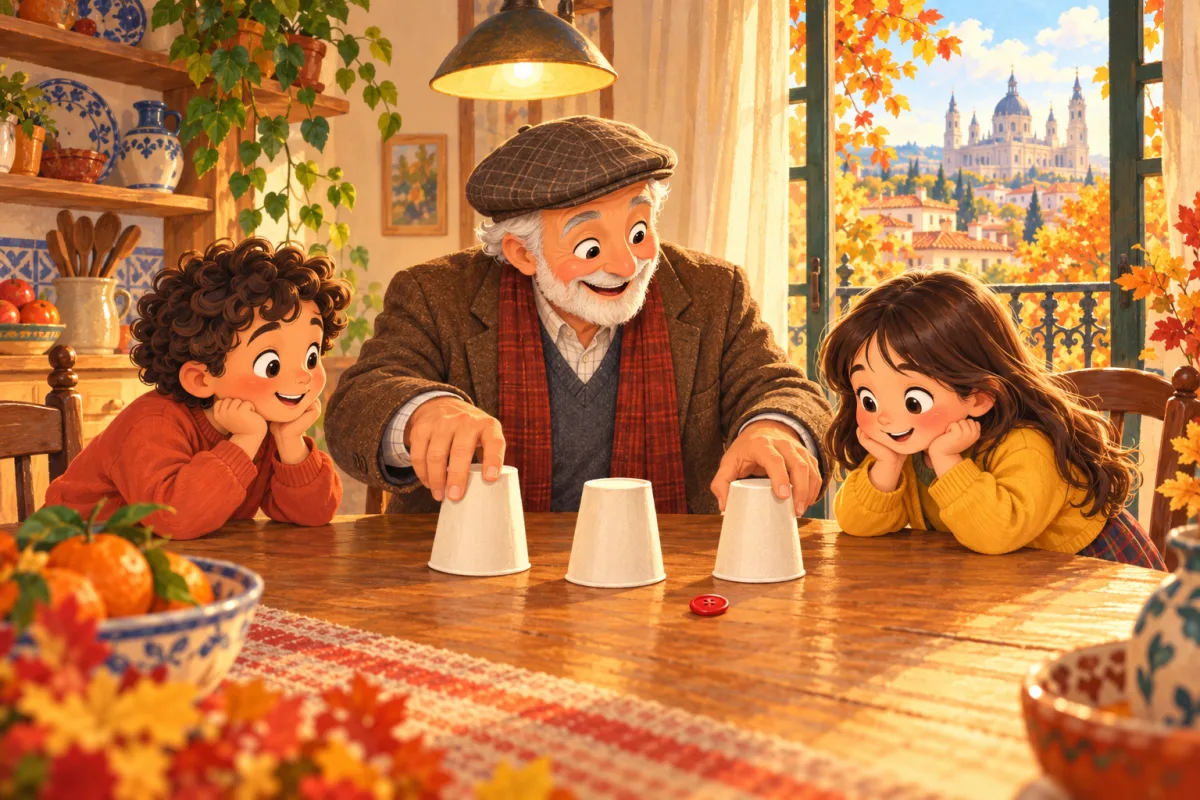
Hide a button under a cup, turn all three upside down and slide them slowly around the table. Where's the button? Once that's easy, go faster, or use two buttons of different colours.
What it builds: sustained attention, staying focused while things move.
Harder: the child moves the cups and the adult guesses.
2. Dice hunt
Throw eight or ten dice on the table. Someone calls a number: find every die showing it as fast as you can. Then throw them again.
What it builds: scanning with your eyes without skipping anything.
Harder: find pairs of dice that add up to seven.
3. Mirror drawing
On a sheet folded in half, the adult draws half a house, half a face or half a rocket against the fold. The child draws the other half, the same but flipped, like a mirror.
What it builds: attention to detail and a sense of space.
Harder: draw with both hands at once, one on each side of the fold.
Memory games: keeping and recalling
4. The tray game
Put eight objects on a tray: a key, a peg, a spoon, a pencil… Look for thirty seconds, cover them with a tea towel and someone takes one away without being seen. Which one is missing?
What it builds: visual memory.
Harder: take two away, or swap two around.
5. The colour caterpillar
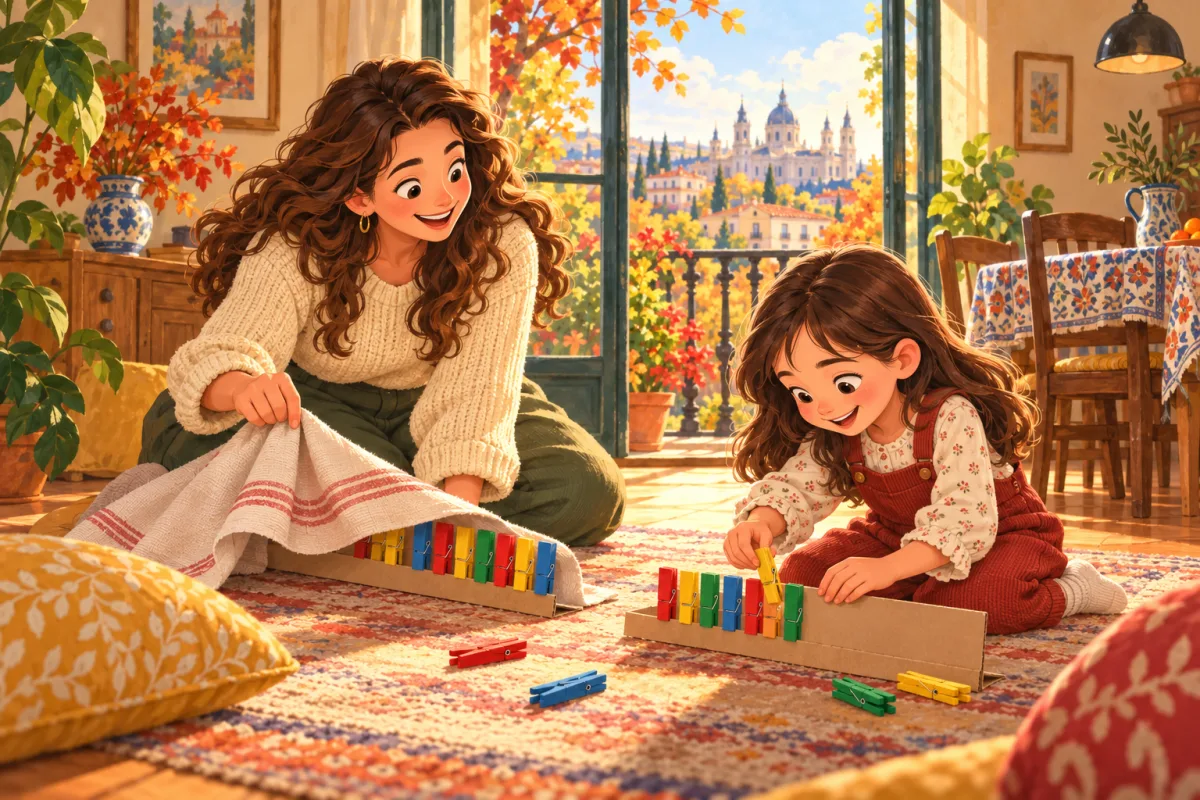
Clip clothes pegs in six colours onto a strip of cardboard to make a caterpillar. Look for ten seconds, cover it and make an identical one, in the same order.
What it builds: working memory, the kind that holds things for a moment while you use them.
Harder: a longer caterpillar, or build it in reverse order.
6. Copy the tower
The adult builds a small tower of coloured blocks. The child looks at it, turns around and builds the same one with their own blocks. Then swap roles.
What it builds: visual memory and planning.
Movement and self-control games: stopping in time
7. Colour circles
Tape circles of card in four colours to the floor. Someone holds up a card and everyone jumps onto a circle of that colour. On the red card, everyone freezes like a statue. Once that goes well, swap: now red means jump and every other colour means stop.
What it builds: self-control, holding back what comes automatically.
8. Number hopscotch
Mark a hopscotch from 1 to 10 in the hallway with masking tape. Instead of hopping in order, call out a sum: "three plus two", and they hop to 5. Or "the number before 8".
What it builds: thinking and moving at the same time, and mental arithmetic.
9. Straw race
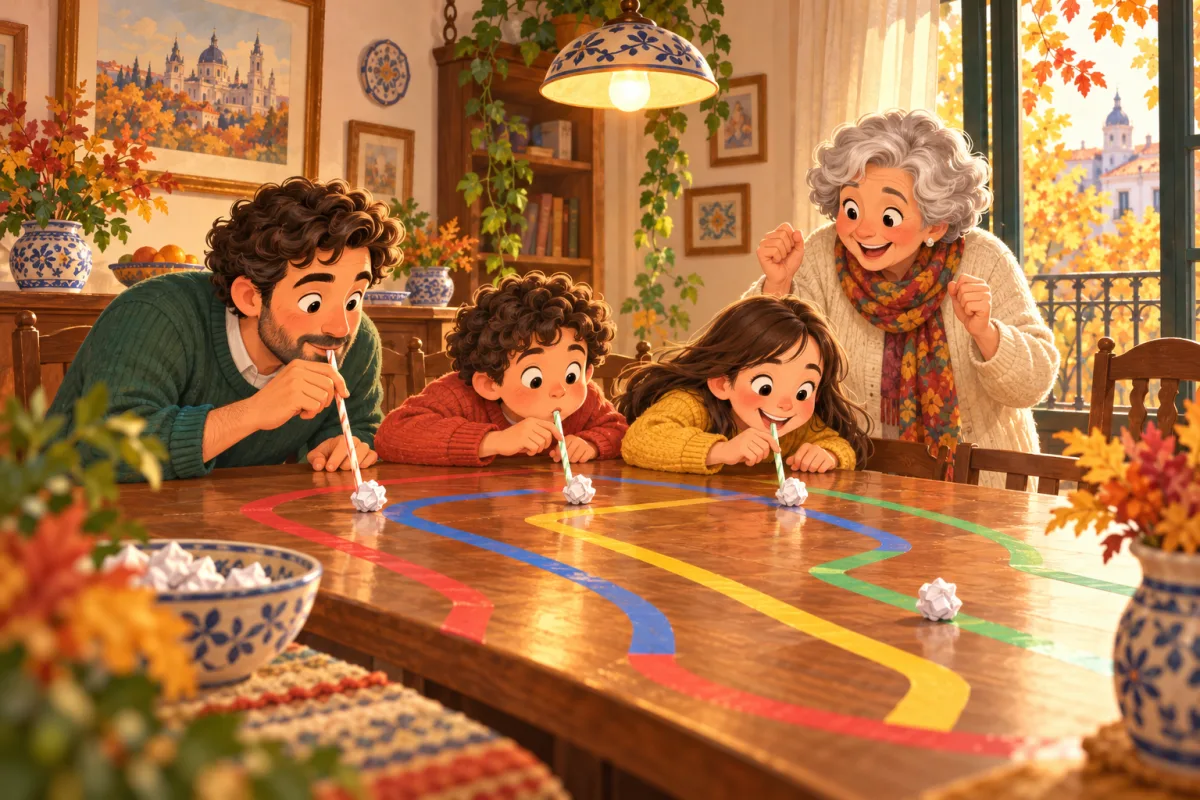
Mark a track on the table with coloured tape. Each player blows a crumpled paper ball through a straw from start to finish without leaving the track.
What it builds: body control and patience.
10. Spoon and ball
A small ball on a spoon, then walk the hallway to a cup without dropping it. If it falls, start again from the last tape mark.
What it builds: balance, coordination and calm.
Harder: hold the spoon in the hand you don't write with.
Tips to make it work
- One or two games at a time. Stop while they still want more.
- The adult plays too. And gets things wrong too, so nobody is afraid of making mistakes.
- Let the kids invent rules. Making up a rule and sticking to it is another game in itself.
- Repeat the favourites. A game played every week gets better each time, and you notice.
And when you go out? Walking games for Madrid with kids has seven ideas where every child gets a role.
FAQ
Which screen-free games help children's attention?
Games where you follow something with your eyes (the three cups, dice hunt), games where you remember (the tray game, the colour caterpillar) and stop-and-go games (colour circles). You play them with things you already have at home.
What age are they for?
They're designed for children aged 6 to 9. For younger kids, drop rules. For older ones, add them.
How long should we play?
Ten minutes is enough. What helps is repeating them, not making them longer.
When it's time to go out
Paseo y Pista adventure books take these games outside: each mission asks children to look carefully at a real fountain, doorway or statue, remember what they saw and find a hidden letter. They're for kids aged 6 to 9 with an adult, and each one is a walk through central Madrid. See the books.