Technology · 8–12 years
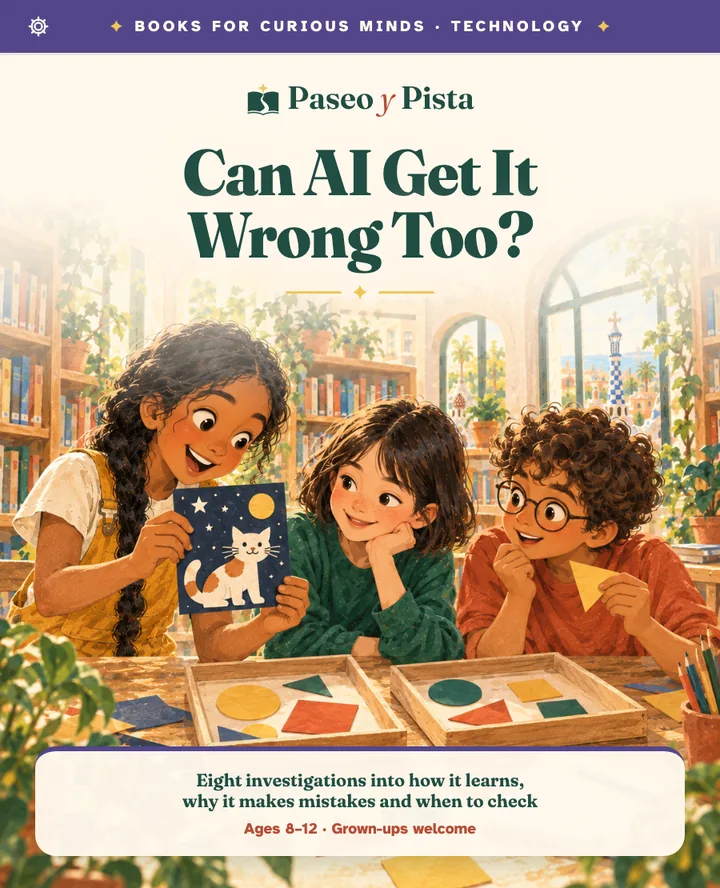
Can AI Get It Wrong Too?
Eight investigations into how it learns, why it makes mistakes and when to check
You learn to: Test when an AI gets it right, and when it doesn't
A cat that turns into a dog. A seven that doesn't fit. A very confident sentence that gets the Moon wrong.
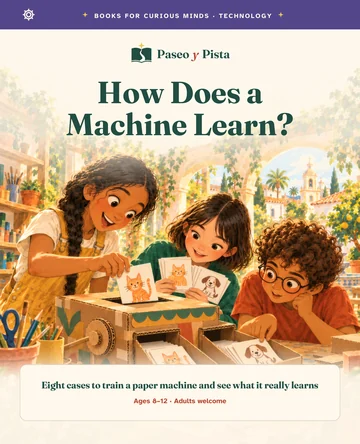
Three friends start a testing club to understand artificial intelligence without screens. With paper cards, rules and examples, you find out how a system learns, why it makes mistakes and when to check what it says. Everything works without accounts, apps or personal data.
- Age
- 8–12 years, adults welcome
- Format
- Paperback, colour
- Language
- Spanish and English editions
- Subject
- Artificial intelligence
- Series
- Technology
Look inside
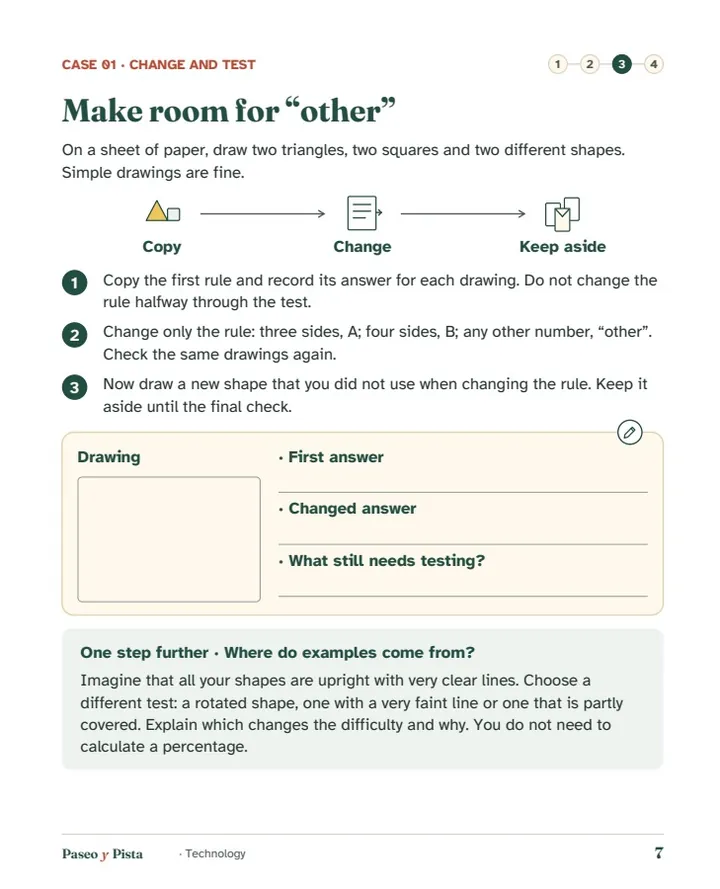
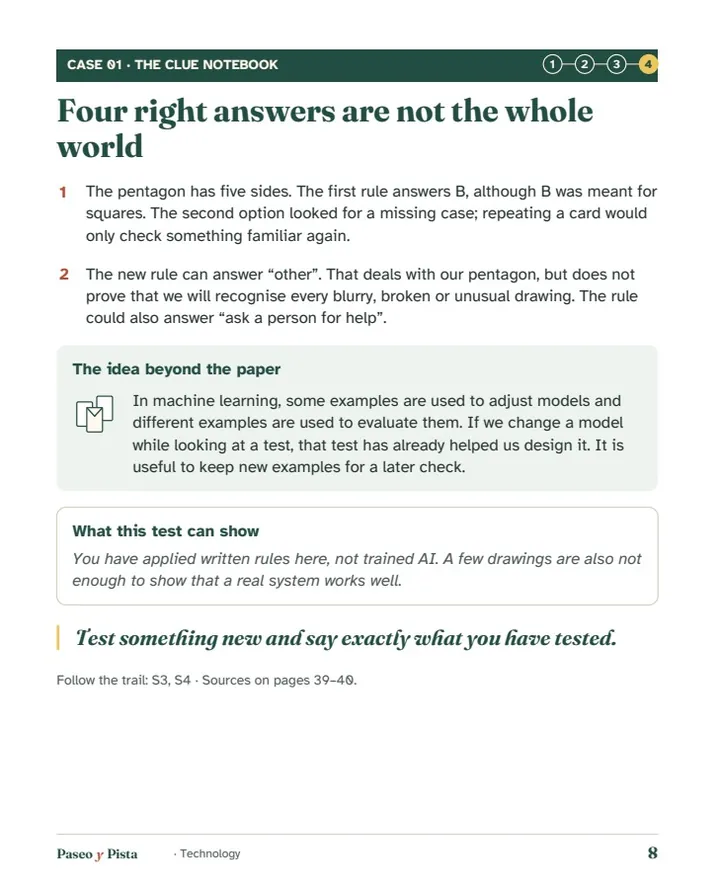
Why this book
Children already use AI tools, but few know why they get things wrong. This book teaches them to test those tools with paper cards and decide which details not to share.
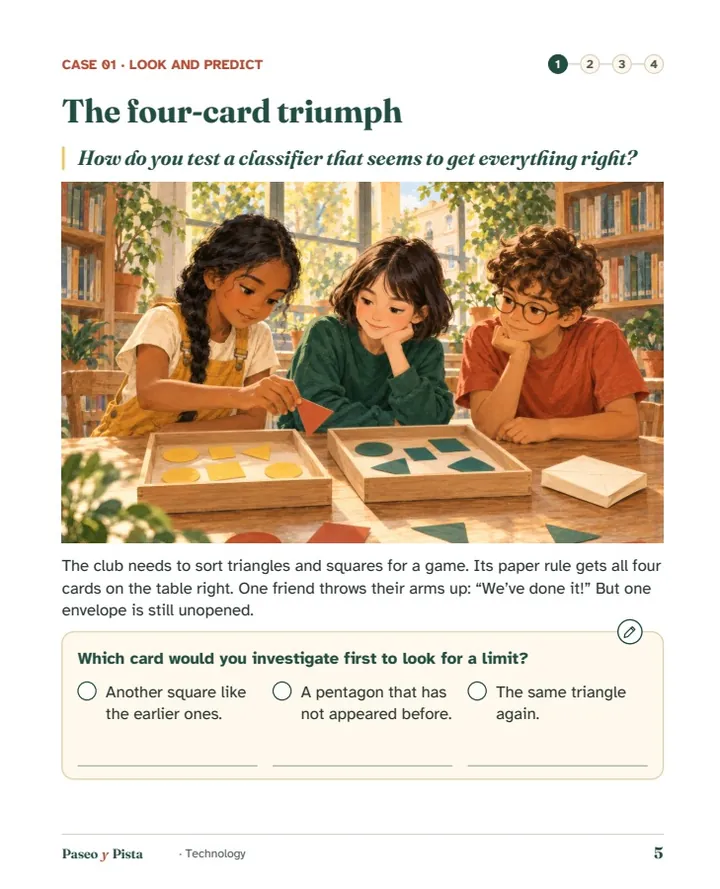
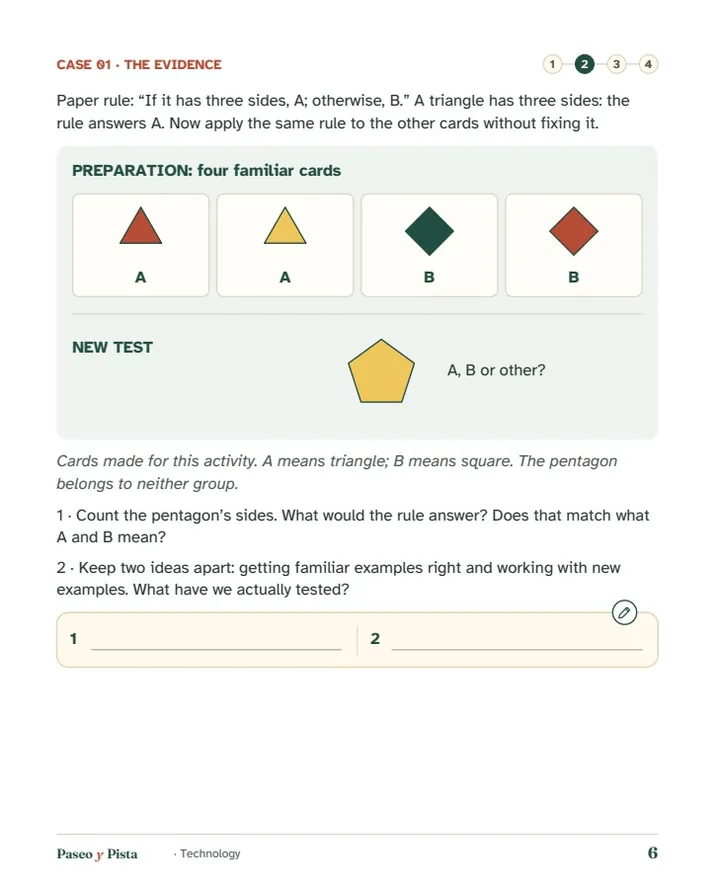
- Design a fair test for a classifier
- Check a very confident sentence against sources
- Decide which personal details a helper does not need
What they learn as they play
Learning outside the classroom: what school starts carries on at home and on the street.
- How things work Machines, inventions and networks from the inside.
- Thinking in rules and steps Coding without screens, with paper and pencil.
- Spotting mistakes Seeing when a machine gets it wrong, AI included.
- Using technology wisely Privacy, messages and good decisions.
Questions from parents
Do we need a computer or tablet?
No. Everything is pencil and paper: children understand how technology works without using a screen.
What age is it for?
Ages 8 to 12, with an adult at the start.
Have another question? Write to us at contact@paseoypista.com and we'll reply.
What is inside
- 8 illustrated investigations with paper models
- Classify, recommend and generate: three kinds of AI explained with examples
- Challenges to change a rule, find the limit and protect your data
- Worked answers, a glossary and sources from UNESCO, UNICEF, NIST and NASA
How it works
Questions, clues and investigations with paper and pencil.
- 1Look and predictEvery case opens with an illustrated scene and a question.
- 2Check the cluesData, diagrams and real sources to reason with.
- 3Explain your ideaWorked answers to compare how you thought it through.