Technology · 8–12 years
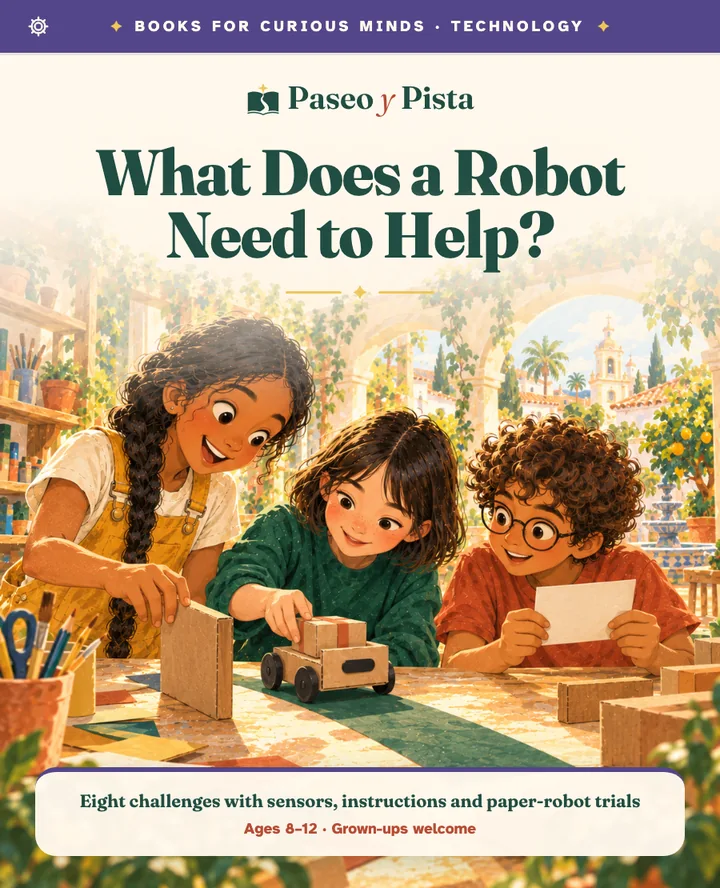
What Does a Robot Need to Help?
Eight challenges with sensors, instructions and paper-robot trials
You learn to: Design a robot with sensors and fair tests
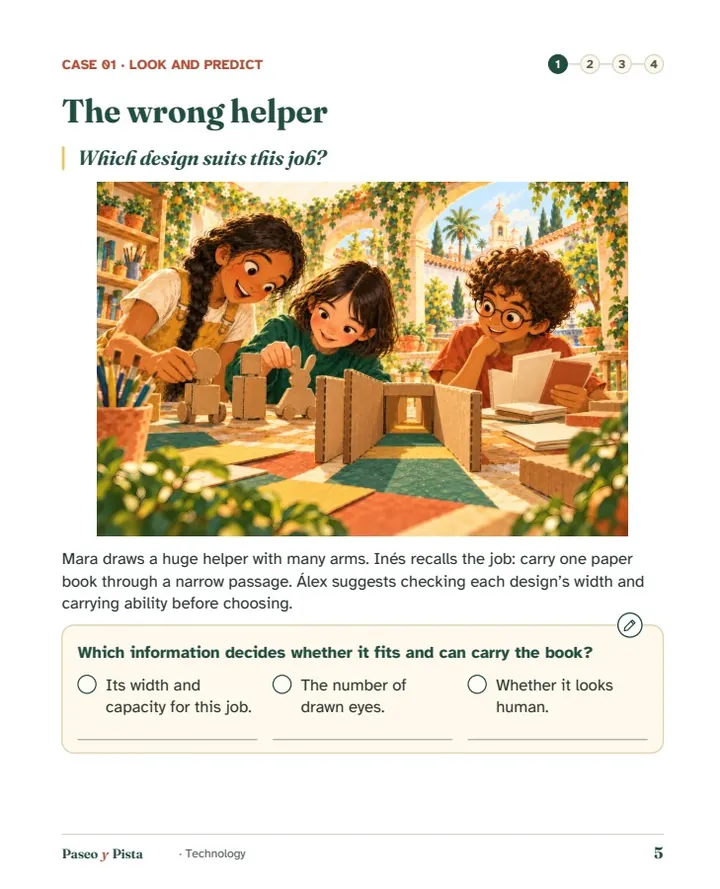
One helper will not fit through the passage. Another switches on a light at the wrong moment. What needs checking?
In Inés, Mara and Álex’s workshop, choose a job before comparing sensors, readings and actions. Design and revise a paper helper with tests you can explain. You need the book, a pencil and a sheet of paper; no electronic robot is needed.
- Age
- 8–12 years, adults welcome
- Format
- Paperback, colour
- Language
- Spanish and English editions
- Subject
- Robotics
- Series
- Technology
Look inside
Why this book
Mechanics and sensors are two blocks of Madrid's Technology and Robotics area. With paper robots, children decide what a helper needs and test it the way an engineer would.
- Tell input, rule and output apart
- Choose the right sensor
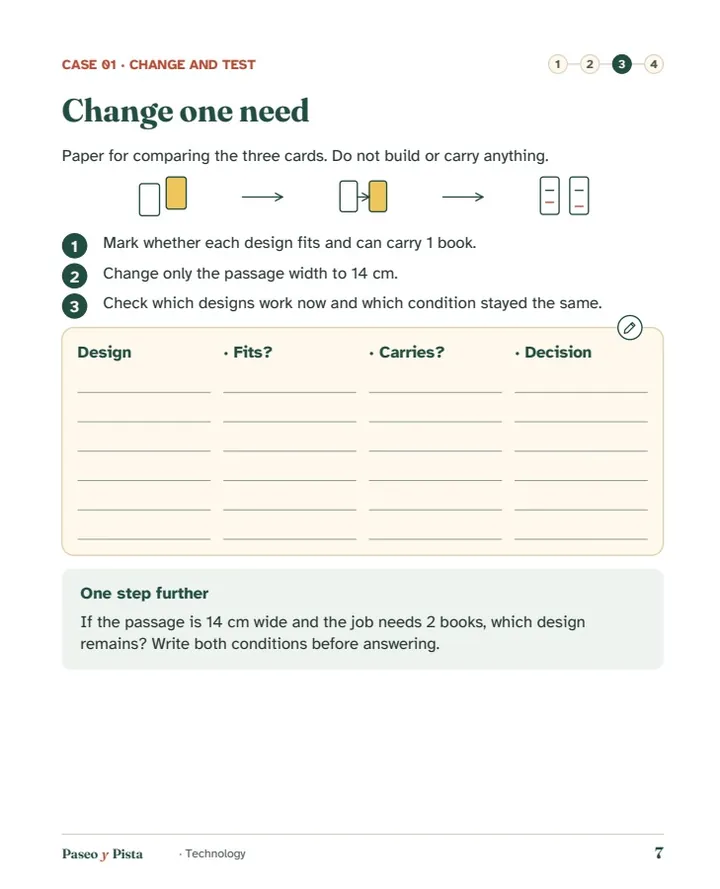
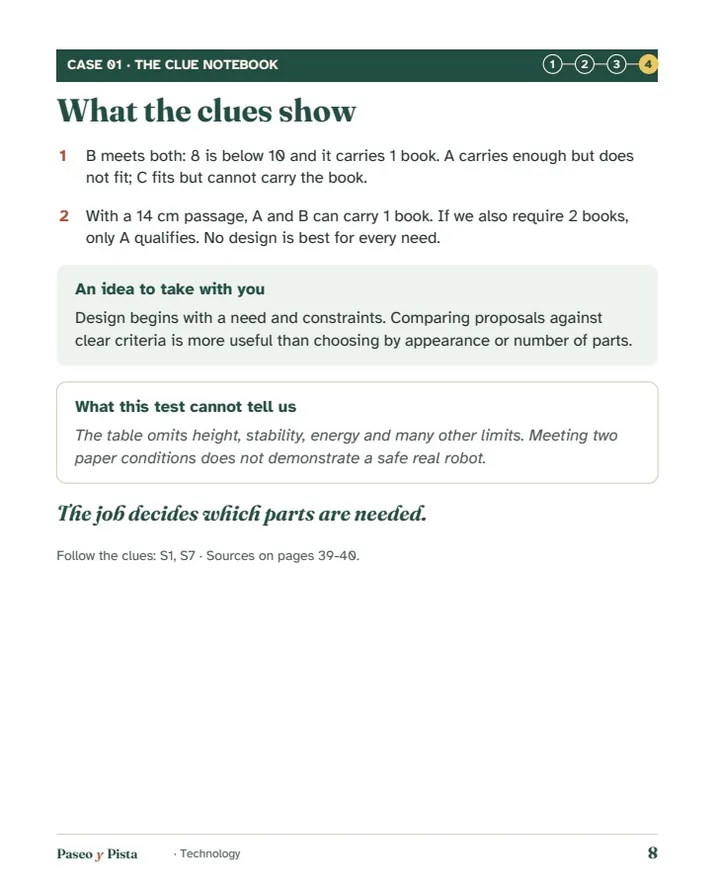
- Run a fair test between two designs
What they learn as they play
Learning outside the classroom: what school starts carries on at home and on the street.
- How things work Machines, inventions and networks from the inside.
- Thinking in rules and steps Coding without screens, with paper and pencil.
- Spotting mistakes Seeing when a machine gets it wrong, AI included.
- Using technology wisely Privacy, messages and good decisions.
Questions from parents
Do we need a computer or tablet?
No. Everything is pencil and paper: children understand how technology works without using a screen.
What age is it for?
Ages 8 to 12, with an adult at the start.
Have another question? Write to us at contact@paseoypista.com and we'll reply.
What is inside
- 8 illustrated four-page challenges
- Jobs, sensors, tools and actions
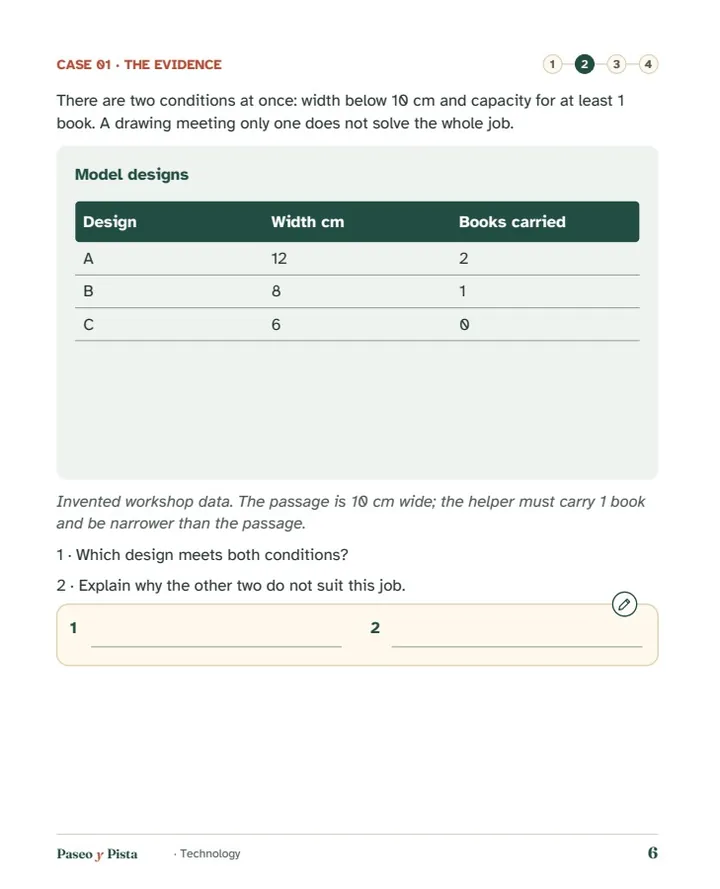
- Tests for comparing designs and checking a reading
- Paper models, worked answers, a glossary and sources
How it works
Questions, clues and investigations with paper and pencil.
- 1Look and predictEvery case opens with an illustrated scene and a question.
- 2Check the cluesData, diagrams and real sources to reason with.
- 3Explain your ideaWorked answers to compare how you thought it through.