Technology · 8–12 years
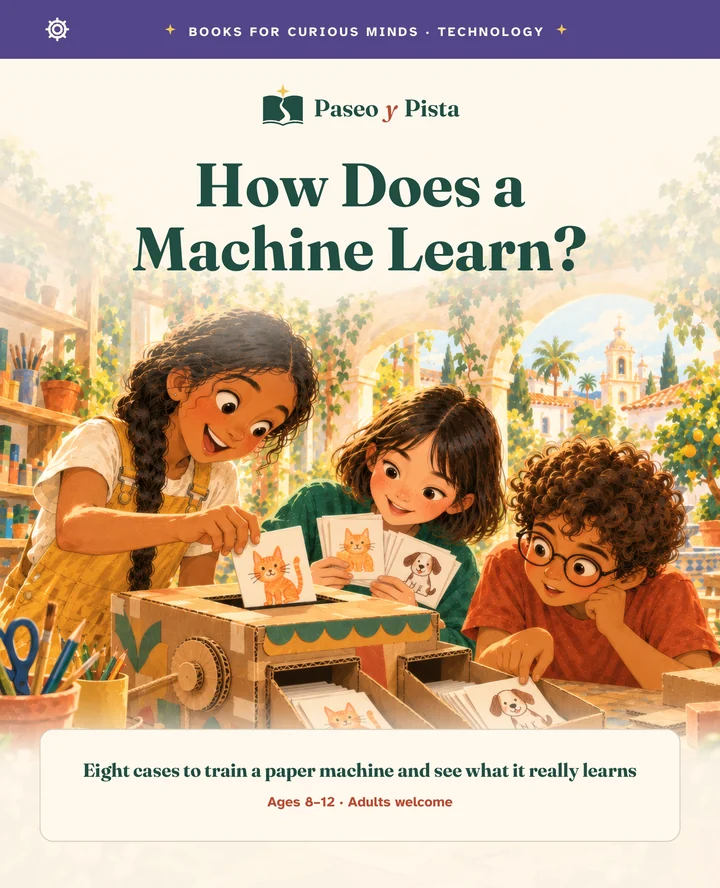
How Does a Machine Learn?
Data, examples and a paper machine
You learn to: Understand what training data is
What does a machine learn when you teach it with examples?
Train a paper "machine" with examples, and see what it really learns. A case about training data and mistakes, with no screens.
- Age
- 8–12 years, adults welcome
- Format
- Paperback, colour
- Language
- Spanish and English editions
- Subject
- Machine learning
- Series
- Technology
Why this book
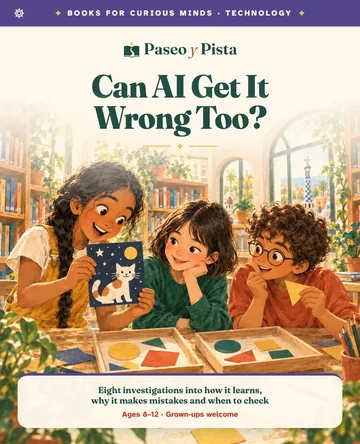
AI is in phones, cars and homework, yet almost nobody explains to children how it learns. Here they train a paper machine with examples and find out why it sometimes learns the wrong thing.
- Understand what training data is
- Spot when an example fools the machine
- Explain in their own words how an AI learns
What they learn as they play
Learning outside the classroom: what school starts carries on at home and on the street.
- How things work Machines, inventions and networks from the inside.
- Thinking in rules and steps Coding without screens, with paper and pencil.
- Spotting mistakes Seeing when a machine gets it wrong, AI included.
- Using technology wisely Privacy, messages and good decisions.
Questions from parents
Do we need a computer or tablet?
No. Everything is pencil and paper: children understand how technology works without using a screen.
What age is it for?
Ages 8 to 12, with an adult at the start.
Have another question? Write to us at contact@paseoypista.com and we'll reply.
What is inside
- A complete case to solve as a family
- Clues, activities and challenges with paper and pencil
- Explained answers and a section for the adult
How it works
Questions, clues and investigations with paper and pencil.
- 1Look and predictEvery case opens with an illustrated scene and a question.
- 2Check the cluesData, diagrams and real sources to reason with.
- 3Explain your ideaWorked answers to compare how you thought it through.