Technology · 8–12 years
How Does It Work?
Ideas and inventions from Spain
You learn to: How some Spanish inventions work
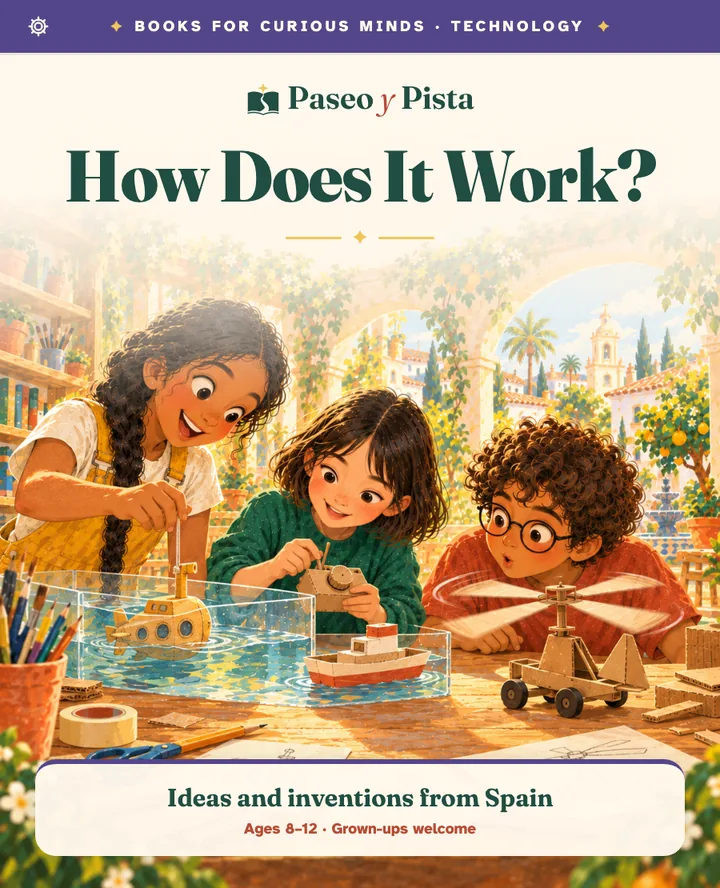
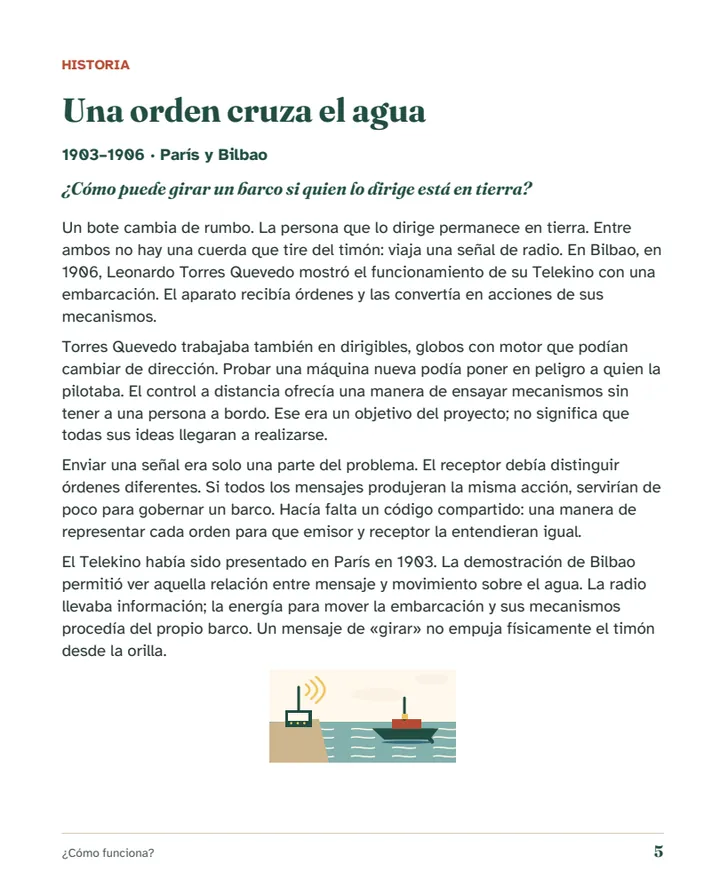
How can a boat turn with nobody on board? How does a submarine go down and come back up? Why does a spinning wing fly?
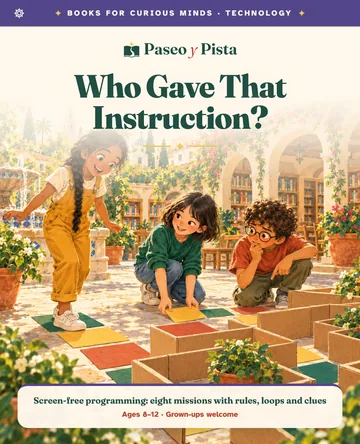
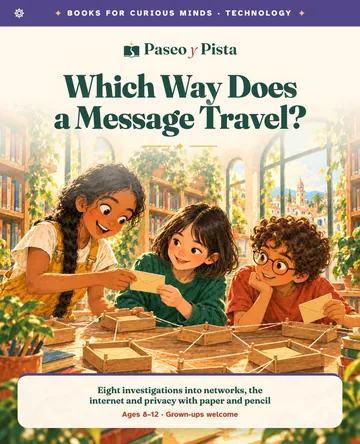
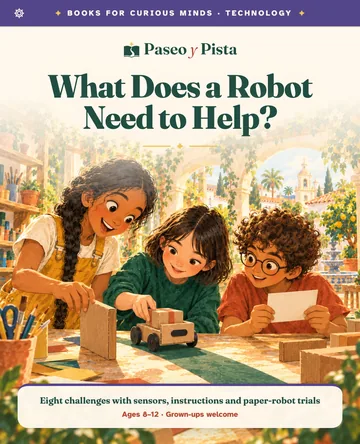
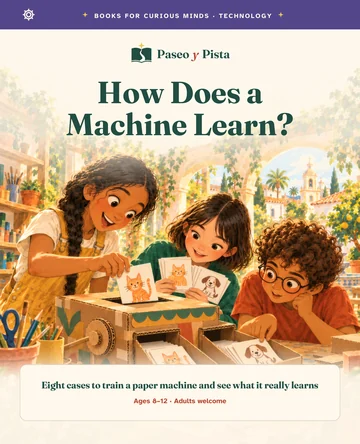
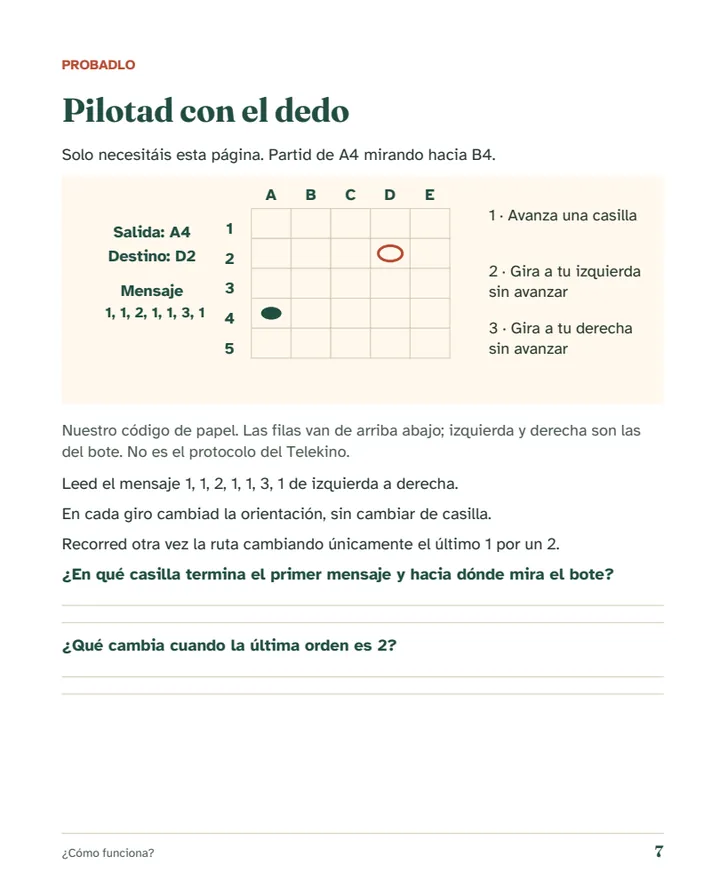
Nine ideas and inventions from Spain, explained piece by piece: Torres Quevedo's Telekino, the submarines of Monturiol and Peral, Juan de la Cierva's autogiro, Ángela Ruiz Robles's mechanical encyclopedia, Casamayor's arithmetic, Torroja's roofs, measuring the Earth, Dorotea Barnés's light and Margarita Salas's enzyme. In each chapter, Álex, Carla and Rocío test the mechanism with a paper challenge, and you solve it with them. With a painting in every chapter, explained answers, a glossary, sources and a section for the adult. For ages 8 to 12; all you need is a pencil.
- Age
- 8–12 years, adults welcome
- Format
- Paperback, colour
- Language
- Spanish and English editions
- Subject
- Inventions and technology
- Series
- Technology
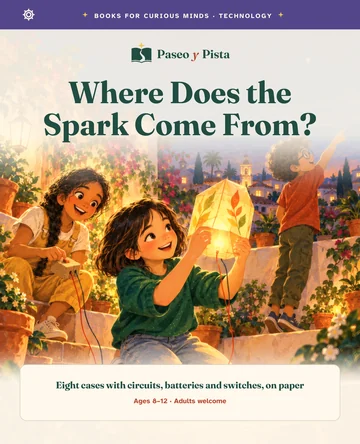
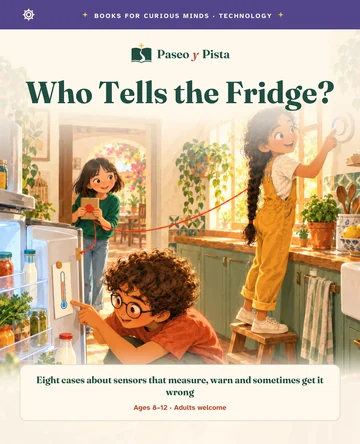
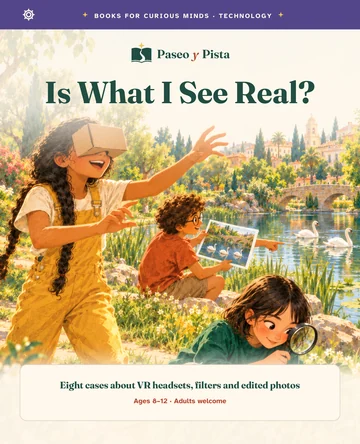
Look inside
What they learn as they play
Learning outside the classroom: what school starts carries on at home and on the street.
- How things work Machines, inventions and networks from the inside.
- Thinking in rules and steps Coding without screens, with paper and pencil.
- Spotting mistakes Seeing when a machine gets it wrong, AI included.
- Using technology wisely Privacy, messages and good decisions.
Questions from parents
Do we need a computer or tablet?
No. Everything is pencil and paper: children understand how technology works without using a screen.
What age is it for?
Ages 8 to 12, with an adult at the start.
Have another question? Write to us at contact@paseoypista.com and we'll reply.
What is inside
- 9 stories of ideas and inventions from Spain
- Mechanisms explained with diagrams
- Paper challenges and reasoned answers
- Timelines, vocabulary and sources
How it works
Questions, clues and investigations with paper and pencil.
- 1Look and predictEvery case opens with an illustrated scene and a question.
- 2Check the cluesData, diagrams and real sources to reason with.
- 3Explain your ideaWorked answers to compare how you thought it through.