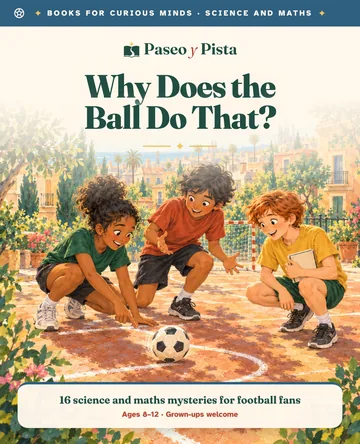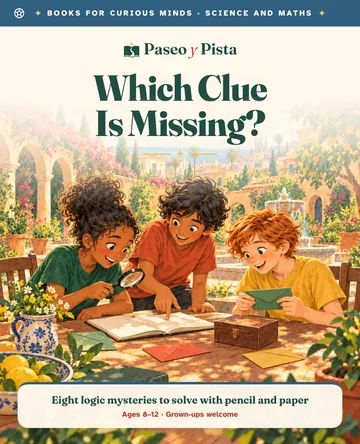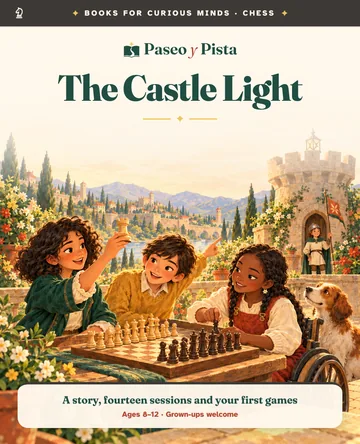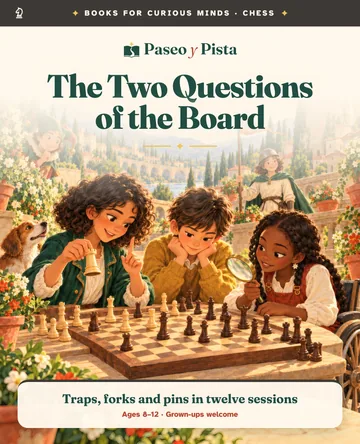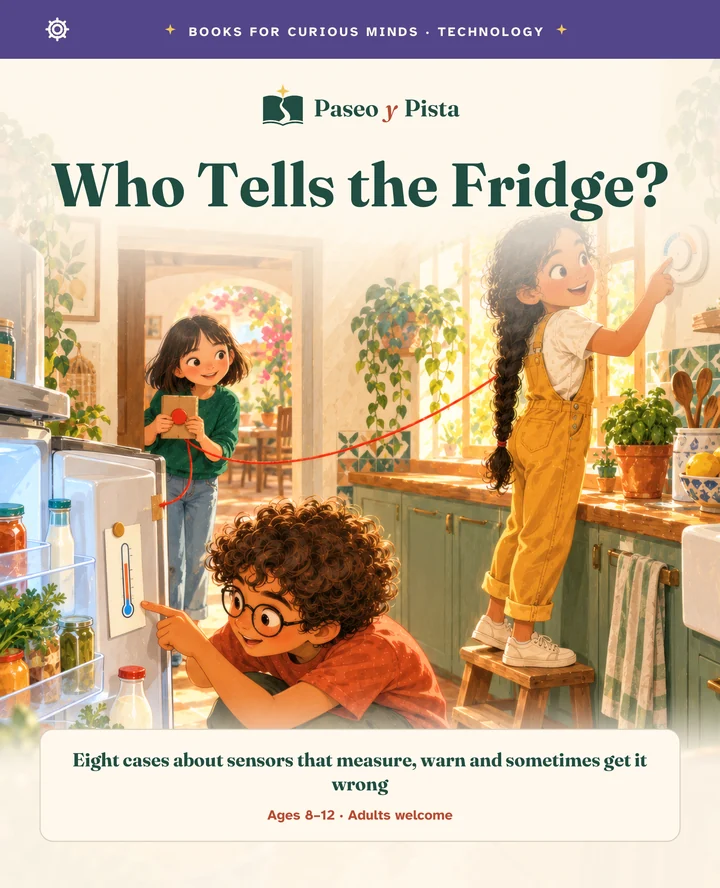
Cover of Who Tells the Fridge?

Technology · 8–12 years

Who Tells the Fridge?

Sensors that measure, warn and sometimes fail

You learn to: Know what each sensor measures

Who tells the house what is happening?

Home sensors that measure, warn and sometimes fail: what they measure, who they tell and what happens to the data.

Age
8–12 years, adults welcome
Format
Paperback, colour
Language
Spanish and English editions
Subject
Sensors and the Internet of Things
Series
Technology
Coming soon to Amazon

Why this book

Thermostats, doorbells and step-counting watches: homes are full of sensors. This book shows what they measure, who they tell and what happens to the data.

  • Know what each sensor measures
  • Follow an alert from one device to another
  • Think about which data we share, and with whom

What they learn as they play

Learning outside the classroom: what school starts carries on at home and on the street.

  • How things work Machines, inventions and networks from the inside.
  • Thinking in rules and steps Coding without screens, with paper and pencil.
  • Spotting mistakes Seeing when a machine gets it wrong, AI included.
  • Using technology wisely Privacy, messages and good decisions.

Questions from parents

Do we need a computer or tablet?

No. Everything is pencil and paper: children understand how technology works without using a screen.

What age is it for?

Ages 8 to 12, with an adult at the start.

Have another question? Write to us at contact@paseoypista.com and we'll reply.

What is inside

  • A complete case to solve as a family
  • Clues, activities and challenges with paper and pencil
  • Explained answers and a section for the adult

How it works

Questions, clues and investigations with paper and pencil.

  1. 1Look and predictEvery case opens with an illustrated scene and a question.
  2. 2Check the cluesData, diagrams and real sources to reason with.
  3. 3Explain your ideaWorked answers to compare how you thought it through.
More in Technology

Technology

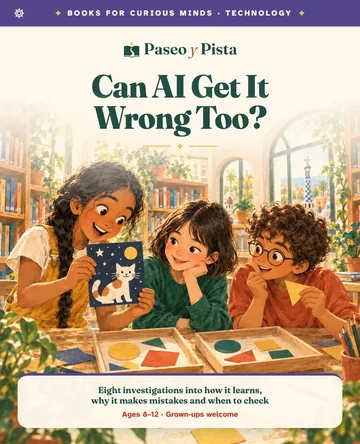
Can AI Get It Wrong Too?

Eight investigations into how it learns, why it makes mistakes and when to check

You learn to: Test when an AI gets it right, and when it doesn't

8–12 years · Spanish and English editions

Artificial intelligence

Technology

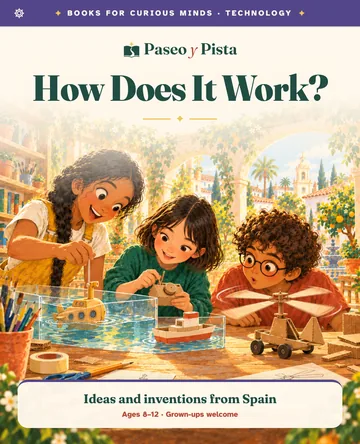
How Does It Work?

Ideas and inventions from Spain

You learn to: How some Spanish inventions work

8–12 years · Spanish and English editions

Inventions and technology

Technology

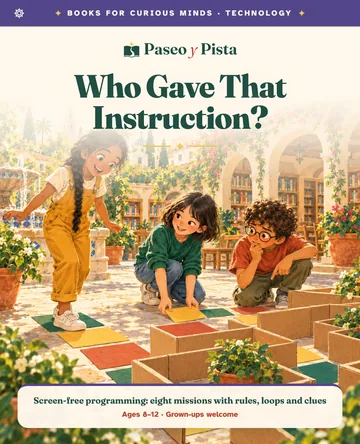
Who Gave That Instruction?

Screen-free programming: eight missions with rules, loops and clues

You learn to: Write exact instructions, loops and conditions

8–12 years · Spanish and English editions

Programming foundations

Technology

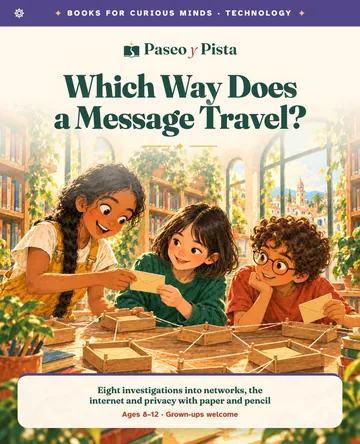
Which Way Does a Message Travel?

Eight investigations into networks, the internet and privacy with paper and pencil

You learn to: Follow a message through a network and protect your data

8–12 years · Spanish and English editions

Networks and the internet

Technology

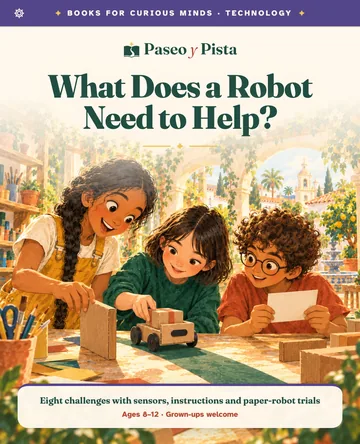
What Does a Robot Need to Help?

Eight challenges with sensors, instructions and paper-robot trials

You learn to: Design a robot with sensors and fair tests

8–12 years · Spanish and English editions

Robotics

Technology

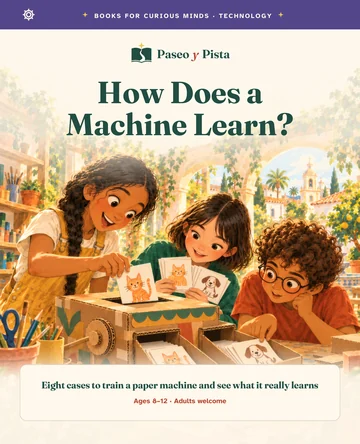
How Does a Machine Learn?

Data, examples and a paper machine

You learn to: Understand what training data is

8–12 years · Spanish and English editions

Machine learning

Technology

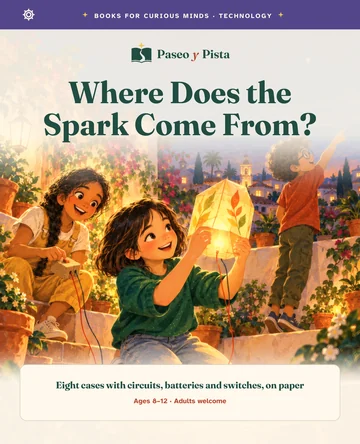
Where Does the Spark Come From?

Circuits, batteries and switches

You learn to: Read and draw a simple circuit

8–12 years · Spanish and English editions

Electricity and circuits

Technology

Is What I See Real?

Headsets, filters and edited photos

You learn to: Tell virtual from augmented reality

8–12 years · Spanish and English editions

Virtual and augmented reality

Other series

Games for the street, books for curious minds and stories to read together.
Paseo y Pista makes paper games, books and stories for learning through play: curious, hands-on and away from screens.