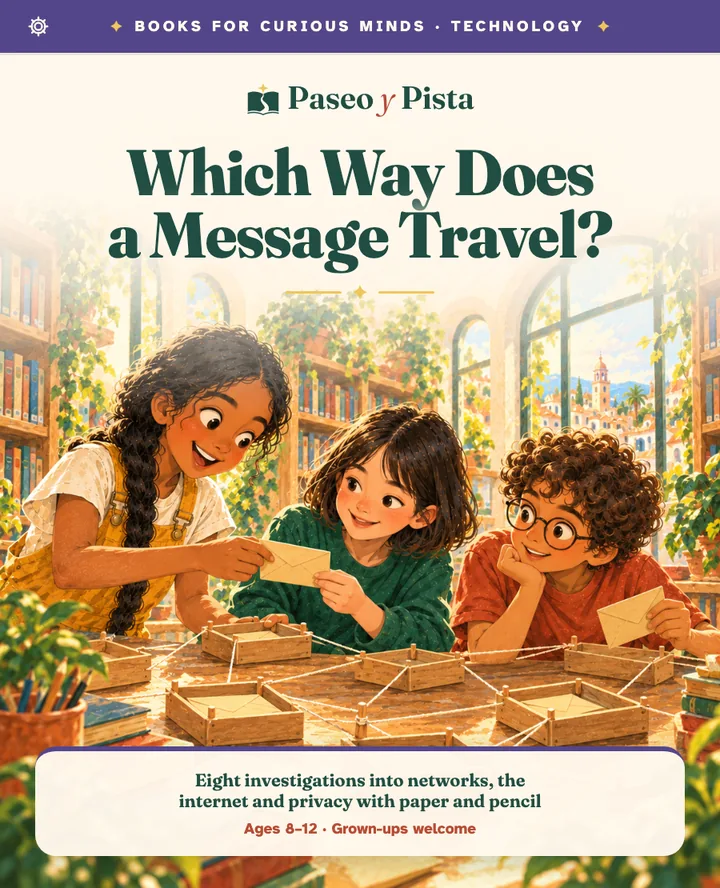
Technology · 8–12 years
Which Way Does a Message Travel?
Eight investigations into networks, the internet and privacy with paper and pencil
You learn to: Follow a message through a network and protect your data
A drawing arrives jumbled. One piece is missing. And who is asking for it to be sent to an unfamiliar address?
Join Inés, Mara and Álex to follow a message between two libraries. Trace connections, order pieces and separate delivering information from deciding whether to share it. Eight investigations with the book, a pencil and paper, without accounts, apps or an internet connection.
- Age
- 8–12 years, adults welcome
- Format
- Paperback, colour
- Language
- Spanish and English editions
- Subject
- Networks and the internet
- Series
- Technology
Look inside
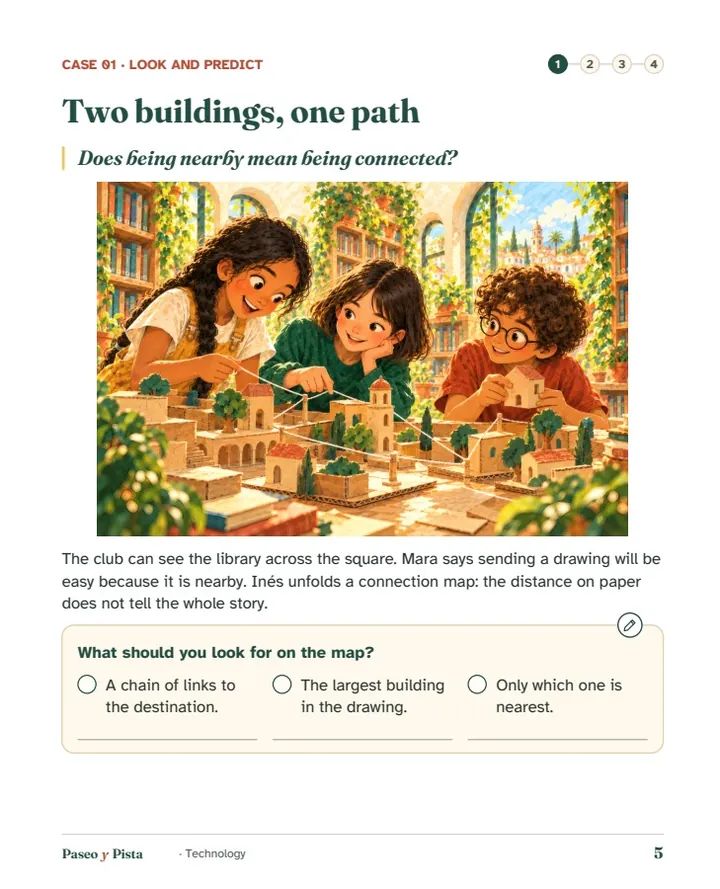
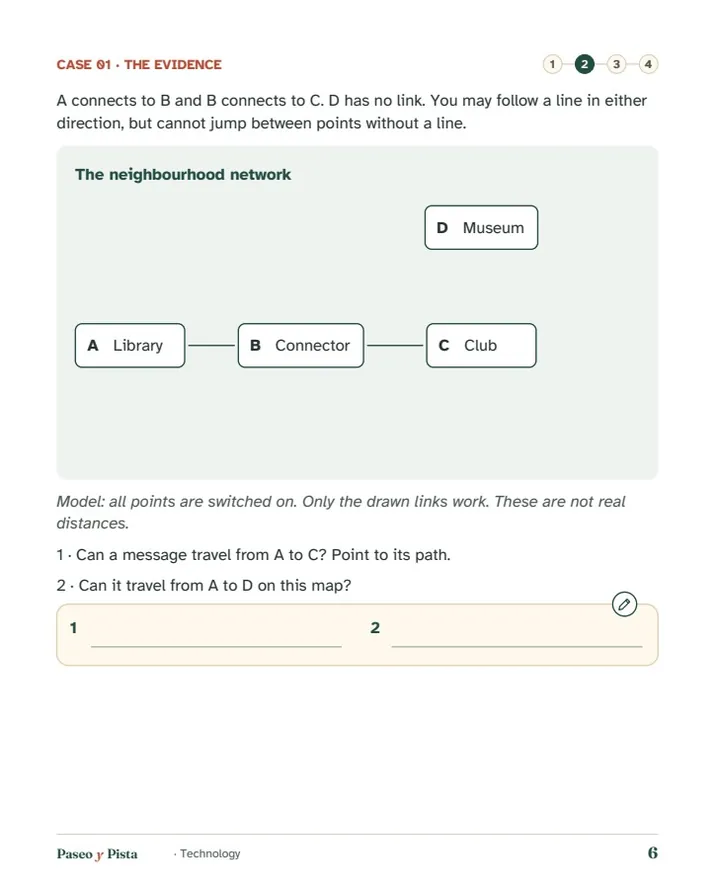
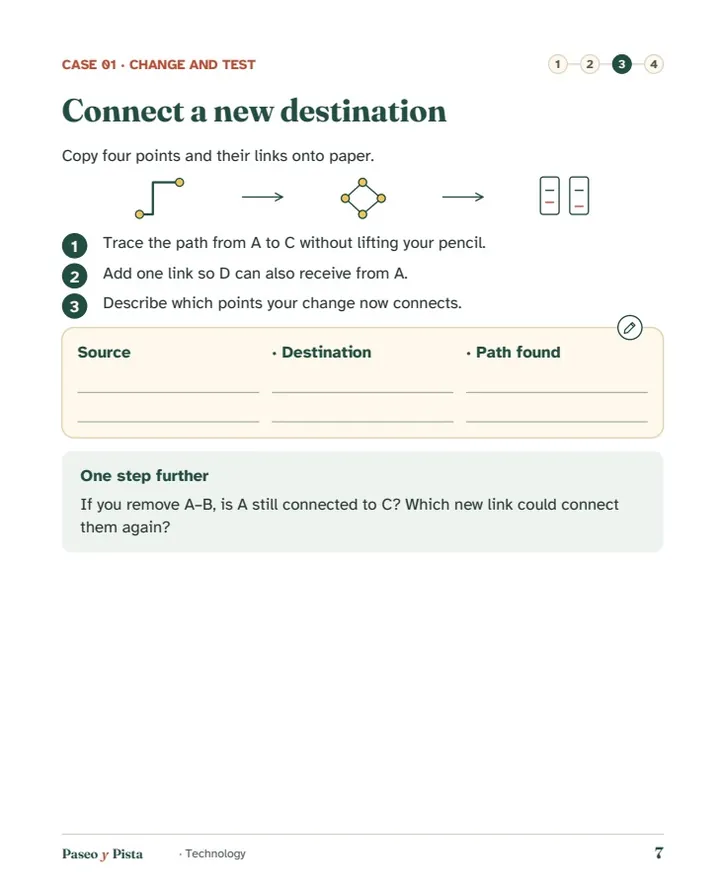
Why this book
The internet is part of everyday life, yet almost nobody explains how a message travels. With maps and cards, children follow packets, routes and names, and learn who not to give their details to.
- Follow a message through a network
- Tell the internet apart from the web
- Spot a message that asks for details as a trick
What they learn as they play
Learning outside the classroom: what school starts carries on at home and on the street.
- How things work Machines, inventions and networks from the inside.
- Thinking in rules and steps Coding without screens, with paper and pencil.
- Spotting mistakes Seeing when a machine gets it wrong, AI included.
- Using technology wisely Privacy, messages and good decisions.
Questions from parents
Do we need a computer or tablet?
No. Everything is pencil and paper: children understand how technology works without using a screen.
What age is it for?
Ages 8 to 12, with an adult at the start.
Have another question? Write to us at contact@paseoypista.com and we'll reply.
What is inside
- 8 illustrated four-page investigations
- Connections, destinations, missing pieces and alternative paths
- The Web and the internet, permission and privacy
- Paper maps, worked answers, a glossary and sources
How it works
Questions, clues and investigations with paper and pencil.
- 1Look and predictEvery case opens with an illustrated scene and a question.
- 2Check the cluesData, diagrams and real sources to reason with.
- 3Explain your ideaWorked answers to compare how you thought it through.